
Rakour
Menu
Smart Home Battery Storage System with Integrated Lighting Control

Integrated Home Energy Solutions

Smart Home Battery Storage System with Integrated Lighting Control

Power your home lighting automatically with a scalable LiFePO4 battery storage system — built for energy independence, backup reliability, and smart load control.

Understanding the Home Battery Storage System Integrated with Smart Lighting

A complete residential energy solution that connects your battery, inverter, and lighting into one intelligent, automated ecosystem.

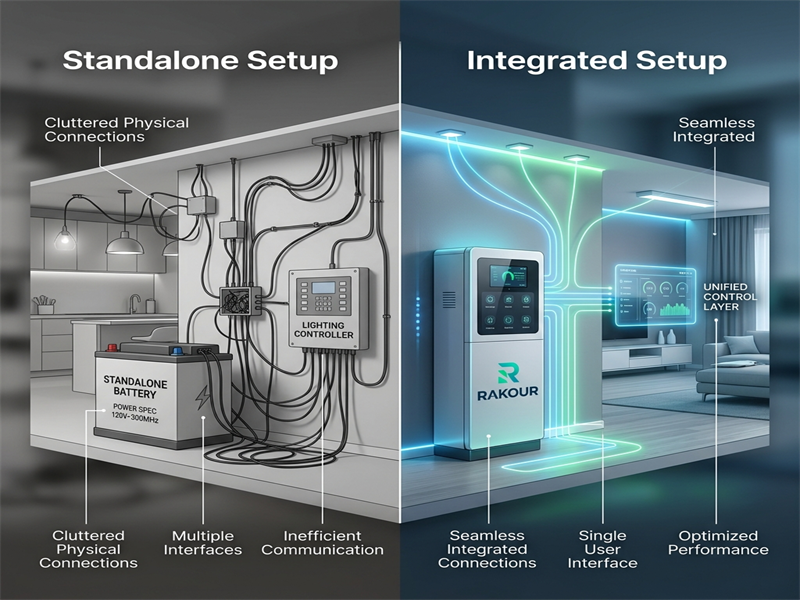
Comparison diagram showing standalone setups versus an integrated RAKOUR home battery system with a unified control layer.

How It Differs from Standalone Systems

Traditional setups treat energy storage and lighting as two separate systems. An integrated home battery storage system unifies both under a single control layer — eliminating manual switching and reducing energy waste through coordinated automation between battery output and lighting loads.
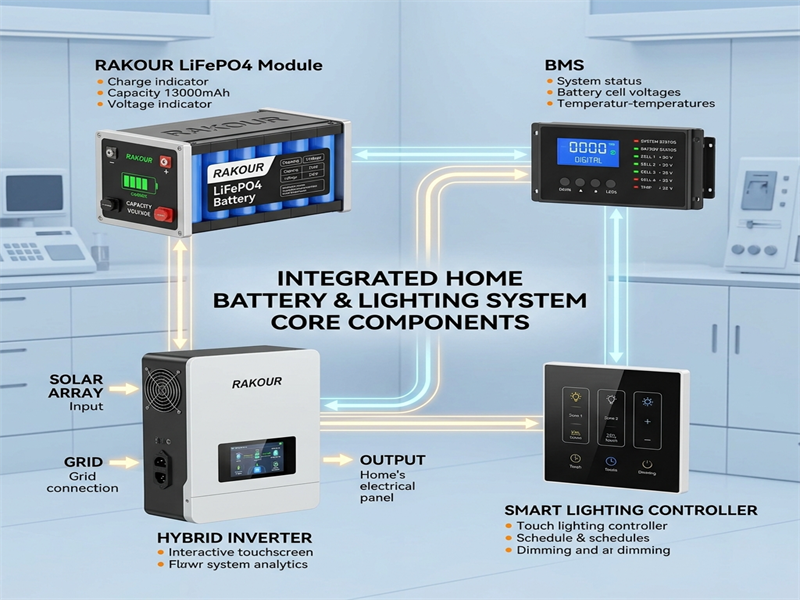
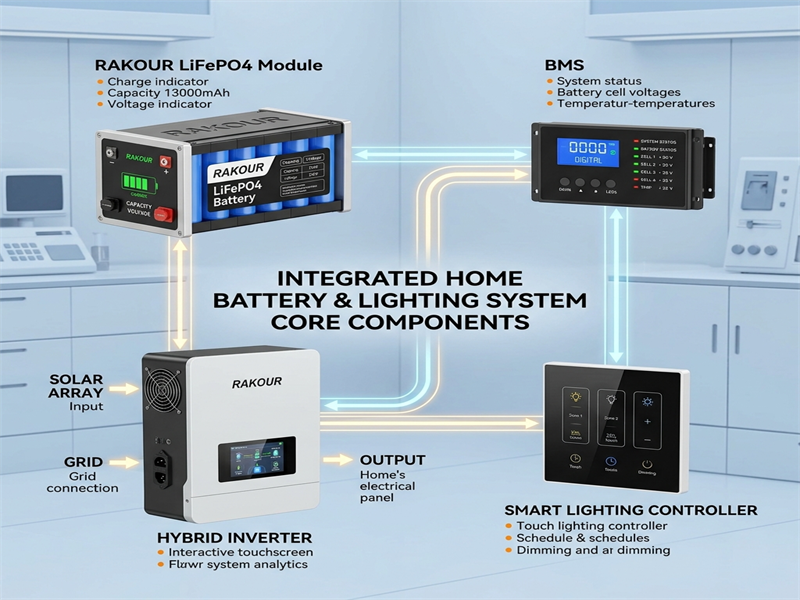
Infographic detailing components of integrated energy storage: LiFePO4 battery, BMS, inverter, and smart lighting controller.

Core Components That Make It Work

The foundation includes a LiFePO4 battery module, a BMS, a hybrid inverter, and a smart lighting controller. Together, these four components continuously communicate — the battery supplies power, the BMS protects cell health, and the lighting controller responds dynamically to available stored energy and real-time occupancy signals.

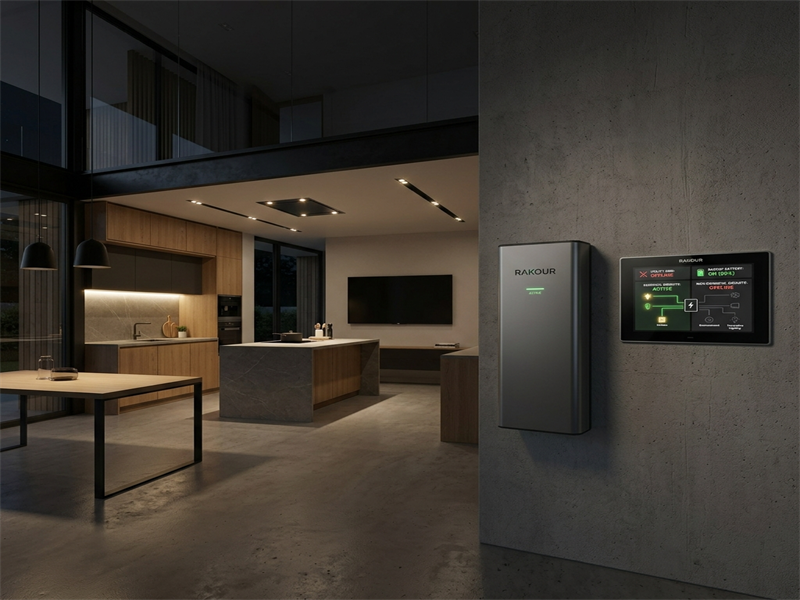
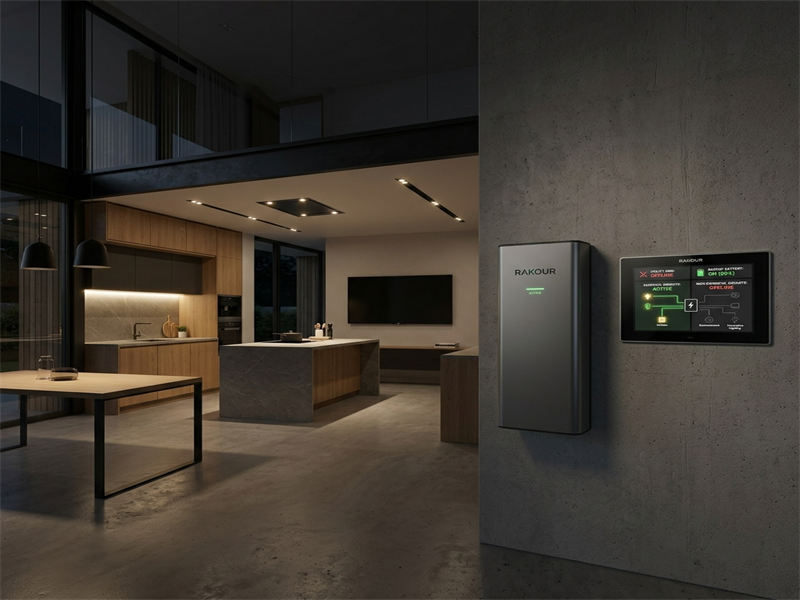
Luxury modern home interior during outage with an integrated battery system intelligently directing backup power to essential lighting.

Why Integration Matters for Homeowners

Without integration, stored energy is often misallocated — wasting capacity on idle circuits while critical lighting loads go unmanaged. A unified home battery storage system ensures every kilowatt-hour is directed intelligently, reducing grid dependency and keeping lights operational automatically during outages or peak-rate hours.

How a Home Solar Battery System Moves Energy from Storage to Your Lights

From solar input to lighting output, every stage of energy flow is managed automatically — no manual intervention required.

Daytime: Charging and Simultaneous Supply

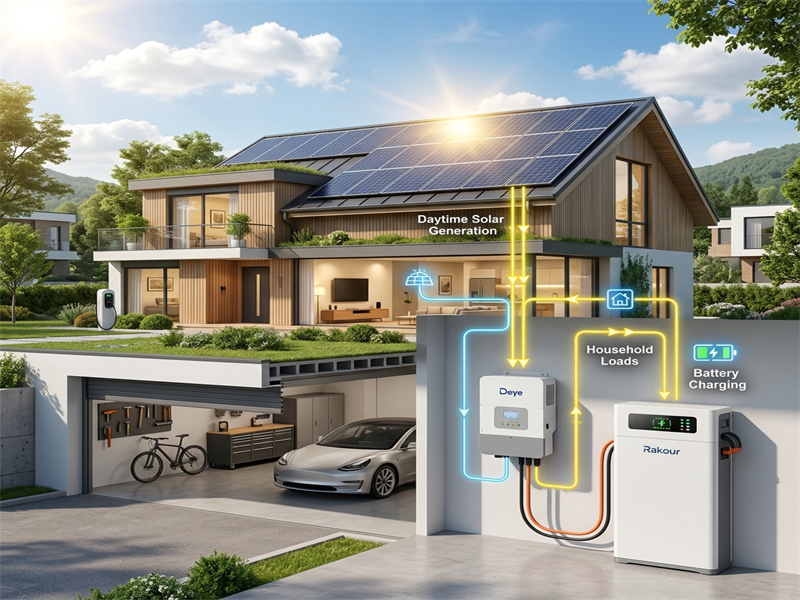
During daylight hours, solar panels feed DC electricity into the RAKOUR battery modules. The BMS continuously monitors cell voltage and temperature, optimizing the charge rate. Excess energy beyond what lighting and appliances consume is stored in the battery at up to 95% round-trip efficiency — ensuring nothing is wasted.

Nighttime and Outage: Seamless Discharge to Lighting Loads

After sunset or during grid outages, the home battery storage system automatically transitions to discharge mode. The inverter converts stored DC power to AC for your lighting circuits. Switchover happens in under 10ms — fast enough that LED fixtures experience zero visible interruption, maintaining full illumination without a single manual action.

TOU Scheduling: Smart Lighting Dispatch by Rate Period

The system reads time-of-use tariff windows and pre-schedules lighting loads accordingly. During peak electricity price periods, stored battery energy powers all lighting automatically. During off-peak hours, the battery recharges from the grid at lower cost — reducing your household electricity bill through intelligent energy dispatch timing.

Learn More Residential Solutions

Explore RAKOUR’s full range of low-voltage and high-voltage home battery systems tailored to your unique energy needs. Contact our engineering team today to design a scalable residential solution that maximizes long-term savings and grid independence.

Explore More

Battery Energy Storage System Specifications You Need Before Buying

Detailed technical parameters for RAKOUR's residential storage lineup — capacity, voltage, BMS protection, and compatibility at a glance.

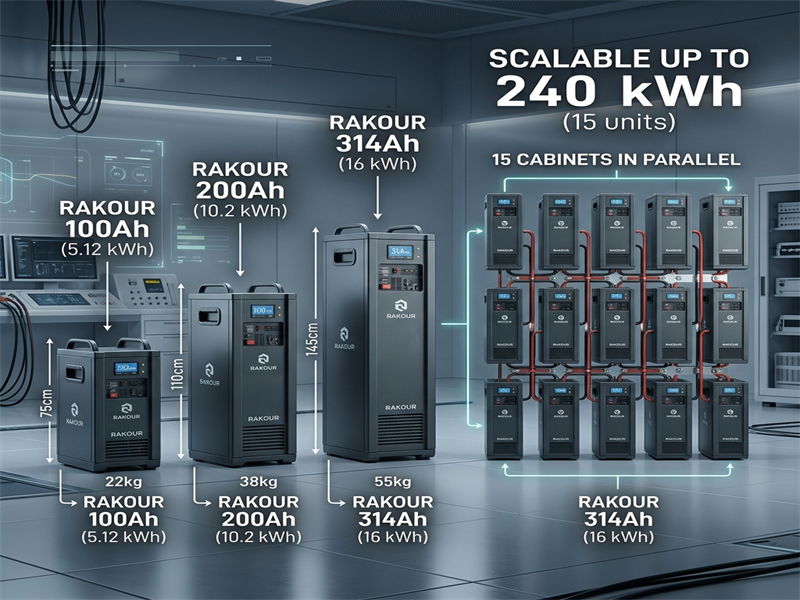
RAKOUR battery modules in multiple size configurations including 100Ah, 200Ah, and 314Ah, demonstrating scalable expandability up to 240 kWh.

Capacity Range and Expandability

RAKOUR's home battery storage system is available in 100Ah (5.12kWh), 200Ah (10.2kWh), and 314Ah (16kWh) configurations. All models support parallel connection — up to 15 units simultaneously — allowing residential capacity to scale from 5kWh to over 240kWh without replacing existing hardware or rewiring your installation.

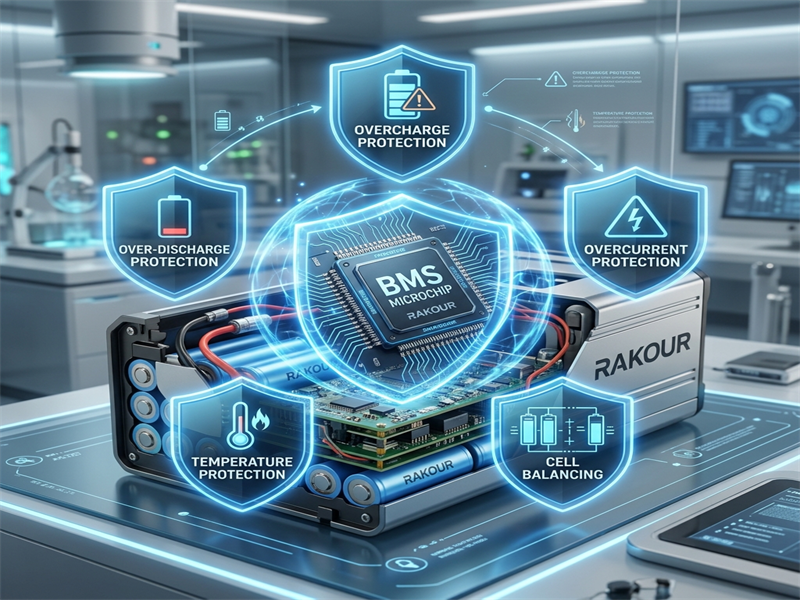
BMS battery management system details illustrating multi-layer protections for cell voltage, current, and temperature.

BMS Battery Management System Protections

Every RAKOUR module includes a built-in BMS battery management system that monitors cell voltage, current, and temperature in real time. Multi-layer protection covers overcharge, over-discharge, overcurrent, and high/low temperature faults. The BMS also performs automatic cell balancing during each charge cycle, directly extending usable battery lifespan beyond 6,000 cycles.

RAKOUR battery panel featuring touch screen interface, compatible with Deye inverters via CAN and RS485.

Communication Protocols and Inverter Compatibility

RAKOUR batteries communicate via CAN, RS485, and built-in WiFi. Compatible with leading inverter brands including Deye SUN series. The touch color screen on LV models displays live SOC readings, charge/discharge status, and active BMS alerts — giving installers and homeowners complete real-time visibility without requiring additional monitoring hardware or third-party software.

How Your Solar Battery Storage System Drives Intelligent Lighting Automation

From occupancy detection to TOU-based scene switching, your lighting responds automatically to energy availability and real-time household conditions.

Occupancy-Based Lighting Control

When a room is unoccupied, the integrated system automatically cuts lighting loads — reducing unnecessary draw on the home battery storage system and extending backup runtime. PIR and microwave occupancy sensors communicate directly with the energy controller, ensuring lights activate only when spaces are in use, cutting lighting-related energy consumption by up to 30%.

Daylight Harvesting to Protect Battery Capacity

Photosensors measure indoor natural light levels continuously. When daylight exceeds the programmed threshold, artificial lighting dims or switches off entirely — preserving stored battery capacity for evening use. This daylight harvesting function has documented energy-saving potential of 20–60%, directly reducing how frequently the home battery storage system needs to discharge during productive daytime hours.

App-Based Remote Monitoring and Scene Presets

RAKOUR's WiFi-enabled battery modules connect to a mobile app, giving homeowners real-time visibility of SOC, active lighting loads, and discharge rates. Custom scene presets — evening mode, outage mode, or away mode — can be configured and triggered manually or scheduled automatically, keeping energy usage aligned with your household routine without manual intervention each day.

What You Need to Know Before Installing a Home Battery System

Space, wiring, inverter brand, and lighting protocol compatibility — everything that determines whether your installation runs smoothly from day one.

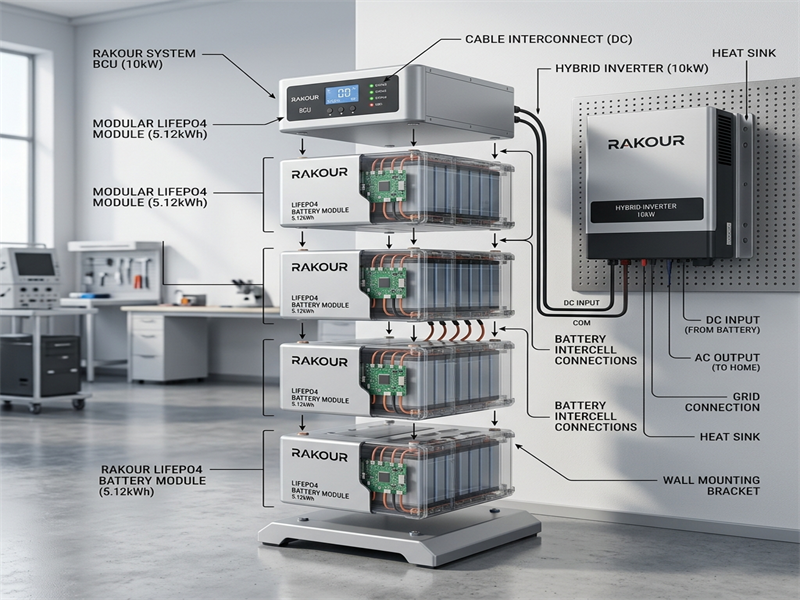
Exploded view diagram showing key components of RAKOUR battery modules stack, detailing installation space and vertical mounting requirements.

Space, Mounting, and Weight Requirements

RAKOUR rack-mounted modules fit standard 19-inch server enclosures. Wall-mounted LV models require a flat, ventilated surface rated for the unit's weight. Ground-wheel NSTLV series suits garage or utility room floor placement. Always confirm the installation area maintains ambient temperature between −20°C and 55°C for safe, continuous operation of the home battery system.

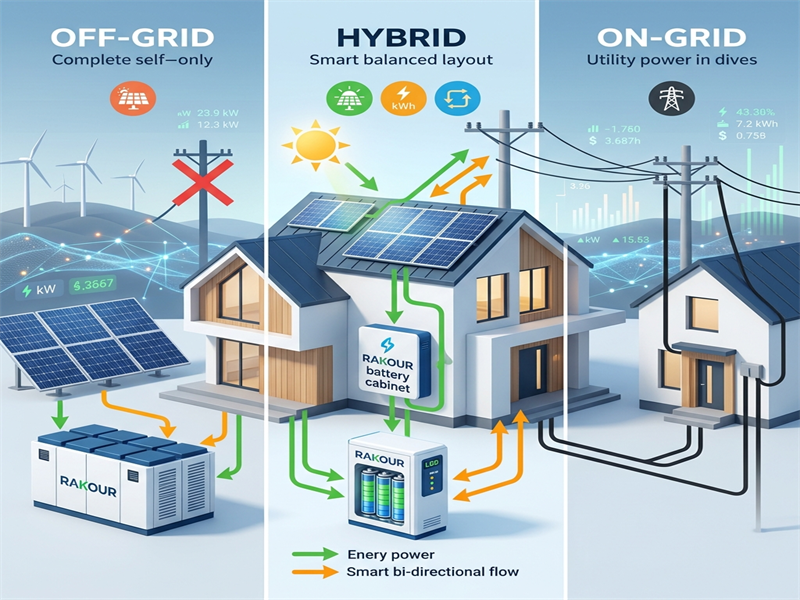
On-grid and off-grid home battery system diagram showcasing RAKOUR battery cabinet paired with inverters and solar array.

Inverter and Grid Compatibility

RAKOUR LV series pairs with low-voltage inverters; HV series connects to high-voltage inverters within 185V–980V operating range. Compatible home solar battery systems include verified Deye SUN series configurations. Both on-grid and off-grid modes are supported. Parallel communication ports (CAN/RS485) ensure the battery stack communicates reliably with your inverter without requiring additional protocol converters or custom firmware.

Core components flowchart of an integrated battery and lighting setup, detailing connection with smart controllers.

Lighting Protocol Compatibility

RAKOUR's energy controller is compatible with mainstream smart lighting protocols including Zigbee, Matter, and RS485-based DALI systems. For retrofit installations, the system connects alongside existing wiring without requiring panel replacement. Installers should verify that occupancy sensors and dimming controllers support 0–10V or DALI signaling before commissioning the integrated lighting and storage setup.

Why Lithium Iron Phosphate Battery Chemistry Sets the Safety Baseline

RAKOUR's multi-layer safety architecture — from cell chemistry to BMS fault logic — is engineered to protect your home and investment across every operating condition.

LiFePO4 Chemistry: Inherently Stable by Design

Unlike NMC cells, lithium iron phosphate battery chemistry does not enter thermal runaway under overcharge or mechanical stress conditions. The phosphate-oxygen bond remains stable at elevated temperatures, eliminating the risk of combustion that concerns homeowners evaluating residential battery installations. This intrinsic chemical stability is the first and most fundamental layer of RAKOUR's safety design.

Multi-Layer BMS Fault Protection

RAKOUR's BMS enforces hard limits across six fault conditions: overcharge, over-discharge, overcurrent, short circuit, high temperature (above 60°C), and low temperature (below −20°C). When any threshold is breached, the BMS isolates the affected module within milliseconds. BCU-level master BMS in HV series adds a second supervisory layer, independently cross-checking each slave BMS reading before allowing charge or discharge to resume.

Certifications and Warranty Coverage

RAKOUR batteries carry CE certification and comply with IEC 62619 safety requirements for stationary lithium energy storage systems. UN38.3 transport certification ensures safe international shipping. Each unit is covered by the manufacturer's warranty for cycle life and capacity retention. Certification documentation is available upon request for installers, project developers, and buyers requiring compliance verification before purchase approval.

Real Savings from Battery Backup for Home Power Outage and Peak-Rate Management

Quantified energy benefits from combining residential battery storage with smart lighting automation — bill reduction, backup reliability, and long-term ROI in one system.

Smart energy system dynamically directing backup battery power to residential lighting during peak electricity tariff windows.

Lighting Load as a Starting Point for Savings

Lighting typically represents 10–20% of total residential electricity consumption. When smart automation routes lighting loads through stored battery energy during peak tariff windows, homeowners avoid the highest-cost grid electricity. The home battery storage system dispatches stored energy precisely during these windows, turning lighting — traditionally a passive cost — into an actively managed savings lever.

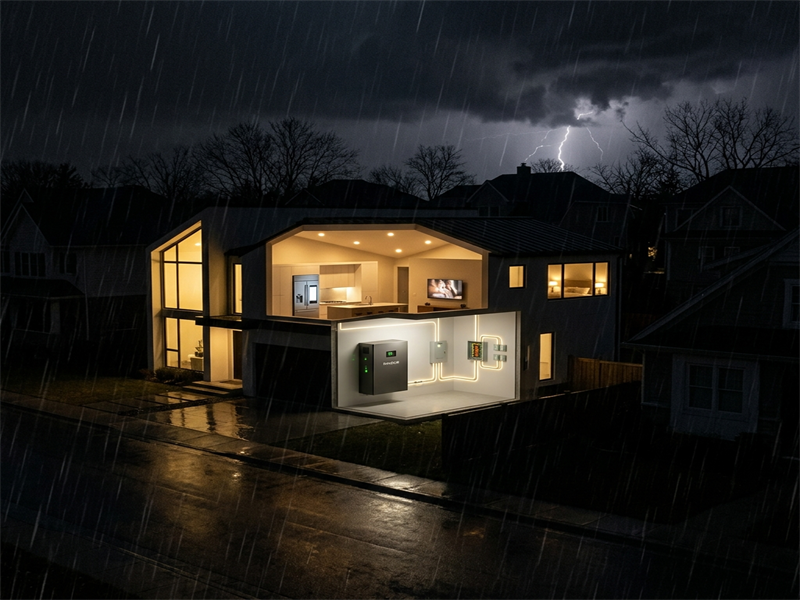
RAKOUR home battery backup system providing continuous illumination and power to critical appliances during a complete grid blackout.

Backup Runtime During Grid Outages

A single RAKOUR 314Ah module provides 16kWh of usable capacity. For a household running essential lighting at 500W average draw, that delivers approximately 32 hours of continuous illumination with no grid connection. Battery backup for home power outage scenarios is where integrated systems demonstrate clearest value — lights, routers, and low-power appliances remain operational without generators or manual fuel management.

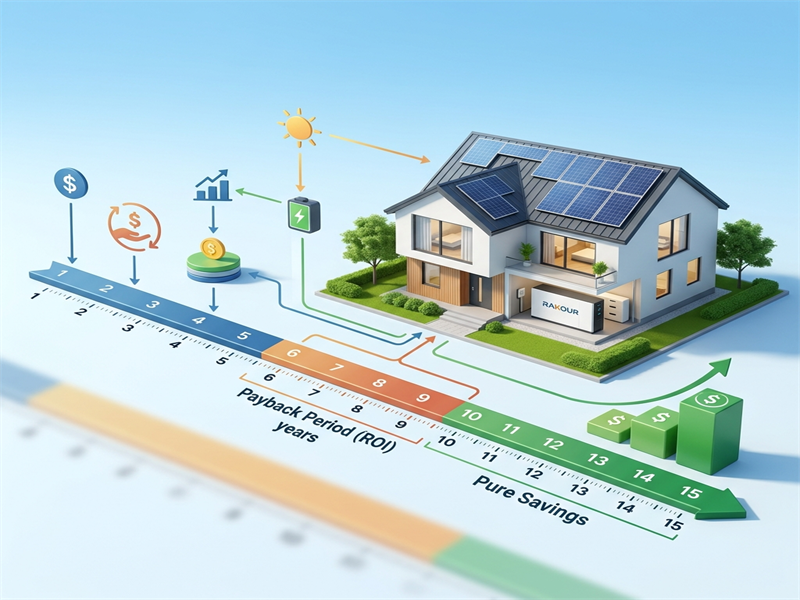
Investment payback timeline for home energy storage, illustrating initial break-even window and subsequent long-term utility savings.

Long-Term ROI: Cycles, Degradation, and Payback

RAKOUR LiFePO4 cells are rated for over 6,000 charge-discharge cycles with less than 20% capacity degradation. At one cycle per day, that equals 16+ years of productive service. Combined with TOU arbitrage savings and avoided outage costs, most residential battery storage for home installations in markets with variable electricity pricing achieve payback within 5–8 years of commissioning.

How to Choose the Right Battery Storage for Home — Capacity, Mode, and Compatibility

Match your household energy profile, lighting load, and grid connection type to the correct RAKOUR battery configuration before you buy.

Sizing by Household Energy Profile

Start with your average daily consumption. A small home under 100m² with basic lighting loads typically needs 5–10kWh — RAKOUR's 100Ah or 200Ah modules cover this range. Larger homes or those running high-power lighting rigs, heat pumps, or EV chargers simultaneously should consider the 314Ah module or a parallel stack to avoid premature battery depletion during extended outage events.

Grid-Tied vs. Off-Grid: Which Mode Fits Your Setup

Grid-tied installations use stored energy for peak shaving and outage backup while remaining connected to utility supply. Off-grid setups require sufficient capacity to cover full household load independently. Home battery backup without solar is a valid grid-tied strategy — charging overnight at off-peak rates and discharging during expensive daytime hours without any PV panel investment required upfront.

When to Scale: Parallel Expansion Planning

RAKOUR supports up to 15 units in parallel, allowing homeowners to start conservatively and expand as energy needs grow. Add a second module when runtime falls below your target, or when new loads — EV charging, additional lighting zones — are introduced. Expansion requires no hardware replacement; new modules connect to the existing BMS and inverter communication bus without system reconfiguration or downtime.

Frequently Asked Questions About Home Battery Storage Systems and Smart Lighting

Everything homeowners and installers ask before committing to an integrated energy storage and lighting solution.

What is a battery energy storage system and how does it power home lighting?

A battery energy storage system stores electricity from solar panels or the grid inside LiFePO4 cells. When needed, the inverter converts stored DC power to AC, supplying your lighting circuits automatically. RAKOUR systems switch from grid to battery in under 10ms — lights stay on without any visible interruption during outages or peak-rate switching events.

How does the BMS battery management system protect my battery during daily cycling?

RAKOUR's built-in BMS monitors cell voltage, current, and temperature in real time across every module. It enforces hard cut-offs for overcharge, over-discharge, overcurrent, and temperature faults — isolating affected cells within milliseconds. Automatic cell balancing runs during every charge cycle, preventing capacity drift between cells and extending usable lifespan well beyond 6,000 rated cycles.

Can I use home battery backup without solar panels already installed?

Yes. RAKOUR batteries charge directly from the grid during off-peak hours at lower electricity rates, then discharge during expensive peak windows — no solar panels required. This grid-arbitrage strategy still reduces electricity bills meaningfully. Solar can be added later; the existing battery, inverter, and BMS setup remains fully compatible without hardware replacement or rewiring.

How long does a lithium iron phosphate battery last in residential use?

RAKOUR's lithium iron phosphate battery cells are rated for over 6,000 charge-discharge cycles with less than 20% capacity loss. At one full cycle per day, that represents 16+ years of productive service life. Unlike NMC chemistry, LiFePO4 cells do not degrade significantly from partial charging — making them ideal for daily residential storage cycling patterns with variable solar or grid inputs.

What size residential battery storage system do I need for whole-home lighting backup?

For essential lighting backup only, a single RAKOUR 100Ah (5.12kWh) module typically covers 10–20 hours depending on fixture count. For whole-home coverage including appliances, the 314Ah (16kWh) module or a parallel stack is recommended. Use your average daily kWh consumption as the baseline — RAKOUR's team can calculate the exact configuration your household requires.

Ready to Power Your Home with an Integrated Battery Storage and Lighting System?

Ready to Power Your Home with an Integrated Battery Storage and Lighting System?

Tell us your energy goals — our specialists will configure the right RAKOUR system for your home within 24 hours.