Rakour
Menu
Battery Energy Storage Systems for Home & Commercial Use | Rakour

Residential & Commercial Energy Storage Solutions

Battery Energy Storage Systems for Home & Commercial Use | Rakour

From scalable home battery systems to high-capacity C&I solutions, Rakour LiFePO4 battery energy storage systems deliver safe, reliable power for every application.

Complete Battery Energy Storage Systems for Every Scale

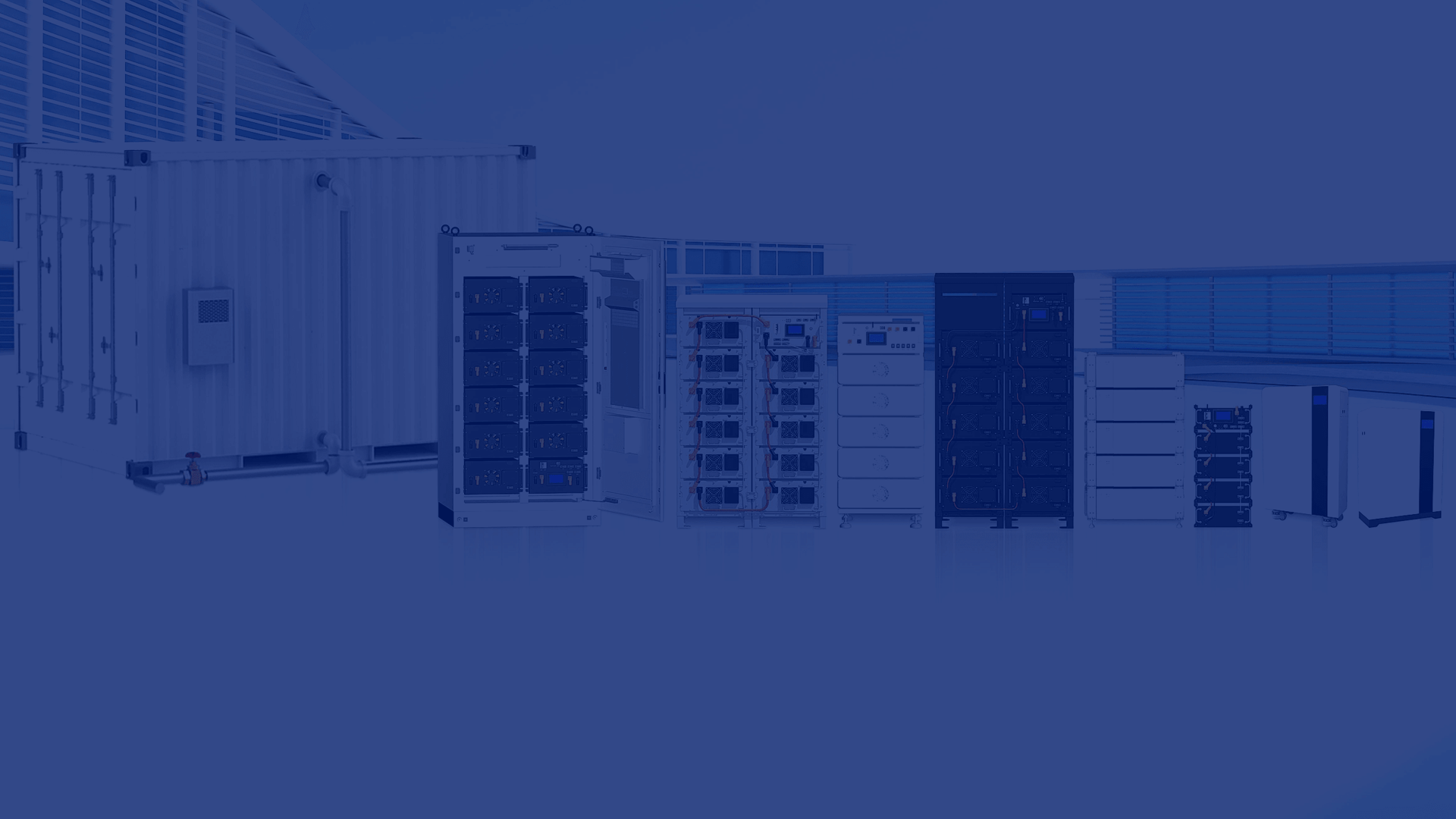
Rakour offers a full-spectrum lineup of residential and commercial energy storage systems — all built on LiFePO4 cells with integrated BMS protection and a 5-year warranty.

Rakour LV series low-voltage solar battery storage models: wall-mounted, rack-mounted, and ground-wheel residential battery storage.

Residential Energy Storage Series (LV)

The Rakour LV series includes wall-mounted, rack-mounted, and ground-wheel models ranging from 5.12kWh to 16.08kWh per unit. Supporting up to 15 units in parallel, total deployable capacity exceeds 240kWh — ideal for households pairing with standard low-voltage solar inverters.
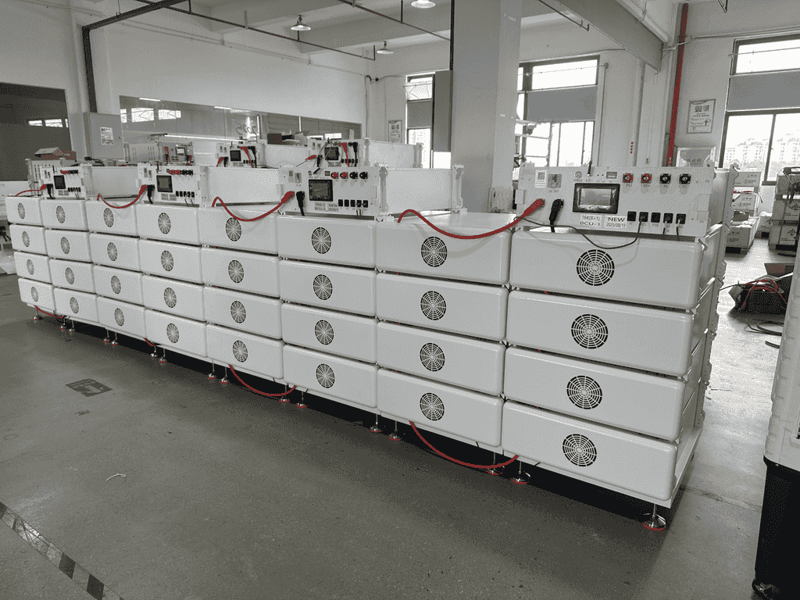
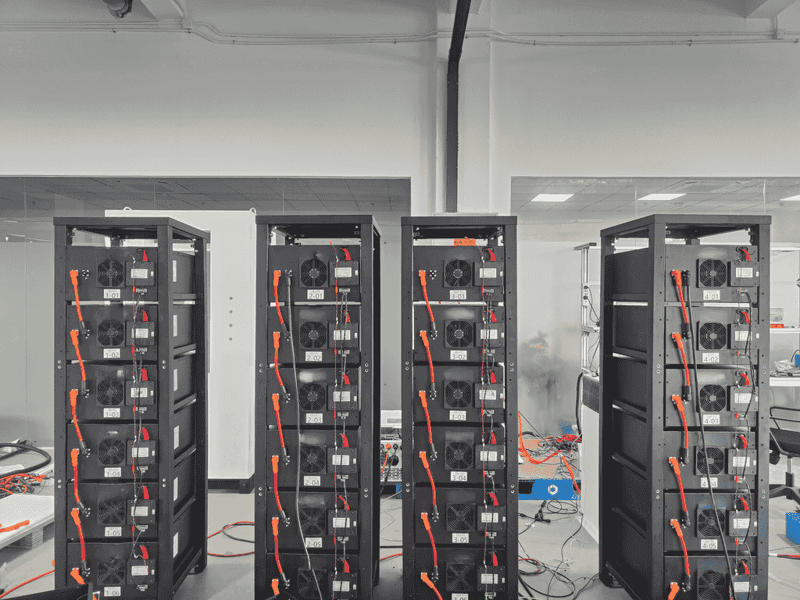
Rakour high-voltage solar battery storage cabinet, modular expansion up to 225kWh for home and small commercial and industrial C&I energy storage.

High-Voltage Series for Home and C&I (HV)

The HV series connects 5 to 17 battery modules in series, reaching system voltages up to 979.2V and total energy up to 225kWh per set. Built for high-voltage inverters, this line supports both residential backup power and small-scale commercial energy storage requirements.

Modular commercial energy storage cabinet by Rakour, supporting PV plus storage and backup power for commercial and industrial BTM applications.

Two Clusters, One Unified Ecosystem

All Rakour models share the same LiFePO4 chemistry, CAN/RS485 communication standard, and CE-certified safety framework. Whether you need a 5kWh home battery or a 225kWh C&I system, every unit integrates seamlessly within one consistent product platform.

Why LiFePO4 Is the Right Chemistry for Energy Storage

All Rakour battery energy storage systems use lithium iron phosphate cells — the safest and longest-lasting chemistry available for stationary storage today.

Lithium Iron Phosphate Battery: Thermal Stability That Matters

Unlike NMC cells, lithium iron phosphate batteries do not enter thermal runaway under overcharge or short-circuit conditions. The stable phosphate bond holds even at elevated temperatures, making LiFePO4 the benchmark chemistry for safely deployed residential and commercial storage.

Rated Cycle Life: 6,000 to Over 11,000 Full Cycles

Rakour LV 100Ah models are rated at ≥6,000 cycles; the 280Ah achieves ≥10,000 cycles; the 314Ah exceeds 11,000 cycles at 90% DOD. This equates to 20+ years of daily cycling — significantly lower total cost of ownership compared to conventional lead-acid alternatives.

No Memory Effect, Wide Operating Temperature Range

LiFePO4 cells have no memory effect, allowing partial charges without capacity loss. Rakour systems discharge from -20°C to 60°C and charge from 0°C to 60°C — suitable for hot climates and cold northern installations without additional thermal management.

Built-In Battery Management System: Intelligent Protection at Every Layer

Every Rakour energy storage system includes a fully integrated BMS, monitoring, balancing, and protecting cells in real time across all operating conditions.

Rakour high-voltage battery management system showing the dual-layer master-slave BMS architecture with BCU and internal CAN bus ports.

Master-Slave BMS Architecture in HV Systems

HV series products use a dual-layer BMS: a master BMS in the BCU and a slave BMS in each battery module. The slave unit collects cell voltage and temperature data and transmits it to the master via internal CAN bus, enabling precise system-level control of charge and discharge parameters.

Automated battery management system BMS safety protection architecture in Rakour solar battery storage, guarding lithium cells against electrical and thermal risks.

Multi-Layer Protection Against Critical Failure Modes

The battery management system guards against over-discharge, overcharge, overcurrent, high temperature, low temperature, and short-circuit simultaneously. All protections trigger automatically without operator input — minimizing system downtime and preserving cell capacity across the full rated operating lifespan.

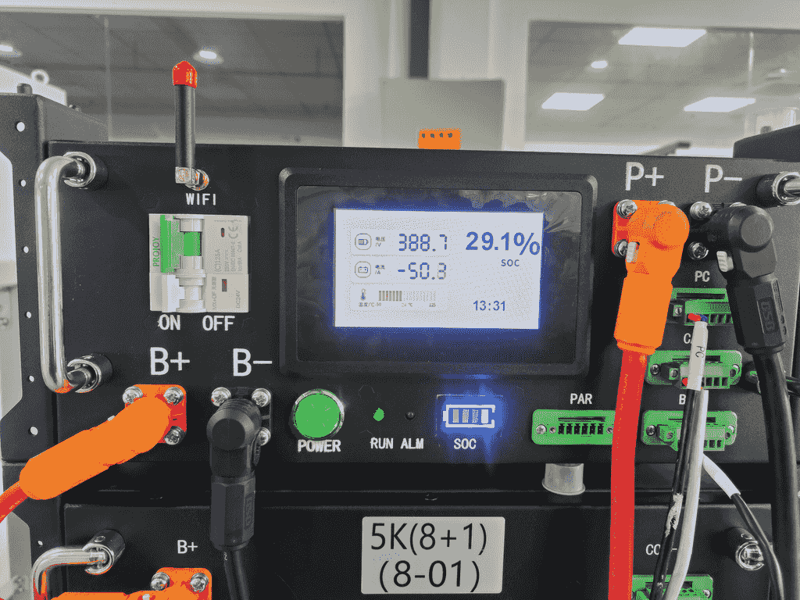
Rakour solar battery BMS screen with color touch panel displaying real-time SOC telemetry, built-in Wi-Fi for remote monitoring, and active cell balancing.

Active Cell Balancing, Wi-Fi Remote Monitoring, and Touch Display

Rakour BMS actively balances cells to maximize usable capacity. Built-in Wi-Fi enables smartphone remote monitoring. The front-panel color touch screen displays real-time SOC, voltage, current, and alarm data, with switchable communication protocols for third-party inverter compatibility.

Four Installation Form Factors to Fit Any Project Requirement

Rakour battery energy storage systems are available in rack-mounted, wall-mounted, ground-wheel, and iron-frame configurations — matched to space constraints and installation environments.

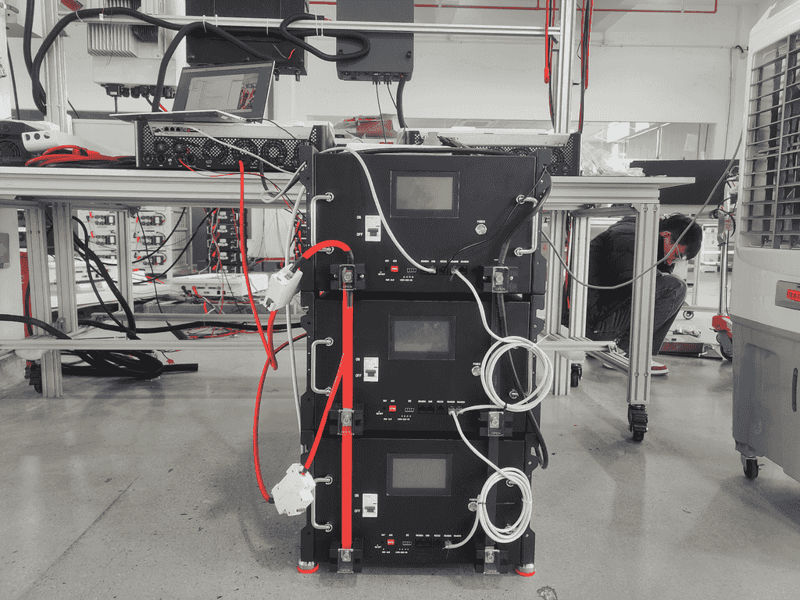
Rakour rack-mounted lithium battery storage system in standard cabinet enclosure, showing vertically stacked modular batteries with front touch screens.

Rack-Mounted Battery: Designed for Indoor Utility Rooms

The LV rackable series (100Ah to 314Ah) fits standard cabinet enclosures with a front-panel touch screen. IP20 rated, each unit mounts horizontally and stacks vertically within a single cabinet. This is the preferred form factor for residential utility rooms and small commercial equipment rooms.

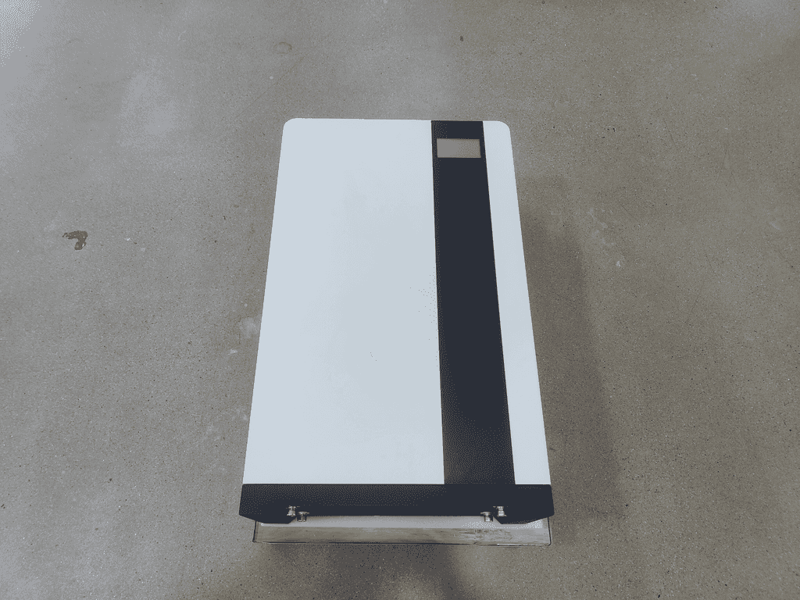
NSTLV-10.2K home energy storage battery showing flexible wall-mounted installation and floor-standing option with universal ground wheels.

Wall-Mounted and Ground-Wheel Options for Flexible Placement

The NSTLV-10.2K supports wall mounting via expansion-anchored hanging plates and floor standing with optional universal wheels for repositioning. IP54 protection allows installation in covered outdoor spaces, garages, and carports where rack-mount enclosures are not practical.

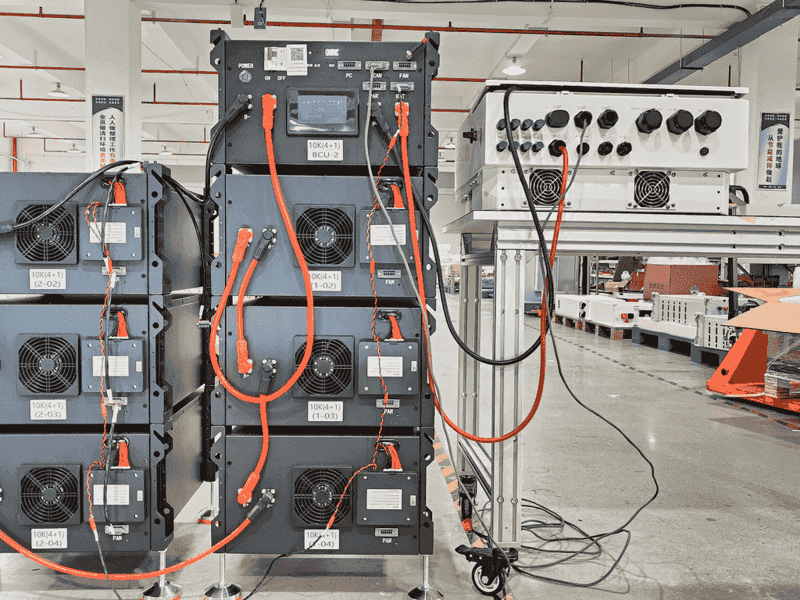
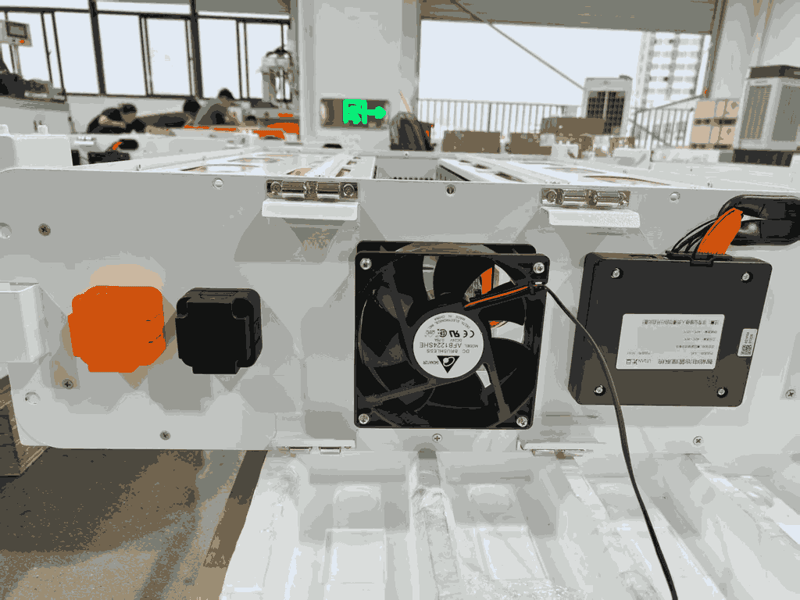
High-voltage commercial and industrial rack-mounted battery energy storage system installation with efficient sheet-metal heat dissipation.

HV Iron-Frame Mounting for High-Power C&I Deployments

HV 200Ah and 314Ah modules mount on dedicated iron frames, configuring from 6 to 17 modules per set. Active fan cooling and porous sheet-metal heat dissipation maintain stable temperatures. These systems suit C&I mechanical rooms, rooftop plant rooms, and containerized energy storage projects.

Scalable Energy Storage From 5kWh to 225kWh and Beyond

Rakour systems expand through parallel or series configuration — letting installers precisely match battery storage system capacity to project requirements without overbuilding from day one.

LV Parallel Expansion: Up to 15 Units Per System

All LV models support up to 15 parallel units. One 100Ah module delivers 5.12kWh; 15 units reach 76.8kWh. The 314Ah model scales from 16kWh to over 240kWh at full parallel. Inter-battery communication runs automatically via RS485-2 through BMS address assignment, requiring no additional configuration.

HV Series Expansion: 5 to 17 Modules Per Set

HV 314Ah systems scale from 5 modules (80.38kWh at 256V) up to 14 modules (225.08kWh at 716.8V). Each added module requires no firmware changes — the BCU auto-detects module count and adjusts charge parameters accordingly, simplifying capacity expansion for field installers.

Commission Small Today, Expand as Demand Grows

Rakour LV and HV systems are designed for modular growth. Buyers can deploy a minimum viable installation initially and add capacity later without replacing core hardware. This phased approach reduces upfront capital, lowers project risk, and keeps Rakour systems competitive across a wide range of project budgets.

Low-Voltage vs High-Voltage: Which Battery Energy Storage System Fits Your Project?

Choosing between Rakour LV and HV battery energy storage systems depends on your inverter voltage platform, power requirements, and installation scale.

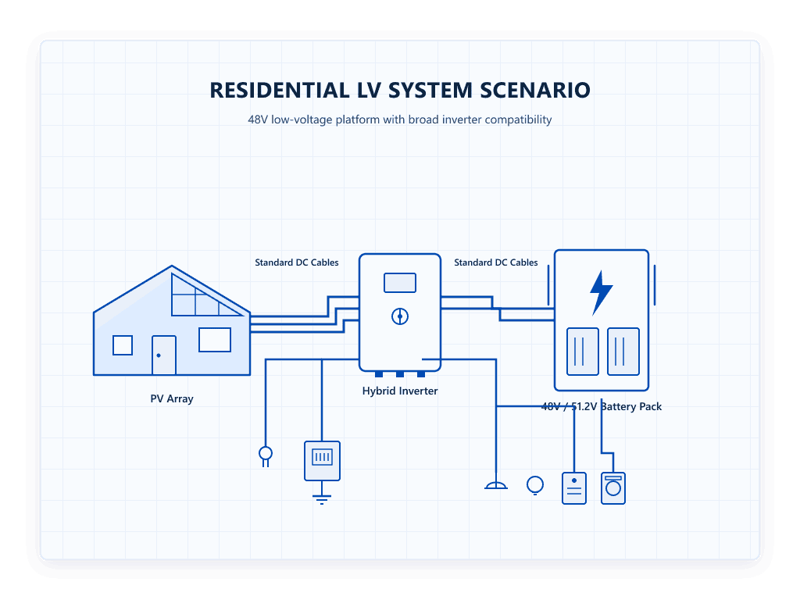
Bright blueprint engineering diagram of Rakour 48V low-voltage residential energy storage system showing PV array, hybrid inverter, and wall-mounted battery in a premium card frame.

LV Systems: 48V Platform, Compatible with Most Residential Energy Storage Inverters

Rakour LV models operate at 51.2V nominal (46.4–57.6V working range). This 48V platform is compatible with the broadest range of residential hybrid inverters. Standard DC cable sizing applies, and no high-voltage commissioning is required — reducing installation complexity and total installed cost for residential projects.

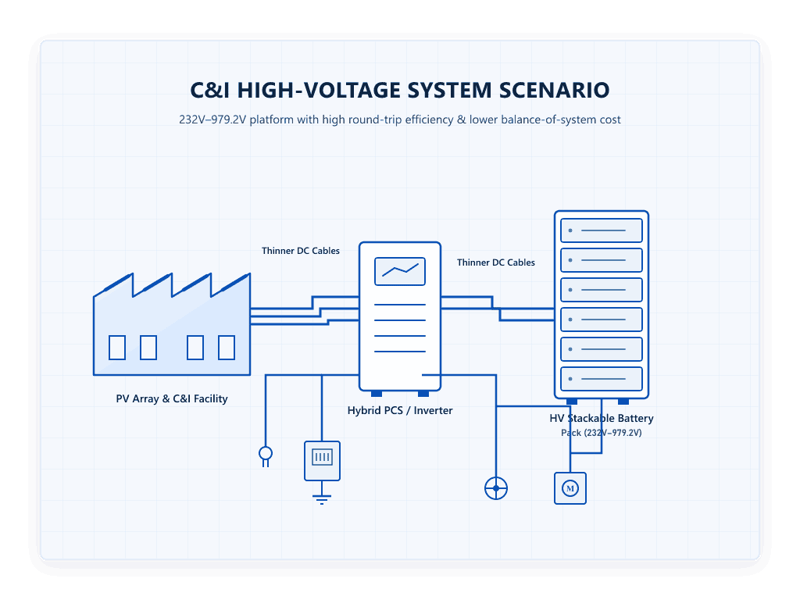
Bright blueprint engineering diagram of Rakour High Voltage battery storage system showing stackable HV battery cabinet, PCS inverter, and C&I facility in a premium card frame.

HV Systems: Higher Efficiency and Lower DC Cable Loss at Scale

Rakour HV systems operate from 232V to 979.2V, reducing DC current at equivalent power levels. Lower current means thinner cables, lower copper cost, and improved round-trip efficiency. These advantages grow significantly for systems above 30kWh, where HV architectures deliver measurably lower balance-of-system costs.

Bright blueprint selection guide comparing Rakour Low Voltage (48V) and High Voltage (200V-1000V) battery systems in a premium card frame.

Match Your Battery to the Inverter Voltage Platform

Select an LV system if your inverter accepts 48V battery input. Select HV if your inverter specifies 200V–1000V battery voltage. For C&I projects above 80kWh, HV delivers better efficiency and lower cable cost. Rakour technical support can confirm model compatibility with your specific inverter.

Verified Inverter Compatibility and System Integration

Rakour battery systems communicate via CAN and RS485 — the two universal protocols supported by most hybrid and grid-tie inverters worldwide.

Validated Deye Battery Inverter Integration: SUN-29.9K to SUN-80K

Rakour provides dedicated guides for pairing the 51.2V314Ah HV battery with Deye SUN-29.9K~50KSG01HP3 and SUN-80KSG02HP3-EU-EM6 inverters. Power cables connect to BAT1/BAT2 ports; the CAN line connects to the inverter BMS1 port. No custom firmware or additional interface hardware is required.

Switchable Communication Protocol via On-Unit Touch Screen

All Rakour LV batteries feature a touch screen that lets installers switch between CAN and RS485 on-site. One SKU covers multiple inverter brands, reducing warehouse inventory and giving installers the flexibility to deploy a single battery model across different project specifications without preconfiguration.

Built-In Soft-Start Circuit Protects Inverters from Inrush Current

Rakour HV systems include a soft-start circuit inside the BCU, preventing inrush current damage to inverters lacking native soft-start capability. This allows pairing with a broader range of inverter models, removing the need for separate inrush protection components and reducing per-installation BOS cost.

Global Safety Certifications and Multi-Layer System Protection

Every Rakour battery ships with internationally recognized certifications — documented proof of compliance for import, grid-connection, and project financing requirements.

CE, UN38.3, ROHS, IEC62619, and MSDS: What Each Covers

CE confirms EU directive compliance. UN38.3 validates safe transport under shock and temperature extremes. IEC62619 sets safety requirements for stationary lithium battery cells. ROHS certifies hazardous substance restriction. MSDS covers safe chemical handling. Together these five certifications satisfy import authorities and utility requirements in most major markets.

Lithium Battery Safety by Design: IP Rating, Fan Cooling, and Circuit Isolation

LV rack units are IP20-rated; the NSTLV ground-wheel series is IP54 for semi-outdoor environments. HV systems combine active fan cooling with porous sheet-metal panels. The BCU includes a DC fuse and cut-off protection switch that electrically isolates the battery from the inverter under any detected fault condition.

Compliance Documents Available Through Authorized Distributors

CE declarations, IEC test reports, and MSDS sheets are provided to authorized distributors on request, supporting customs clearance and grid-connection approval in Europe, Australia, and Southeast Asia. All documents are formatted to meet standard import authority and utility interconnection review requirements.

Application Scenarios: Where Rakour Energy Storage Systems Deliver Value

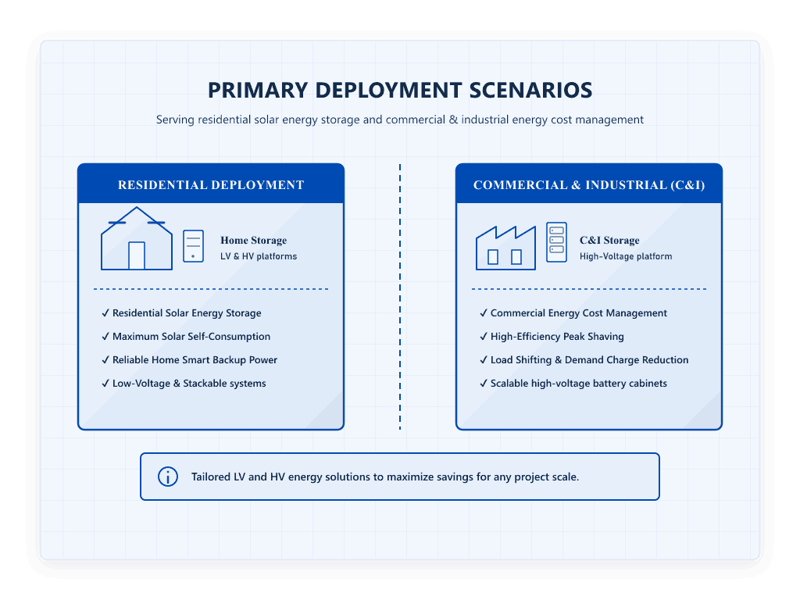
Rakour LV and HV battery systems serve two primary deployment categories — residential solar energy storage and commercial energy cost management.

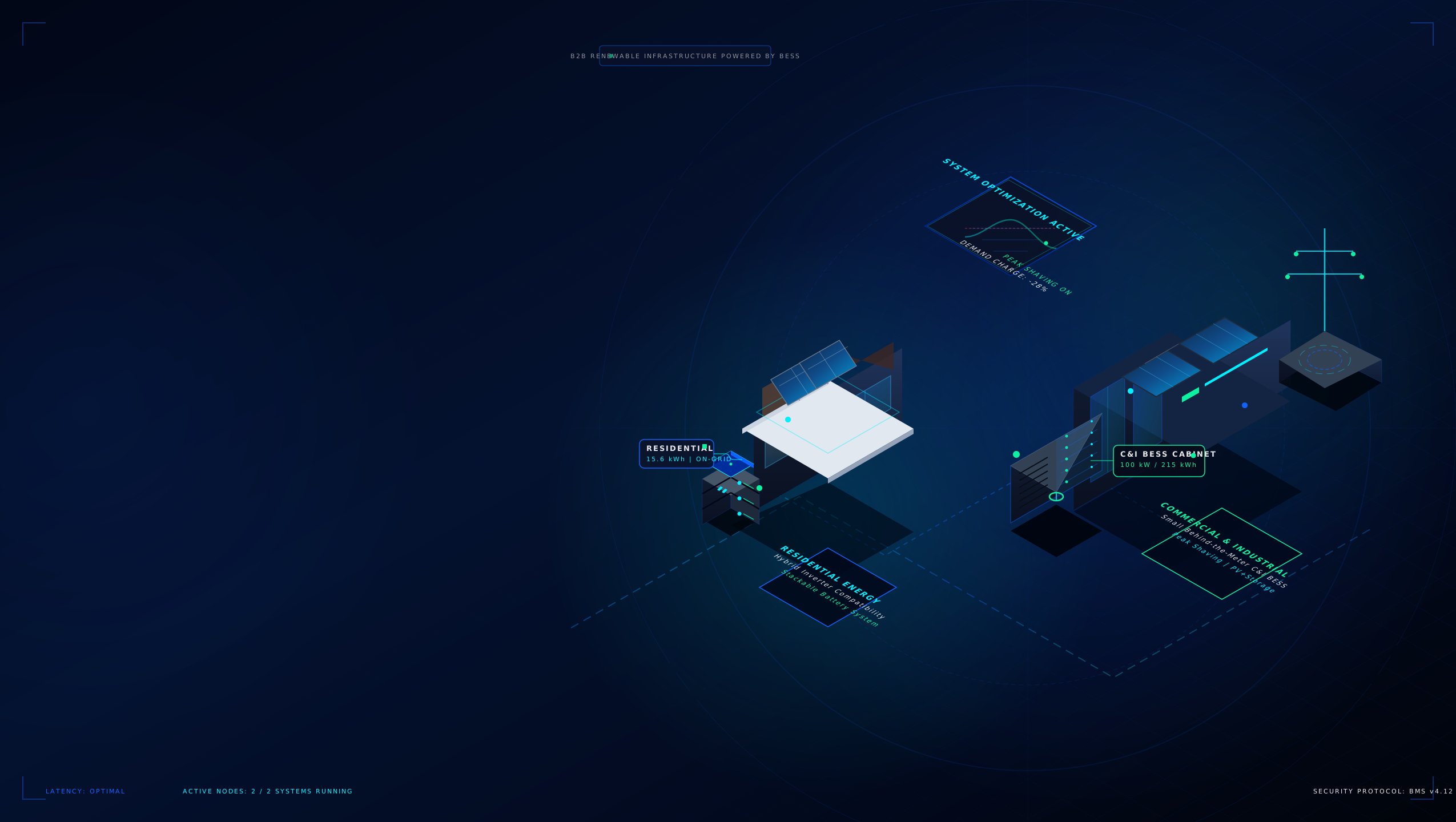
Bright blueprint engineering diagram comparing Rakour Residential and Commercial & Industrial (C&I) battery storage deployment scenarios.

Home Solar Battery Storage: Self-Consumption, Backup Power, and TOU Arbitrage

Paired with a hybrid inverter, Rakour LV systems store surplus solar output for nighttime use, reducing grid import. In time-of-use tariff regions, the battery charges off-peak and discharges at peak rates. A built-in backup mode maintains essential household loads during grid outages without additional external transfer switch hardware.

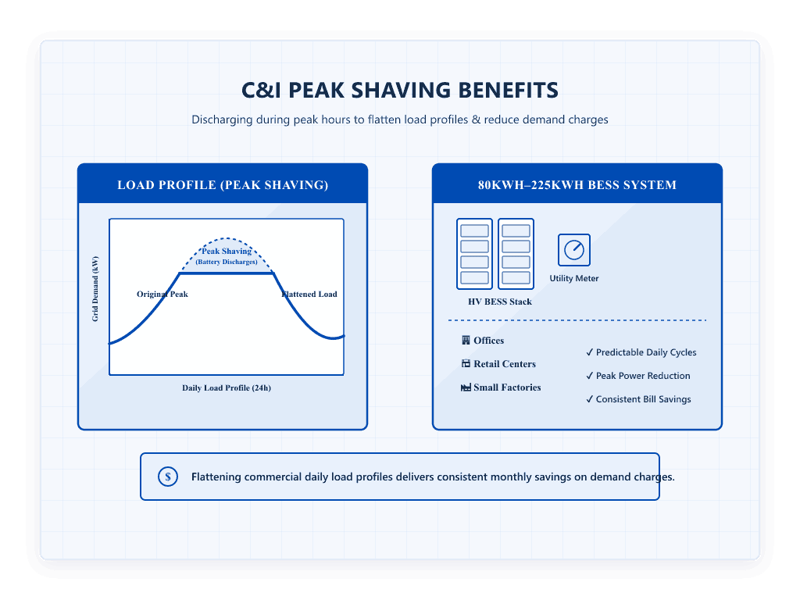
Bright blueprint engineering diagram demonstrating peak shaving with Rakour High Voltage battery systems to cut commercial demand charges.

Commercial Energy Storage: Peak Shaving and Demand Charge Reduction

Rakour HV systems cut commercial electricity bills by discharging during consumption peaks, flattening the load profile at the utility meter. Systems from 80kWh to 225kWh suit small factories, retail centers, and offices with predictable daily load cycles — delivering consistent monthly savings on demand charges.

Bright blueprint engineering diagram demonstrating parallel cluster expansion and extreme temperature operation for Rakour LV off-grid battery systems.

Off-Grid Solar-Plus-Storage for Remote Sites

Where grid access is unreliable, Rakour LV systems pair with off-grid inverters to deliver solar-backed continuous power. Up to 15 units in parallel provide sustained overnight capacity. The -20°C to 60°C discharge range ensures reliable operation in remote locations with extreme ambient temperatures throughout all seasons.

Full Product Spec Comparison: Rakour LV and HV Series

Key specifications across the Rakour lineup — enabling buyers to shortlist models and size systems before requesting a detailed project quote.

LV Series: Capacity, Cycle Life, and Certifications

LV models run at 51.2V nominal. The 100Ah delivers 5.12kWh (≥6,000 cycles); 200Ah gives 10.24kWh; 280Ah reaches 14.34kWh (≥10,000 cycles); 314Ah delivers 16.08kWh (≥11,000 cycles). All are IP20-rated with a 5-year battery warranty, 15-unit parallel support, and CE, ROHS, MSDS, UN38.3 certification.

HV Series: Voltage Range and Scalable Energy Output

HV 200Ah scales from 4 modules (40.96kWh, 204.8V) to 10 modules (102.4kWh, 512V). HV 314Ah scales from 5 modules (80.38kWh, 256V) to 14 modules (225.08kWh, 716.8V). Both use fan cooling, CAN/RS485/Wi-Fi, CE and UN38.3 certification, and a 5+5-year battery warranty.

Shared Specifications Across All Rakour Models

Every model uses LiFePO4 cells at 90% DOD, rated for ≤2,000m altitude and ≤85% RH. CAN and RS485 ports are standard across the full range. RS232 is available on LV units for PC configuration. Wi-Fi is built into HV models and optionally available on LV batteries.

Battery Warranty and Lifecycle Support You Can Rely On

Rakour backs every battery energy storage system with a structured warranty and post-sale support framework — giving distributors and buyers long-term confidence in their investment.

5-Year Battery Warranty on LV Models, 5+5 Years on HV Series

Rakour LV products carry a 5-year product warranty. HV models include a 5+5-year structure: 5 years standard coverage plus an additional extended period under defined conditions. Warranty triggers on whichever threshold arrives first — time elapsed or cycle count — ensuring coverage reflects actual usage rather than calendar years alone.

Remote Diagnostics via Wi-Fi to Lower After-Sales Costs

Built-in Wi-Fi on HV models and optional Wi-Fi on LV units enables remote reading of cell voltage, temperature, SOC, and fault codes. Service teams can diagnose issues without a site visit, reducing response time and per-incident service costs across distributed installation networks spanning multiple geographic markets.

Warranty Claims and Compliance Docs via Authorized Distributor Network

Rakour operates through a global authorized distributor network. Warranty claims, spare parts requests, and compliance documents — CE declarations, MSDS sheets, test reports, and user manuals — are all handled through this channel, ensuring consistent documentation support for regulatory approvals and end-customer handovers.

How to Choose the Right Rakour Battery Storage System for Your Project

This three-step framework helps buyers and installers identify the right model based on application type, inverter voltage, capacity, and site conditions.

Define the Application — Residential Energy Storage or Commercial

Residential projects with a single household load and a hybrid inverter point to Rakour LV. Projects needing more than 30kWh, higher discharge rates, or high-voltage inverter integration should evaluate the HV series. This decision narrows selection to the right product cluster and voltage platform.

Match Inverter Voltage and Calculate Required Capacity

Confirm your inverter battery input: 48V selects LV; 200V–1,000V selects HV. Calculate daily energy from load data and desired backup duration. For LV, pick the Ah model meeting per-unit demand and add parallel units to reach total capacity. For HV, choose the module count delivering required kWh.

Choose Form Factor and Verify Site Compatibility

Select form factor by available space: rack-mount for enclosed rooms, wall-mount or ground-wheel for open areas, iron-frame for C&I plant rooms. Verify ambient temperature against operating ranges. IP54-rated NSTLV units suit covered outdoor locations. Contact Rakour support to confirm inverter compatibility before placing an order.

Frequently Asked Questions About Rakour Battery Energy Storage Systems

Everything buyers and installers need to know before selecting a Rakour energy storage system.

What is the cycle life of a LiFePO4 battery in Rakour energy storage systems?

LV 100Ah/200Ah models are rated ≥6,000 cycles; 280Ah achieves ≥10,000; 314Ah exceeds 11,000 cycles at 90% DOD. At one cycle per day, the 314Ah delivers 30+ years of rated service life.

How does the battery management system protect Rakour batteries during operation?

The built-in BMS monitors voltage, current, and temperature in real time, triggering protection against over-discharge, overcharge, overcurrent, and over-temperature. HV models use a dual-layer BMS.

Which inverter brands are compatible with Rakour battery storage systems?

Rakour uses CAN and RS485, covering most hybrid and grid-tie inverter brands. Verified Deye SUN-29.9K~80K guides are included. The LV touch screen switches protocols on-site with no hardware changes.

What certifications do Rakour battery energy storage systems carry?

All Rakour products carry CE, UN38.3, and MSDS. Select LV models add ROHS and IEC62619 — covering EU access, transport safety, stationary cell safety, substance restriction, and chemical handling.

What is the battery warranty period for Rakour LV and HV series products?

LV models carry a 5-year warranty. HV models include a 5+5-year structure: 5 years standard plus an extended period. Warranty triggers on whichever comes first: time elapsed or the rated cycle count.

Ready to Source a Reliable Battery Energy Storage System?

Ready to Source a Reliable Battery Energy Storage System?

Share capacity, inverter model, and site type — our team responds with the right solution in 24h.