

Rakour
Menu
Utility-scale solar power plant and integrated battery energy storage cabinets, driving South Africa's energy transition.

Commercial Battery Storage ROI

How to Calculate ROI for Commercial Battery Storage in South Africa (2026 Guide)

A practical framework for South African businesses to model payback periods, energy savings, and long-term returns before investing in commercial battery storage. 

Understanding Commercial Battery Storage ROI and Payback Period

The two core financial metrics every South African business needs before approving a battery investment


What ROI Really Means for Battery Storage

Commercial battery storage ROI measures the financial return a business earns from installing a battery system, expressed as a percentage of total capital invested. It is calculated using Net Profit divided by Initial Investment, multiplied by 100, where net profit combines annual energy savings, demand charge reductions, and avoided downtime costs.
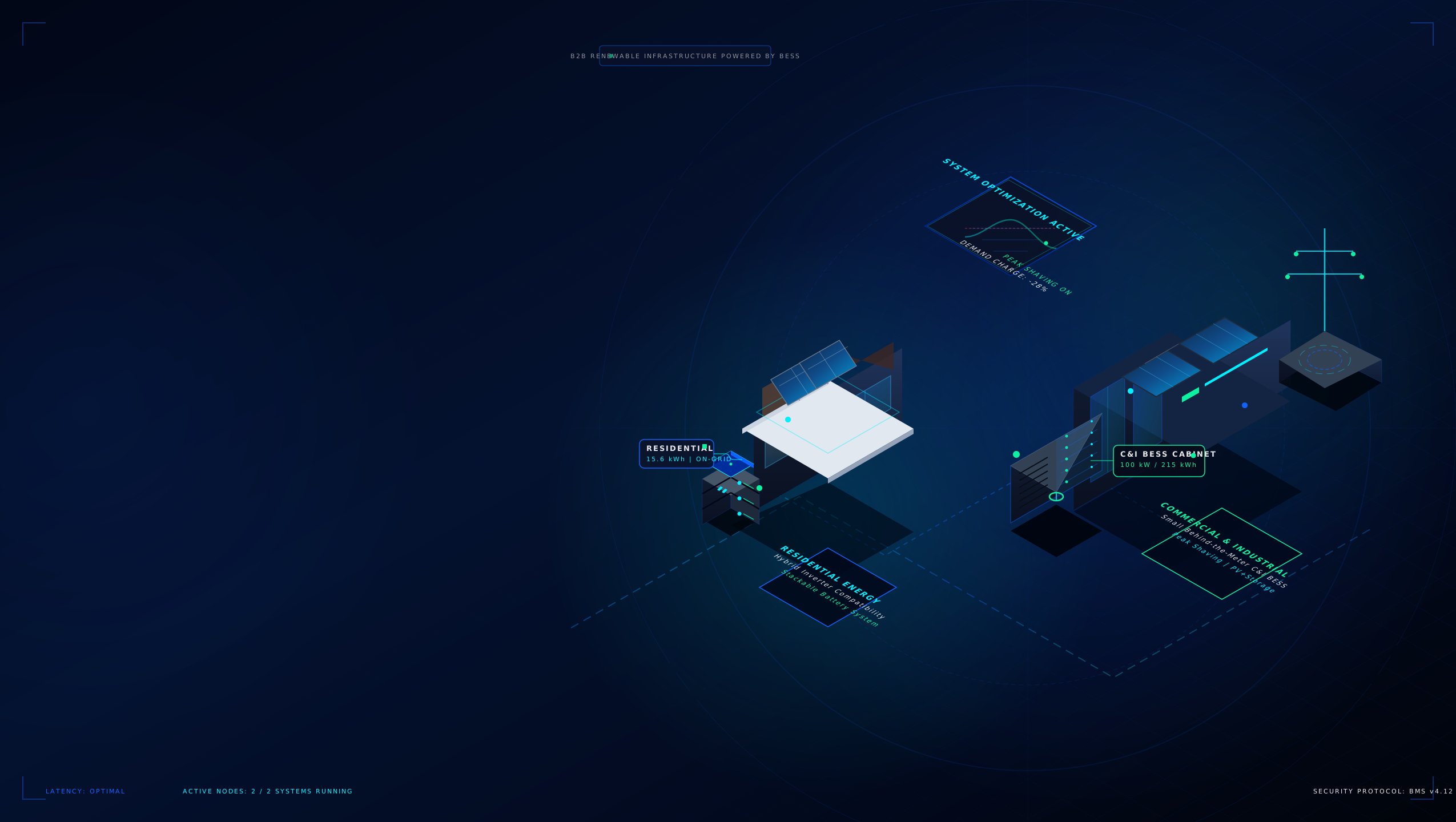
 

ROI Based on Real System Performance

For businesses evaluating RAKOUR systems, ROI reflects actual operating performance rather than projected estimates, since real returns depend on cycle life, usable depth of discharge, and system efficiency sustained over years of daily use.


Calculating the Payback Period

Payback period divides net system cost by annual net benefit. A R1.2 million commercial installation generating R450,000 in yearly savings recovers its capital in under three years, well inside a typical five-year warranty window.


Why Both Metrics Matter Together

ROI shows long-term value while payback period shows how fast capital returns. Together, these two figures give finance teams a defensible case before approving budget for battery storage ROI projects.


Real Cost Breakdown for Commercial Battery Storage in South Africa

What businesses actually pay once cells, hardware, and installation are all accounted for


Beyond the Battery Cells

A realistic commercial battery storage cost breakdown must go beyond the battery cells themselves. Cells typically represent only half of total installed cost, with inverters, battery management systems, cabling, and installation making up the remainder of a properly engineered commercial system.


Flexible Capacity with RAKOUR Rackable Modules

RAKOUR's rackable LiFePO4 modules range from 100Ah to 314Ah, giving businesses flexible capacity planning from small retail sites to large industrial facilities without redesigning the entire electrical layout each time demand grows or operations expand.


Budgeting for Installation and Commissioning

Installation, DB board modifications, and commissioning vary by site complexity, but budgeting an all-inclusive quote rather than equipment-only pricing prevents underestimating total battery storage system cost during financial modelling and procurement planning.


Scaling Cost with High Voltage Systems

High voltage RAKOUR configurations scale modularly from roughly 40kWh to over 225kWh per cabinet, letting businesses match capital outlay precisely to measured load requirements instead of overspending on oversized systems that delay payback.


Revenue and Savings Streams from Commercial Battery Storage

How South African businesses actually earn their return, beyond a single electricity bill saving


Multiple Revenue Streams, Not One Savings Source

South African businesses generate returns from commercial battery storage through several combined revenue streams, not one single savings source, which is why accurate financial modelling requires itemising each contributing factor separately before totalling annual benefit and calculating the final payback figure.


Time-of-Use Tariff Arbitrage

Time-of-use arbitrage charges batteries during cheap off-peak periods and discharges during expensive peak tariffs, directly cutting the highest-priced electricity units from a monthly bill without reducing operational output or production capacity.


Demand Charge and Peak Shaving Savings

Demand charges, often based on a facility's highest instantaneous draw, can represent a significant share of commercial energy bills. RAKOUR systems support peak shaving to flatten demand spikes and lower this recurring monthly charge substantially.


Downtime Avoidance as a Financial Benefit

Beyond tariff savings, avoided downtime during grid disruptions protects revenue-generating operations directly. Combining arbitrage, demand charge reduction, and downtime avoidance produces a stronger battery storage savings case than any single benefit calculated in isolation.


Battery Chemistry and Its Impact on Commercial Storage ROI

Why the cell technology inside a system determines whether payback projections hold up


Why RAKOUR Builds on LFP Chemistry

Battery chemistry directly shapes long-term ROI, which is why RAKOUR builds every commercial system on LFP battery technology rather than the nickel manganese cobalt chemistry common in consumer electronics and portable devices.


Cycle Life and Warranty Backing

LiFePO4 cells offer a safer thermal profile and significantly longer service life, with RAKOUR modules rated for 6,000 to over 11,000 cycles depending on capacity, backed by a standard five-year warranty across the entire commercial product range.


Degradation Compared to NMC Chemistry

Compared to NMC chemistry, lithium battery storage built on LFP degrades more slowly under daily cycling, meaning usable capacity and financial performance remain stable well beyond year five of continuous commercial operation and daily use.


Chemistry as a Core ROI Variable

For businesses cycling batteries daily for peak shaving or load shedding backup, chemistry selection is not a minor specification choice. It is a primary driver of whether projected payback periods hold up against real-world operating conditions over time.


Key Variables That Change the ROI Calculation

The operating factors that move payback projections far more than headline system specifications


Self-Consumption Rate and Depth of Discharge

Two systems with identical battery storage system capacity can produce very different returns because ROI depends on operating variables, not nameplate specifications alone, especially once real-world site conditions and consumption patterns are factored into the final calculation. Self-consumption rate determines how much stored energy is actually used onsite rather than exported or wasted. RAKOUR's 90% usable depth of discharge across LV and HV ranges maximises the energy genuinely available for daily cycling.


Tariff Structure and Round-Trip Efficiency

Round-trip efficiency and tariff structure also move the numbers. A blended tariff without clear peak and off-peak separation hides real arbitrage value, so businesses should model against their actual time-of-use rate schedule, not an average figure.


Long-Term Capacity Degradation

Annual degradation matters over a ten-year horizon. RAKOUR modules retain stable capacity across 6,000 to 11,000-plus rated cycles, keeping a projected battery energy storage return closer to actual measured performance year after year.


Step-by-Step ROI and Payback Calculation Methodology

A repeatable process for modelling returns before committing capital to any system


Start With a Proper Energy Audit

Calculating ROI for a battery energy storage system starts with a proper energy audit, capturing peak demand, load profile, and critical circuits before any hardware is specified or quoted for a specific commercial site.


Quantify Combined Annual Benefit

Next, quantify annual benefit by summing energy arbitrage savings, demand charge reduction, and downtime avoidance into one combined yearly figure, rather than relying on a single savings source considered in isolation.


Validate Assumptions With Real Monitoring Data

RAKOUR systems support CAN, RS485, and WiFi communication, allowing facility managers to log real consumption and discharge data after installation, validating original assumptions against measured performance across the entire first operating year of use.


Calculate Payback Across a Ten-Year Window

Finally, divide total installed cost by annual net benefit for simple payback, then extend the model across a ten-year window to capture cumulative energy storage system return once tariff escalation and battery degradation are properly factored in.


South African Incentives and Regulatory Factors

Tax allowances and tariff trends that materially improve calculated returns


The Section 12B Tax Allowance

Government and tax policy materially change the payback math for investment in renewable energy storage projects, so any ROI model built without them understates the true return available to a South African commercial business. South Africa's Section 12B allowance permits qualifying businesses to write off a large share of renewable energy asset cost in the first year, improving cash flow and shortening effective payback well below the raw equipment figure.


Rising Tariffs and Early Adoption Value

Rising municipal and Eskom tariffs, often escalating year over year, compound the value of every kWh a RAKOUR battery storage system shifts away from grid supply, making early adoption financially advantageous over waiting for lower prices later.


Confirming Current Regulatory Details

Businesses should confirm current allowance thresholds and municipal net metering rules with a qualified tax advisor, since regulatory details shift and directly affect final calculated returns each financial year.


Common Mistakes and When Storage May Not Pay Off

An honest look at where ROI modelling goes wrong, and when the investment doesn't make sense


When Low Energy Spend Doesn't Justify the Investment

Not every business achieves the returns promised in generic marketing material, and honest ROI modelling for battery storage systems must account for scenarios where the investment does not make immediate financial sense for that particular site. Very low monthly electricity spend rarely generates enough arbitrage or demand savings to justify capital outlay, regardless of how efficient the underlying LiFePO4 technology is rated to perform under normal daily operating conditions.


The Oversizing Trap

Oversizing capacity beyond actual peak load is a common mistake. RAKOUR's modular rackable and high voltage energy storage systems allow precise sizing to measured demand, avoiding the extended payback that comes with unused capacity sitting idle.


Other Assumptions That Distort the Numbers

Short-term leases, incomplete load audits, and ignoring degradation over a ten-year horizon also distort projected numbers, so realistic assumptions matter more than optimistic supplier estimates when protecting actual capital committed to the project.


Frequently Asked Questions About Commercial Battery Storage ROI

Answers to common questions about calculating commercial battery storage ROI in South Africa.

What is a good payback period for a battery energy storage system?

Most commercial systems in South Africa achieve payback between three and five years, depending on tariff structure, self-consumption rate, and how effectively demand charges are reduced onsite. 

How does depth of discharge affect battery storage ROI?

Higher usable depth of discharge means more stored energy is available per cycle. RAKOUR's 90% DOD across LV and HV ranges improves daily savings and shortens the overall payback timeline.

Does LFP battery chemistry improve long-term returns?

Yes. LiFePO4 cells degrade more slowly than NMC alternatives, so RAKOUR systems rated for 6,000 to 11,000-plus cycles maintain stable capacity and predictable returns well beyond year five. 

Can Section 12B tax incentives shorten my payback period?

Yes. Section 12B allows qualifying businesses to write off a large share of renewable energy asset cost in year one, improving cash flow and reducing the effective payback period significantly.

Is commercial battery storage worth it with low electricity usage?

Not always. If monthly electricity spend is low, arbitrage and demand savings may not justify capital cost. A proper energy audit determines whether the investment makes financial sense.

Get Your Commercial Battery Storage ROI Proposal

Get Your Commercial Battery Storage ROI Proposal

Share your site details and get a data-backed ROI proposal from RAKOUR's engineering team.