
Rakour
Menu
Home Battery Backup Systems for Whole-House Power Protection

Residential Energy Storage Solutions

Home Battery Backup Systems for Whole-House Power Protection

From 5.12 kWh to 240 kWh+, Rakour's modular LiFePO4 battery systems deliver silent, clean backup power — with or without solar.

Why Whole House Battery Backup Is No Longer Optional

Power outages are more frequent and longer than ever. For modern homes, a reliable home battery backup isn't a luxury — it's essential infrastructure.

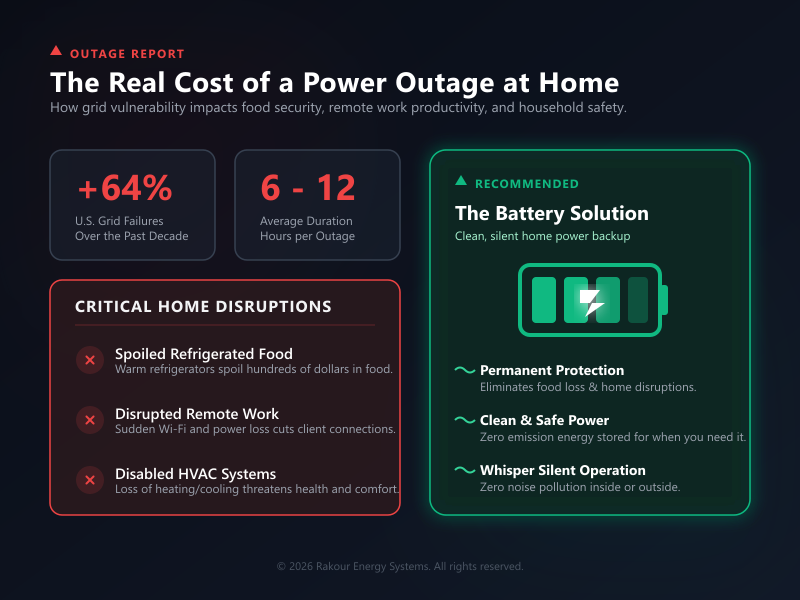
Infographic illustrating the real cost of a home power outage, showing warnings for food spoilage, remote work disruption, and disabled HVAC systems, alongside a clean and silent Rakour battery backup solution.

The Real Cost of a Power Outage at Home

A single outage spoils refrigerated food, disrupts remote work, and disables HVAC — often lasting 6 to 12 hours. U.S. grid failures increased 64% over the past decade. Fuel generators are noisy, emit fumes, and demand ongoing maintenance. A clean, silent battery system permanently eliminates all of those problems.
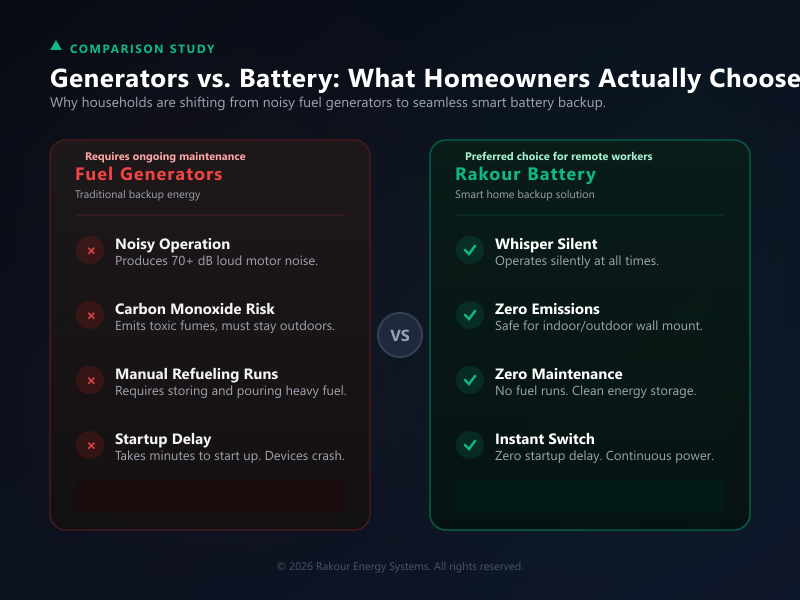
Side-by-side comparison of a traditional fuel generator vs. a Rakour home battery backup, highlighting battery advantages like zero startup delay, zero carbon monoxide risk, and silent operation.

Generators vs. Battery: What Homeowners Actually Choose

Unlike generators, a home battery backup switches to stored power instantly — zero startup delay, no fuel runs, no carbon monoxide risk. Rakour systems operate silently at all times, making them the preferred power outage battery backup solution for families, remote workers, and health-sensitive households alike.

How a Battery Energy Storage System Powers Your Home

Understanding how energy flows through your battery system helps you choose the right capacity, avoid surprises, and extract full value from your installation.

From Grid to Battery to Home: The Energy Flow

A battery energy storage system stores electricity from the grid or solar panels during normal operation. When an outage occurs, the BMS detects the interruption and triggers automatic switchover within milliseconds. Rakour units communicate via CAN and RS485, ensuring seamless, real-time coordination with your connected inverter.

What Your Battery Backup System Can Actually Run

A battery backup system at 10.2 kWh powers refrigeration, lighting, routers, and fans for 12 to 24 hours continuously. At 16 kWh, it supports air conditioning and high-demand circuits. Rakour's built-in touch display shows real-time charge state, giving you complete visibility over available runtime at any moment.

LiFePO4 Battery Life and Safety: The Chemistry Behind Rakour

Rakour exclusively uses LiFePO4 cells — the safest, longest-lasting chemistry available for residential energy storage, with zero thermal runaway risk under normal operating conditions.

LiFePO4 Battery Life: 6,000 to 11,000 Cycles

Rakour's LiFePO4 cells achieve ≥6,000 cycles across the 100Ah and 200Ah models, rising to ≥11,000 cycles on the 314Ah series — the equivalent of 15+ years of daily cycling. Unlike NMC chemistry, LiFePO4 remains thermally stable up to 60 °C, eliminating fire risk in any residential installation environment.

Battery Management System: Active Protection at Every Cell

Each Rakour unit integrates a dual-layer battery management system: a master BMS inside the BCU and a dedicated slave BMS per module. It continuously monitors cell voltage, current, and temperature — triggering automatic protection against overcharge, over-discharge, short circuit, and thermal extremes before damage can ever occur.

Rakour Residential Energy Storage: The Complete Product Range

Rakour offers a unified LiFePO4 platform spanning 5.12 kWh to 225 kWh across wall-mount, rack, and floor-standing form factors — built for every residential application.

Rakour LV Series 51.2V low-voltage residential battery storage system, ranging from 5.12 kWh to 16 kWh with a 314Ah unit for standard homes.

LV Series: 5.12 kWh to 16 kWh for Standard Homes

The LV series operates at 51.2 V, ranging from 5.12 kWh (100Ah) to 16 kWh (314Ah) per unit. All LV models support up to 15 parallel connections, scaling residential energy storage capacity to 240 kWh. The 314Ah unit delivers ≥11,000 cycle life and a 5+5 year warranty for long-term confidence.

Explore Low Voltage Products
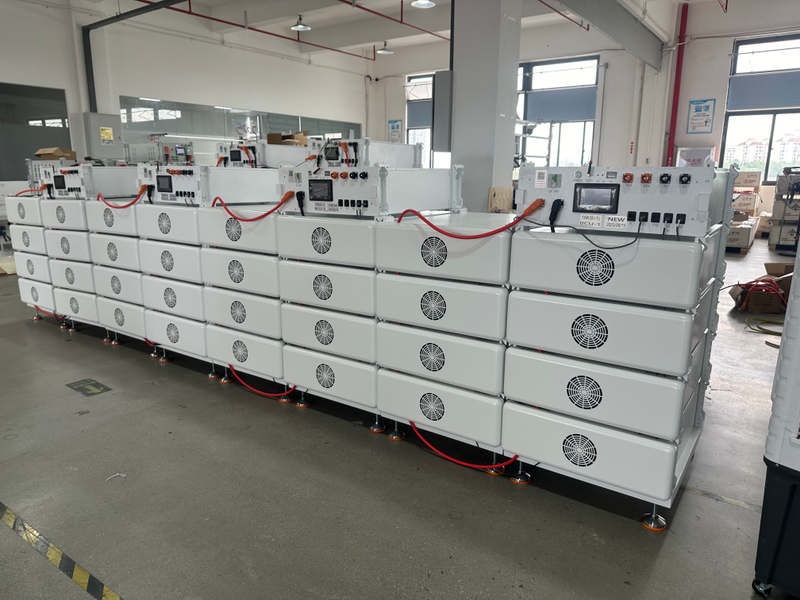
Rakour HV Series high-voltage stackable home battery backup system, showing battery modules stacked in a cabinet scalable from 40 to 225 kWh.

HV Series: 15 kWh Home Battery Backup and Beyond

The 15 kWh home battery backup HV series stacks 51.2 V modules in series, reaching 40 to 225 kWh per cabinet set at 232 to 979 V. Supporting four parallel cabinet sets, HV systems handle larger homes, EV charging demand, and high-capacity solar-plus-storage installations without compromise.

Explore High Voltage Products

Learn More Residential Solutions

Protect your home from grid blackouts and rising electricity rates. RAKOUR offers certified, modular battery setups designed for reliable backup and immediate savings. Speak with our team to configure the ideal system for your home today.

Explore More

Battery Expansion Module: Scale Your Storage as Needs Grow

Rakour's modular architecture means you never over-invest at the start. Add capacity when your household energy needs increase — no system replacement required.

Start Small, Expand on Your Schedule

Every Rakour LV unit supports up to 15 parallel connections via a straightforward cable configuration. Add a battery expansion module only when usage increases — whether from a new EV, additional appliances, or a solar installation. The voltage difference between parallel units must remain within 1 V for safe, balanced operation.

How Parallel Expansion Actually Works

Parallel units connect through staggered positive and negative terminals to equalize discharge across all modules. Communication between units runs on RS485, with the host battery set to address 1000 and subordinate units addressed sequentially. No additional inverter is needed when expanding within the 15-unit parallel limit of a single system.

Solar Energy Storage Integration: With or Without Solar Panels

Rakour batteries charge from the grid, solar panels, or both — giving homeowners full flexibility regardless of whether solar is installed today or planned for the future.

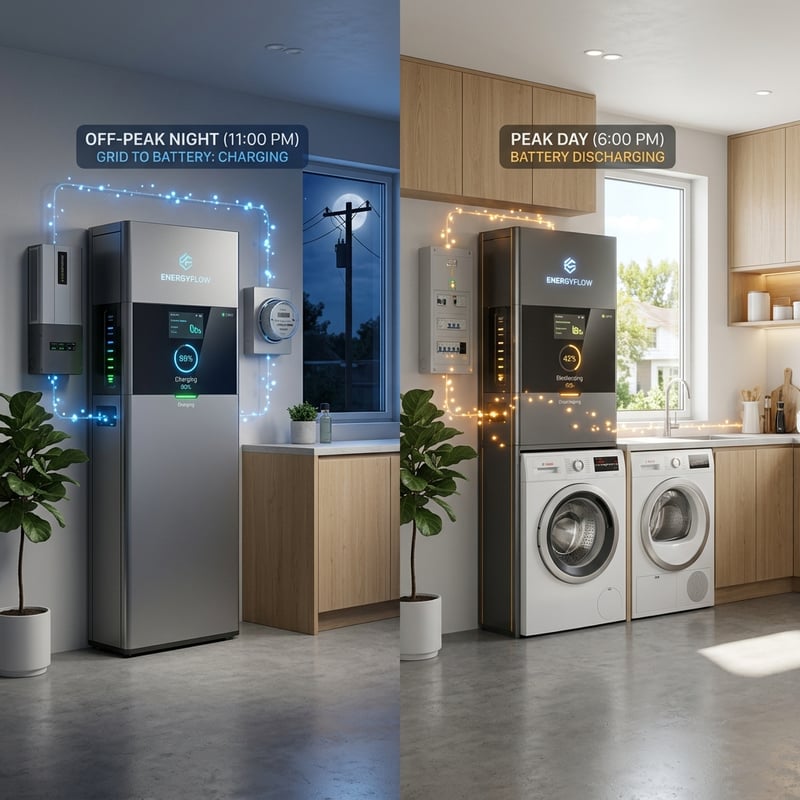
Rakour home battery backup cabinet operating in grid-only mode, showing smart time-of-use scheduling with off-peak charging and peak-rate discharge.

Home Battery Backup Without Solar: Grid-Only Operation

A home battery backup without solar charges entirely from grid power during off-peak hours, then discharges during peak-rate periods or outages. This time-of-use strategy directly reduces your electricity bill. Rakour's BMS communicates with your inverter to automate charge and discharge scheduling without any manual input required.

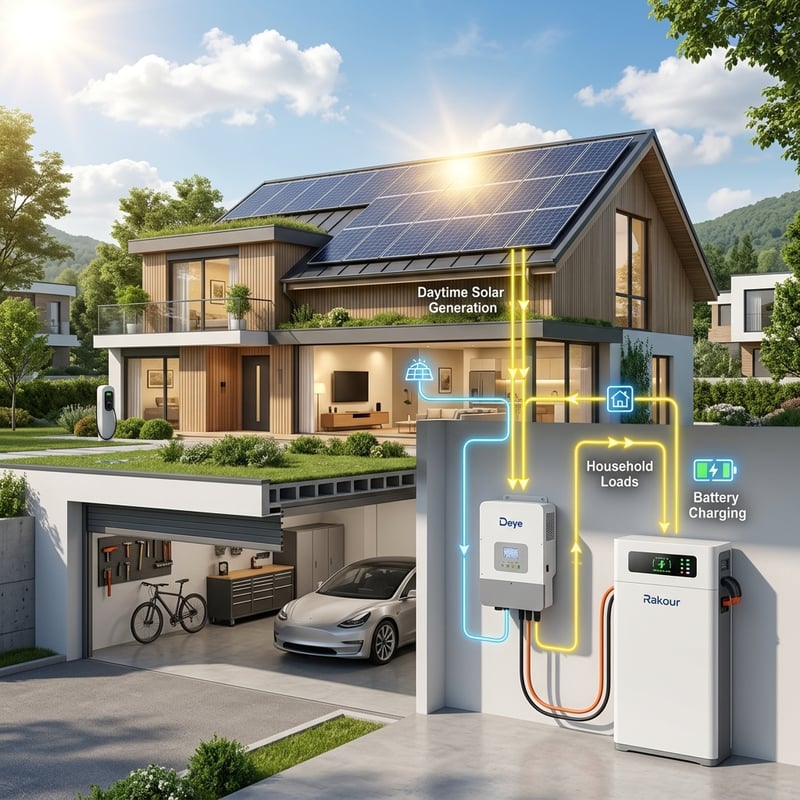
Rakour home battery storage connected to a Deye hybrid inverter, storing surplus solar energy from roof panels to maximize self-consumption.

Solar Energy Storage: Maximizing Self-Consumption

When paired with solar panels, Rakour units store surplus daytime generation for evening and overnight use, maximizing solar energy storage self-consumption. Verified compatible with Deye SUN-29.9K to 80K inverters via CAN communication. The system automatically prioritizes solar input, reducing grid dependency and lowering long-term energy costs.

How to Choose the Right Rakour System: A Practical Sizing Guide

Four steps map your household energy profile to the right Rakour model — preventing undersizing and eliminating unnecessary spend.

Step 1 & 2 — Calculate Load and Required Runtime

List appliances needed during an outage with their wattage. A home running a refrigerator (150 W), lights (200 W), router (20 W), and fans (100 W) draws 470 W continuously. Multiplied by runtime: 10 hours needs 4.7 kWh usable. At 90% DoD, the Rakour 100Ah (5.12 kWh) covers this precisely.

Step 3 & 4 — Select Voltage Platform and Inverter Compatibility

Choose LV series (51.2 V) for standard inverters, or HV series (232–979 V) when demand exceeds 16 kWh per unit. Confirm the protocol — Rakour supports CAN, RS485, and RS232. Correct battery sizing to your inverter's charge current rating eliminates capacity shortfall and unnecessary overspend.

Certifications, Safety Standards, and Rakour's Warranty Commitment

Every Rakour battery ships with independently verified certifications and clearly defined warranty terms. These are documented, testable performance commitments — not marketing claims.

International Certifications Across the Full Product Range

All Rakour residential batteries carry CE marking for European market compliance. The 100Ah and 200Ah LV models additionally hold IEC 62619 certification — the international safety standard specifically for stationary energy storage. All units also pass UN 38.3 transport testing and RoHS compliance, confirming freedom from restricted hazardous substances throughout.

Warranty Terms and What They Actually Cover

Rakour provides a 5-year product warranty across all residential models, with select units offering 5+5 year extended coverage. Cycle life guarantees — ≥6,000 cycles for 100Ah and 200Ah, ≥11,000 for the 314Ah — are specified at 25 °C, 0.5C charge/discharge rate, and 90% DoD. These reflect real operating conditions, not laboratory best-case scenarios.

Frequently Asked Questions About Home Battery Backup

Quick answers to the questions homeowners ask most before choosing a battery backup system.

How long can a home battery backup power my house during an outage?

A 10.2 kWh Rakour unit powers fridge, lights, and router for 12–24 hours. At 16 kWh, AC is supported. Up to 15 units can be paralleled to extend runtime without changing the inverter.

Can a residential energy storage system work without solar panels?

Yes. Rakour batteries charge from the grid off-peak, then discharge during outages or peak rates. Solar can be added anytime — the system connects to Deye inverters via CAN or RS485.

What makes LiFePO4 battery life longer than other chemistries?

LiFePO4 is thermally stable to 60 °C — no runaway risk. Rakour's 314Ah achieves ≥11,000 cycles at 90% DoD, equivalent to 15+ years daily. Built-in BMS prevents overcharge and degradation.

How does the battery expansion module work when I need more capacity?

Add Rakour units in parallel — up to 15 — using supplied cables. Keep the voltage gap within 1 V before connecting. RS485 links all batteries, host set to address 1000. No new inverter required.

What international certifications do Rakour battery backup systems carry?

All Rakour models hold CE, UN 38.3, RoHS, and MSDS. Select LV units also carry IEC 62619 for stationary storage. All are independently verified for electrical safety, transport, and substances.

Ready to Secure Your Home's Power Supply?

Ready to Secure Your Home's Power Supply?

Tell us your load requirements and Rakour will recommend the right capacity and model for your home.