
Rakour
Menu

LiFePO4 Battery Systems | Residential & Commercial Storage | Modular & Scalable Design | Globally Certified

Comprehensive Energy Storage Solutions for Residential & Commercial Applications

RAKOUR delivers modular LiFePO4 battery energy storage systems engineered for EPC installers, distributors, and system integrators worldwide. From 5kWh residential backup to MWh-scale commercial deployments, our certified solutions are built to scale with your projects.

 
Comprehensive Energy Storage Solutions for Residential & Commercial Applications

What Is a Battery Energy Storage System and How Does It Work?

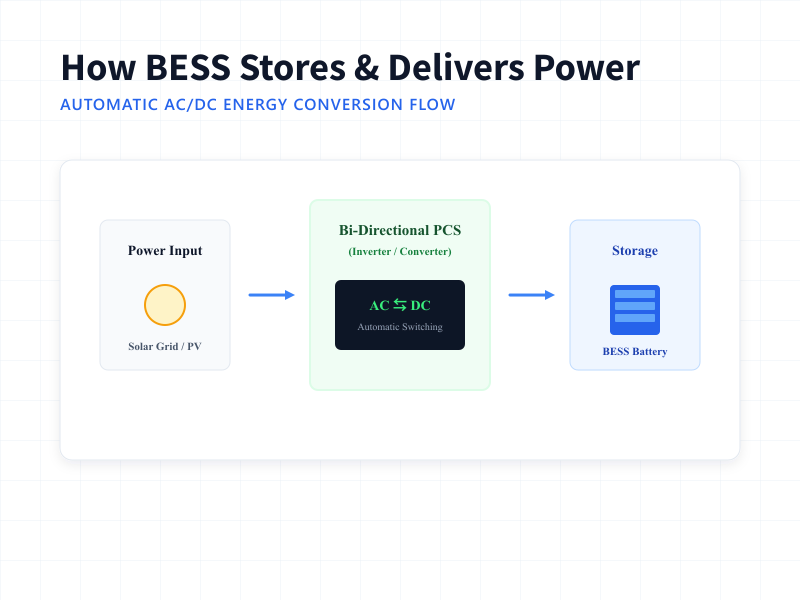
A battery energy storage system (BESS) stores electrical energy in rechargeable battery modules and releases it on demand. For EPC installers, distributors, and system integrators, understanding the core architecture of a BESS is essential to designing reliable projects — whether for residential backup or commercial load management.


How Solar Energy Storage Captures and Delivers Power

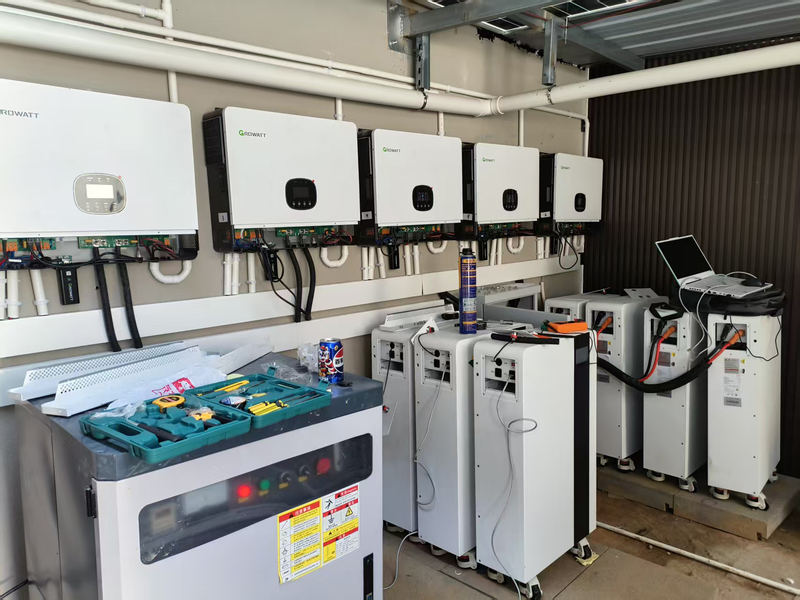
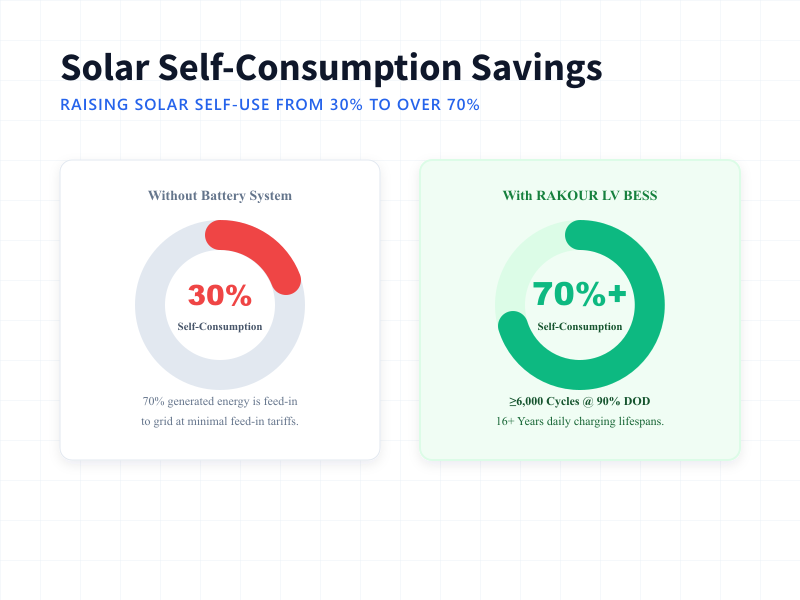
In a typical solar-plus-storage setup, PV panels generate DC electricity during daylight hours. A hybrid inverter directs excess solar energy into the battery modules for storage. When demand rises or the grid goes down, the system discharges stored energy back through the inverter to power your loads. RAKOUR systems support both on-grid and off-grid configurations, giving installers the flexibility to design solutions that match each project's specific requirements.


Energy Storage Solutions for Every Application Scenario

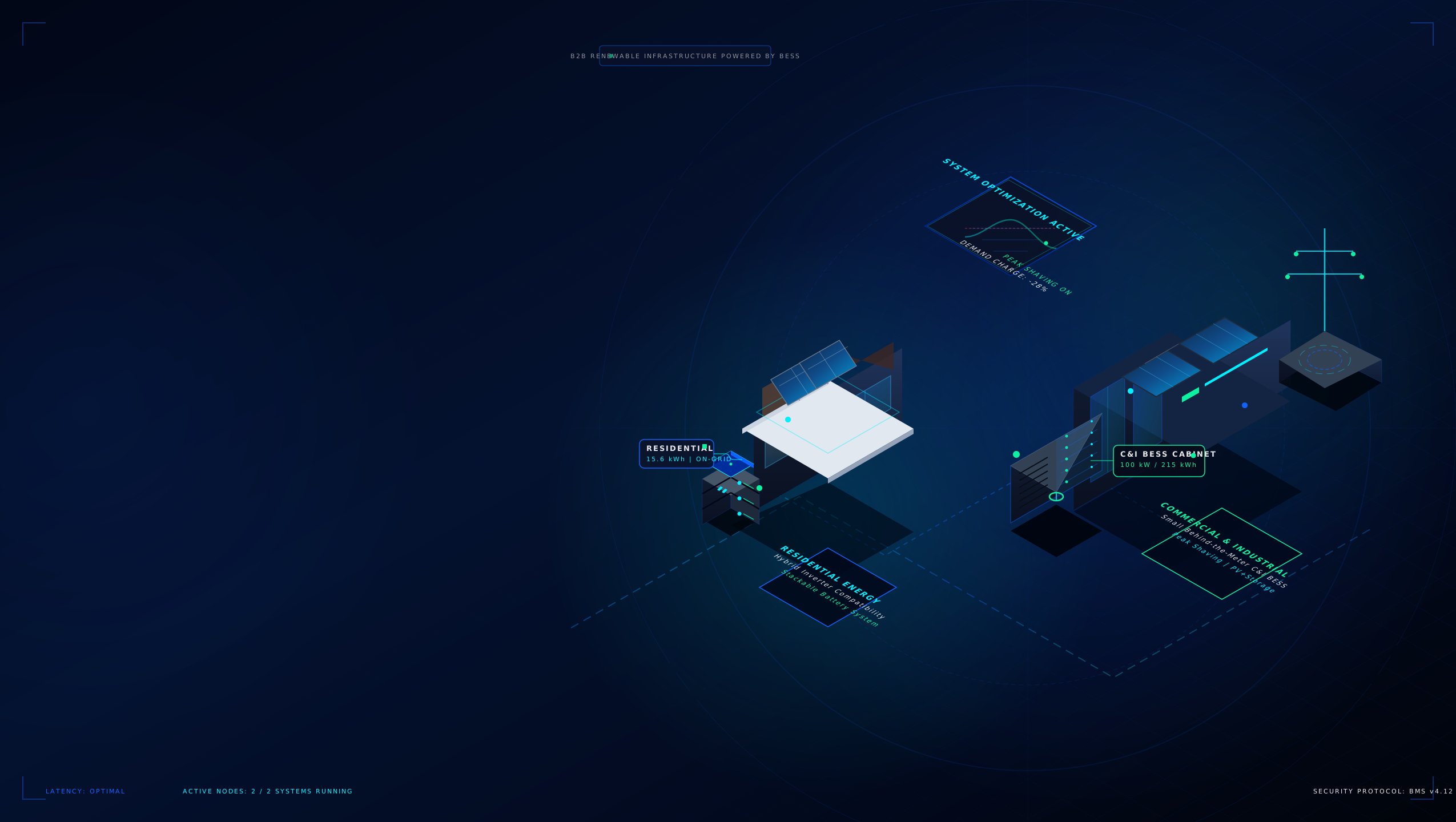
RAKOUR designs energy storage solutions to serve the full spectrum of project types — from a single-family home to a multi-site industrial facility. Each scenario demands different capacity, voltage, and configuration, and our product line is built to match.


Residential Energy Storage and Whole Home Battery Backup

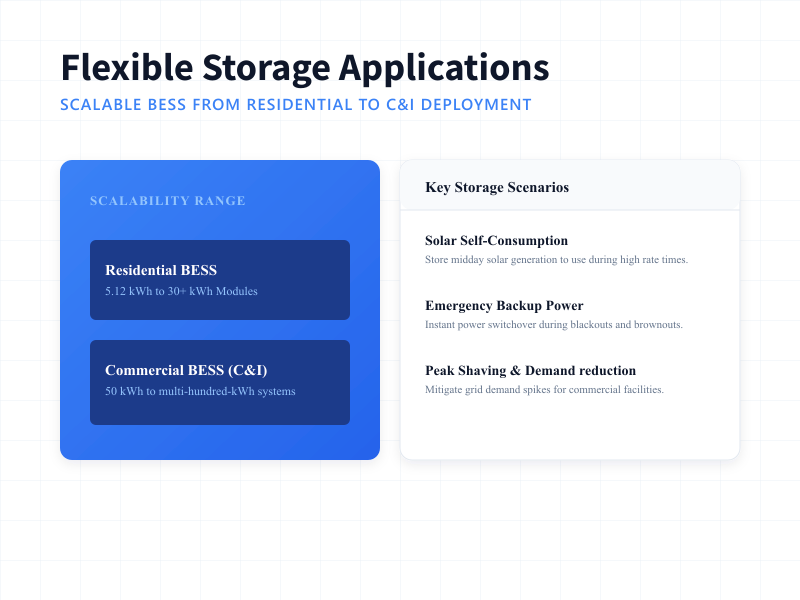
Homeowners need reliable power when the grid fails. RAKOUR's LV rackable and wall-mounted systems (5.12–16.07kWh per unit) provide whole home battery backup with up to 15 units in parallel, scaling to over 240kWh. Whether paired with solar or used purely for backup, these systems keep critical loads — lighting, refrigeration, communications — running through outages.
 

Commercial and Industrial Battery Storage for Peak Shaving and Microgrids

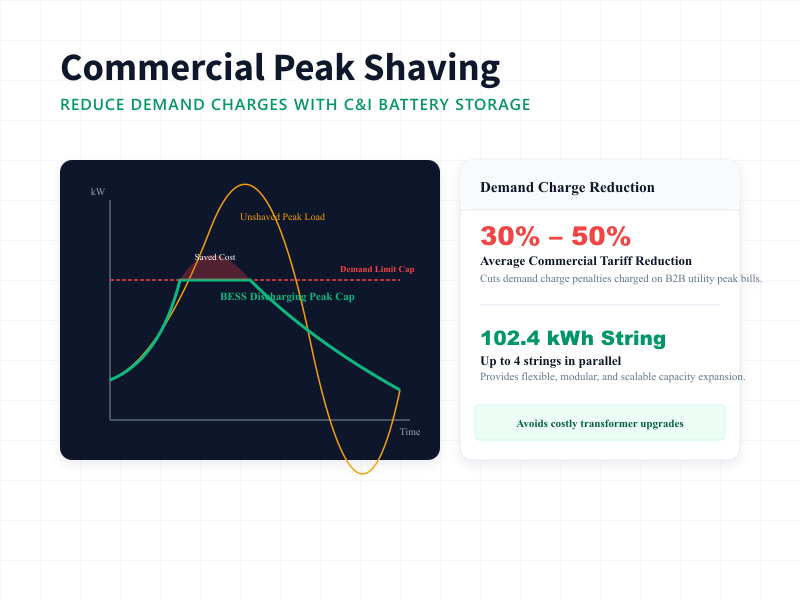
For factories, office buildings, and supermarkets, electricity costs peak during high-demand hours. RAKOUR's HV series supports 8–17 modules in series (up to 243.71kWh per rack at 870.4V), enabling peak shaving strategies that reduce demand charges. Multiple racks can operate in parallel to build microgrid-scale systems for industrial parks and commercial campuses.
 

Why LiFePO4 Battery Technology Leads Modern Energy Storage

Choosing the right cell chemistry determines the safety, lifespan, and total cost of ownership of any energy storage project. RAKOUR exclusively uses LiFePO4 (lithium iron phosphate) cells across its entire product line — and there are clear technical reasons why


LiFePO4 vs Lithium Ion — Safety, Cost, and Performance Compared

Not all lithium batteries are equal. Here's how LiFePO4 stacks up against NMC (nickel manganese cobalt), the other common lithium ion chemistry used in storage:

How Lithium Iron Phosphate Batteries Deliver Superior Cycle Life

RAKOUR's LiFePO4 cells achieve 6,000 to 11,000 cycles depending on capacity — the 314Ah modules reach ≥11,000 cycles, while the 280Ah HV modules deliver ≥8,000 cycles. At one full cycle per day, that translates to over 16 years of daily operation before reaching 80% retained capacity. Combined with low self-discharge, no memory effect, and wide temperature tolerance, this chemistry minimizes replacement costs and maximizes return on investment for installers and their end customers alike.


LiFePO4 Battery Life, Cycle Performance, and Warranty Explained

For EPC installers and distributors, the true value of a battery is not its upfront price — it's how many years of reliable service it delivers. RAKOUR provides transparent performance data so you can project ROI with confidence.

Understanding Depth of Discharge and Its Impact on Battery Longevity

Depth of discharge (DOD) defines how much of a battery's total energy is actually used per cycle. RAKOUR systems are rated at 90% DOD — meaning a 16.07kWh module (314Ah) delivers 14.47kWh of usable energy every cycle. Operating at a moderate DOD rather than 100% significantly extends total cycle life and keeps capacity degradation slow over the system's lifetime.


Warranty Coverage — What to Expect from a Quality Energy Storage Provider

All RAKOUR battery systems carry a standard 5-year warranty, covering manufacturing defects and capacity performance. For distributors structuring after-sales programs or EPC contractors calculating project lifecycle costs, this warranty provides a reliable baseline for long-term planning.


High Voltage vs Low Voltage Battery Systems — Choosing the Right Architecture

Selecting between a high voltage and low voltage battery architecture is one of the first decisions in any energy storage project. The right choice depends on system size, inverter type, and installation scenario. RAKOUR offers both HV and LV product lines so integrators can match the architecture to each project.

When to Choose a High Voltage Battery Energy Storage System

RAKOUR's HV series connects 8–17 battery modules in series through a BCU, reaching system voltages from 358V to 870V (280Ah) or 185V to 980V (200Ah). Higher voltage means lower current at the same power level — reducing cable costs, minimizing transmission losses, and enabling compatibility with high-power inverters like the Deye 29.9K–80K series. This architecture is ideal for large residential villas, commercial buildings, and industrial facilities where system capacity typically exceeds 100kWh.


48V LiFePO4 Battery Systems for Residential and Small Commercial Use

The LV series operates at 51.2V nominal (46.4–57.6V range) and scales through parallel connections — up to 15 units for over 240kWh total capacity. With a simpler wiring topology and no BCU required, LV systems are faster to install and well suited for standard household backup, small rooftop solar setups, and light commercial applications.


Matching Battery Inverter Compatibility Across System Types

Both HV and LV systems communicate with inverters via CAN and RS485 protocols. RAKOUR's touchscreen interface allows installers to switch communication protocols on-site to match different inverter brands — eliminating the need for separate battery SKUs per inverter model.


Modular and Scalable Energy Storage — From 5kWh to MWh

Energy demand changes over time. A homeowner may add an EV charger; a factory may expand production shifts. RAKOUR's modular architecture lets you start with what the project needs today and scale capacity as demand grows — without replacing the existing system.


How Parallel-Connected Battery Modules Expand System Capacity

RAKOUR LV systems support up to 15 units in parallel, scaling from a single 5.12kWh module to over 240kWh. For parallel installation, the voltage difference between batteries must be within 1V, and we recommend using modules manufactured within the same 12-month period to ensure balanced cycling. Staggered positive and negative terminal connections to the inverter further optimize capacity balance across the battery bank.

For commercial and industrial projects requiring even larger capacity, the HV series supports up to 17 modules in series per rack (243.71kWh) with up to 4 racks in parallel — reaching nearly 1MWh from a single battery cluster.

Flexible Configurations with the Battery Management System

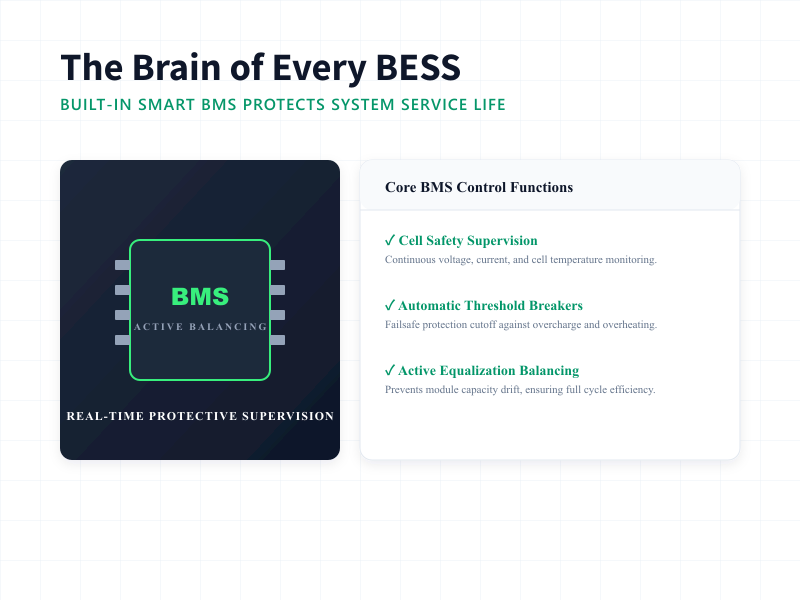
The built-in battery management system coordinates all modules regardless of topology. In parallel LV setups, each unit is assigned a unique BMS address via the dip switch (host = 1, slave = 2–15), and modules communicate internally over RS485. The BMS automatically balances charge states across all connected units, so installers don't need to manually calibrate individual batteries after commissioning.

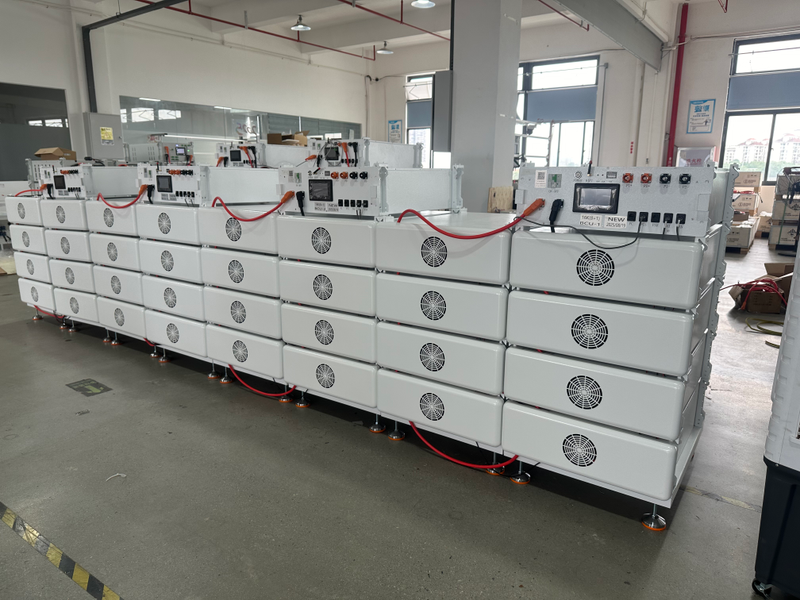
RAKOUR offers three form factors — rackable, wall-mounted, and ground-standing with wheels — giving system designers the flexibility to match each site's space constraints and installation requirements.

Certifications and Compliance for Solar Battery Storage Systems

Before placing an order, distributors and EPC contractors must verify that every battery in their supply chain carries the certifications required by their target market. RAKOUR maintains a complete certification portfolio across its full product range, so you can import, install, and sell with confidence.

Shipping and Import Compliance for Lithium Iron Phosphate Batteries

Every RAKOUR lithium iron phosphate battery ships with a valid By-Sea Transport Certificate (Identification and Classification Report for Transport of Goods), ensuring compliance with IMDG Code for international ocean freight. Combined with the UN38.3 test report and MSDS, these documents form the complete documentation set that freight forwarders and customs authorities require — eliminating delays at port for distributors managing cross-border logistics.


How to Choose a Reliable Energy Storage Solutions Provider

A battery is only as good as the company behind it. For distributors, EPC installers, and system integrators, choosing the right energy storage solutions provider means evaluating not just the product specs, but the manufacturing quality, technical support depth, and long-term partnership reliability.

Ready to Build Your Next Energy Storage Project?

Whether you need a single sample for evaluation or a full container for distribution, RAKOUR provides the LiFePO4 battery systems, technical support, and certifications to get your project moving. Talk to our team today.