
Rakour
Menu
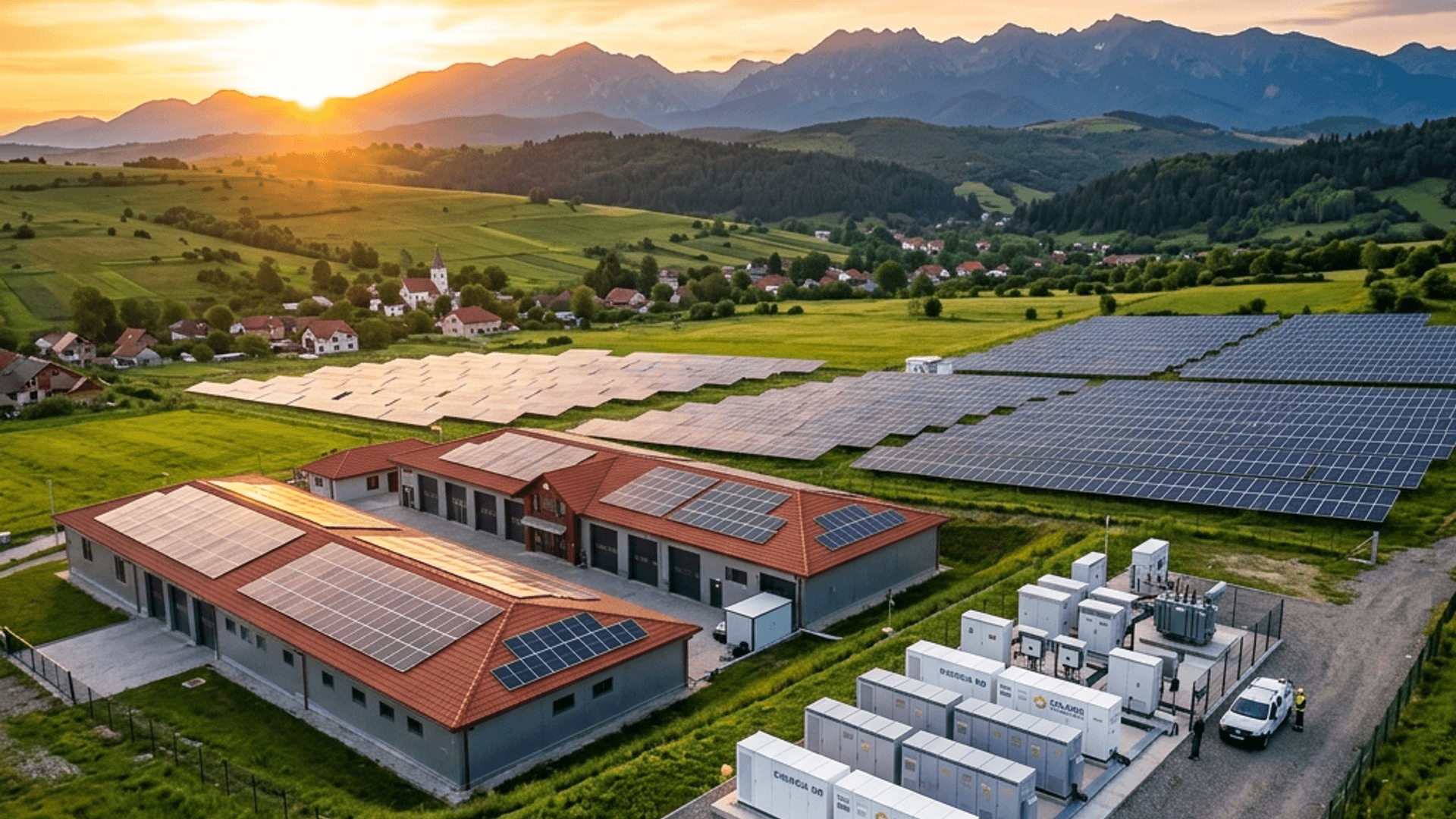
Commercial facility with solar panels on red tiled roofs and battery storage cabinets in Romania at sunrise.

Romania Energy Storage Policy

Romania Battery Storage Subsidy Guide: Modernization Fund & CISAF Explained

A practical overview of Romania's EUR 150 million battery storage subsidy scheme, covering Modernization Fund financing, CISAF state aid rules, eligibility, and funding mechanics.

Romania Battery Storage Subsidy: Origins Under the CISAF Framework

Understanding how EU state aid rules created Romania's first storage-specific grant program


What the CISAF Framework Establishes

The European Commission adopted the Clean Industrial Deal State Aid Framework on 25 June 2025, giving states faster routes to support clean tech. Romania's Romania Battery Storage Subsidy is the first scheme approved under it, covering storage above 2,174 MWh.
 

Modernization Fund as the Financing Source

The scheme's EUR 150 million budget comes from the EU Modernisation Fund, built to decarbonise electricity systems in lower-income states. This channel differs from national recovery plan funds, giving Romania a dedicated source for storage investment.


Why Equipment Buyers Should Track This Policy

Understanding the Clean Industrial Deal State Aid Framework Romania rules clarifies eligible investment types. RAKOUR helps developers navigate these rules, supplying rackable lithium battery systems engineered to match documentation standards required in state aid applications.

Funding Scale and Allocation Rules of the Storage Grant

Breaking down budget size, per-project caps, and cost coverage under the scheme


Total Budget and Capacity Targets

The Modernization Fund battery storage Romania program allocates EUR 150 million to support at least 2,174 MWh of new standalone storage capacity, separate from earlier co-located and NRRP-funded rounds targeting facilities not paired with existing generation assets.


Per-MWh and Per-Project Support Caps

Support is capped near EUR 69,000 per MWh installed, with project funding limited to EUR 15 million. This rewards efficient design, since a grant award depends on the requested aid value expressed in EUR per MWh during bidding.


Cost Coverage and Grant Eligibility Share

Eligible costs can be covered up to 100%, generous compared with typical EU state aid battery storage Romania schemes. RAKOUR's rackable HV and LV platforms help applicants model accurate EUR/MWh bids that affect ranking outcomes.

Eligibility Criteria for Romania's Battery Storage Grant

Who can apply, what registration is required, and which project types qualify


Qualifying Applicant Types

The Romania BESS subsidy scheme is open to microenterprises, small and medium-sized enterprises, large companies including newly established entities, and autonomous public authorities. This broad list allows both first-time developers and established energy companies to compete for the same funding pool.


Legal Establishment and Registration Requirements

Applicants must be legally established in Romania or another EU member state and registered with the National Trade Register Office before the first payment date. This ensures only compliant, verifiable entities receive disbursed grant capital under the scheme.


Project Type Restrictions

Only new, standalone electricity storage installations qualify, distinct from co-located BESS paired with wind, solar, or hydro assets. RAKOUR supports applicants configuring Romania standalone battery storage funding-eligible systems, from single rack units to multi-container arrays.

Application Process and Competitive Bidding Timeline

How Romania ranks proposals and when funds must reach completed projects


Competitive Tendering and Ranking Criteria

The Romania electricity storage scheme uses a single ranking criterion: requested state aid value expressed in EUR per MWh. Lower bids per unit of capacity rank higher, meaning cost-efficient design and accurate technical specifications directly influence an applicant's competitive position.


Submission Platform and Documentation

Applications are submitted through Romania's designated electronic platform, requiring technical files covering installed capacity, connection point, and detailed cost breakdowns. Well-documented specifications support faster review, which is why RAKOUR provides complete datasheets and certification records for applicants.


Grant Disbursement Deadline

All awarded aid must be granted before 31 December 2030, giving developers a defined multi-year window aligned with the Romania renewable energy storage incentive timeline, encouraging selection of proven, readily available battery technology over unproven, higher-risk systems.

Legal Framework Behind Romania's Storage Subsidy Program

How Romanian electricity law and licensing rules support the grant scheme


Electricity Law Basis for Storage Activities

Romania's Law No. 123/2012, as amended, recognises electricity storage as a licensed activity alongside production, transmission, and supply. This foundation lets ANRE issue storage licences to grant beneficiaries, giving the Romania energy storage grant program a stable footing.


ANRE Licensing Requirements for Grant Recipients

Any facility receiving subsidy funds must hold a valid ANRE storage licence before commissioning. RAKOUR's rackable HV and LV platforms are documented with technical parameters licensing applications typically require, helping developers avoid delays before grid connection.


Compliance With EU State Aid Rules

Beyond national law, the scheme must satisfy Article 107(3)(c) of the EU Treaty and CISAF battery storage Romania provisions. This dual layer means applicants need both domestic licensing paperwork and EU-aligned documentation to stay eligible.

Market Data Behind Romania's Battery Storage Growth

Installed capacity trends and grid statistics shaping subsidy demand


Current Installed Storage Capacity

Romania battery storage capacity growth accelerated through 2025, with close to 600 MW installed by year-end according to ANRE estimates, nearly tripling the dispatchable base and signalling strong developer appetite for further Modernisation Fund subsidy rounds ahead.


Renewable Energy Mix and Storage Need

The European Commission projects renewables will reach 69% of the EU energy mix by 2030, up from 47% in 2024. Romania's variable solar and wind output makes storage essential for absorbing daytime surplus and reducing costly evening imports.


Grid Testing and System Readiness

Transelectrica is evaluating Romania grid-scale battery storage operators' ability to deliver balancing services, a technical hurdle beyond subsidy eligibility. RAKOUR designs battery management systems with real-time monitoring to support the reliability grid operators expect.

Romania's Storage Subsidy Compared With Regional Schemes

How funding size and structure differ across neighbouring EU markets


Romania Versus Bulgaria's Grant Approach

A Romania Bulgaria battery storage subsidy comparison shows Bulgaria's RESTORE programme approved roughly EUR 587 million for 82 standalone projects totalling 9.71 GWh, a larger pool than Romania's scheme, though both markets share grid delivery execution risk.


Romania Versus Greece's Availability Contracts

Greece awarded over 900 MW of standalone BESS availability-style contracts, giving developers steadier revenue certainty than Romania's grant-only model. This EU battery storage subsidy comparison highlights why Romanian projects may still need merchant revenue strategies alongside grants.


What Sets Romania's Scheme Apart

Romania's program uniquely allows up to 100% cost coverage per project, unusually generous within the region. RAKOUR advises developers that this grant depth can help offset a less mature long-term flexibility procurement framework still developing.

Bankability Considerations for Romania's Storage Grant Projects

What developers should weigh beyond the subsidy before financing a project


Grants Do Not Replace Market Design

Legal analysis notes subsidy funding can catalyse early deployment but does not alone create a mature investment framework. Romania storage project bankability still depends on clearer long-term flexibility procurement and transparent balancing-market access for lenders and developers.


Revenue Uncertainty After Grant Disbursement

Once construction funding is secured, operators face merchant-market revenue volatility without guaranteed offtake contracts. RAKOUR helps developers select proven battery chemistries and BMS reliability records that support predictable performance during lender due diligence reviews.


Curtailment and Network Tariff Clarity

Bankable projects need predictable network tariff treatment and clear curtailment rules, both still developing in Romania. Managing Romania BESS investment risk means pairing subsidy funds with rigorously tested equipment, reducing one variable lenders can verify independently.

Romania Battery Storage Subsidy FAQs

Quick, precise answers to the questions applicants often ask about this Modernisation Fund scheme.


What is the Romania Battery Storage Subsidy under the Modernization Fund?

It is a EUR 150 million grant scheme financed by the EU Modernisation Fund, supporting at least 2,174 MWh of new standalone battery storage across Romania through competitive, EUR/MWh-ranked bidding.

Who qualifies for the Romania BESS subsidy scheme?

Microenterprises, SMEs, large companies, newly established entities, and autonomous authorities qualify if legally established in the EU and registered with Romania's National Trade Register Office.

How does CISAF battery storage Romania compliance affect applications?

CISAF compliance confirms the scheme meets EU state aid rules, meaning applicants must satisfy Romanian ANRE licensing rules and EU documentation standards before any grant disbursement.

What is the maximum funding under the Romania electricity storage scheme?

Support is capped near EUR 69,000 per MWh installed, with total project funding limited to EUR 15 million, and eligible costs can be covered up to 100 percent of expenditure incurred.

How does Romania compare in the EU battery storage subsidy comparison?

Romania offers full cost coverage but relies on grants alone, while Greece provides steadier availability contracts and Bulgaria's RESTORE programme allocates a larger overall subsidy pool.

Ready to Plan Your Romania Battery Storage Subsidy Project?

Ready to Plan Your Romania Battery Storage Subsidy Project?

Send RAKOUR your project details for equipment specs and support on your Romania subsidy bid.