
Rakour
Menu
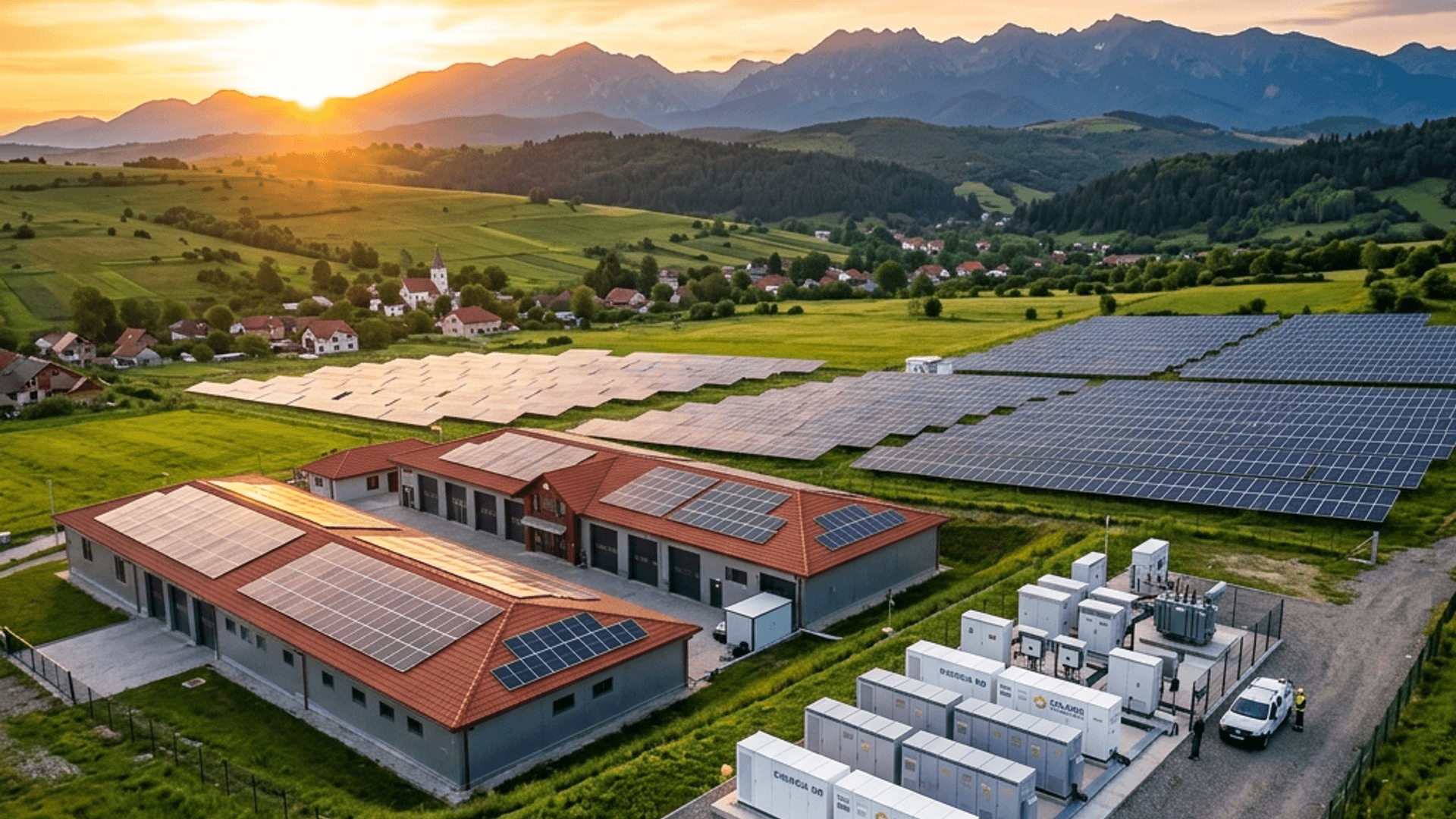
Commercial facility with solar panels on red tiled roofs and battery storage cabinets in Romania at sunrise.

ROMANIA SME ENERGY FUNDING

Romania ElectricUp Program: Battery Storage Guide for SMEs

Learn how Romanian SMEs and HORECA businesses can access non-refundable EU funding for commercial battery energy storage systems under the ElectricUp program.

Understanding the Romania ElectricUp Program for Battery Storage

A government-backed initiative funding renewable energy and storage upgrades for small businesses


Legal Framework Behind the Program

This ElectricUp program battery storage initiative operates under OUG 159/2020, administered by the Ministry of Energy alongside AFM. It establishes clear technical rules governing photovoltaic and storage installations serving eligible SMEs across the country.
 

Funding Cycles and Program Timeline

Since launching in 2020, the program has progressed through multiple funding cycles, with additional rounds expected to continue through 2032. Each new cycle refines eligibility conditions and storage sizing requirements for applicants across all regions.


Role of the EU Modernization Fund

Financing is drawn from the EU Modernization Fund and Romania's national recovery plan, reinforcing the ElectricUp program battery storage component as a lasting policy priority within the country's broader energy transition strategy and industrial goals.

Who Can Apply: Eligibility for SME Battery Storage Funding

Clear qualification rules determine which companies can access ElectricUp grants


Business Types and Sectors Covered

Eligible applicants include microenterprises, small and medium companies, and HORECA operators holding valid CAEN codes. This structure makes battery storage for SMEs Romania accessible across a wide range of industries and regions nationwide.


Financial and Legal Standing Requirements

Applicants must demonstrate no outstanding tax debt, no active insolvency proceedings, and current registration with Romania's National Trade Register Office before any funding contract can be signed and payments released to the business itself.


Property and Installer Requirements

Companies must own, lease, or hold documented usage rights to the installation site, and commit to working with an ANRE-certified installer throughout every battery storage for SMEs Romania project, from initial design through final commissioning and handover.

Technical Requirements for Commercial Battery Storage Systems

Storage capacity and equipment standards every ElectricUp applicant must meet


Minimum Storage-to-PV Capacity Ratio

Every commercial battery storage grant application must include a storage system covering at least 30% of installed PV output, though sizing closer to 50% typically scores higher points during the program's competitive technical evaluation and ranking stage.


Certified Equipment Standards

All batteries must be new, CE-certified, and fully compliant with European safety rules. RAKOUR's LiFePO4 rackable systems, including the 51.2V 314Ah 16kW model, satisfy these standards with a 5-year warranty, IP20 protection, and over 6,000 rated charge cycles.


Monitoring and Communication Compatibility

Approved systems require continuous production and consumption monitoring, plus BMS communication via CAN, RS485, or RS232 protocols, ensuring accurate compliance reporting throughout every commercial battery storage grant implementation period and post-installation audit.

Funding Amount and Co-Financing Structure Explained

How much SMEs can receive and what portion of the investment they must contribute


Maximum Grant Value Per Beneficiary

The program provides non-refundable EU funding battery storage support of up to 150,000 euros per beneficiary, covering as much as 75% of total eligible project costs across all approved equipment categories and related services.


Beneficiary Co-Financing Obligations

The remaining 25% comes from the applicant's own funds, calculated separately for each expense category, including photovoltaic panels, storage equipment such as RAKOUR battery systems, and vehicle charging stations listed in the approved project budget.


Advance Payment Options

Beneficiaries may also request an advance of up to 30% of approved eligible costs under this non-refundable EU funding battery storage scheme, provided a bank or insurance guarantee instrument is submitted alongside the funding application.

How ElectricUp Scores and Ranks Battery Storage Applications

Understanding the evaluation criteria that decide which SME projects get funded


Points Awarded for Storage Capacity

Applications that include a storage system exceeding the minimum 30% ratio earn additional battery storage grant scoring points, rewarding SMEs that plan ahead for higher self-consumption and stronger grid resilience during peak demand periods.


Own Contribution and Mixed-Use Bonuses

Projects where the beneficiary contributes more than the required 25% co-financing, and systems designed for mixed private and public use rather than full grid injection, receive extra scoring points during the technical evaluation process and final ranking.


Avoiding Common Scoring Mistakes

Undersizing storage at exactly the minimum threshold, or omitting production monitoring equipment, often lowers final battery storage grant scoring results. RAKOUR's rackable systems are pre-configured to comfortably exceed these program thresholds.

Preparing Your ElectricUp Application Documents

The paperwork and technical files SMEs need before submitting a project


Energy Audit and Consumption Data

An energy audit based on twelve full months of electricity bills, validated through the PVGIS tool, forms the technical basis used to size both the photovoltaic system and the required storage capacity ratio correctly.


Legal and Fiscal Certificates

Applicants must also gather fiscal attestation certificates, proof of property or lease rights, and identity documents for authorized signatories, all submitted electronically through the program's online platform well before the official closing deadline.


Installer Declaration and Technical Proposal

A signed declaration confirming the ANRE-certified installer's involvement, alongside a detailed technical proposal specifying RAKOUR battery models and capacity, completes the core ElectricUp application documents package required for eligibility review and final approval.

Implementation Timeline for SME Battery Storage Projects

What happens after approval, from contracting through final commissioning


Contracting and Advance Payment Stage

Once approved, beneficiaries must sign a financing contract and may request an advance disbursement, starting the battery storage installation timeline that governs equipment procurement deadlines and site preparation milestones for the entire project.


Equipment Procurement and Installation

RAKOUR battery systems are shipped with full technical documentation and installed by qualified certified technicians, typically requiring several weeks depending on system size, site access conditions, and grid connection scheduling with the local distribution operator.


Commissioning and Final Acceptance

The project closes with commissioning tests, production monitoring setup, and submission of acceptance documents to AFM. Completing the battery storage installation timeline within contractual deadlines is essential to avoid funding penalties or delays.

Long-Term Compliance and Operating Obligations

What SMEs must maintain after receiving ElectricUp battery storage funding


Ongoing Monitoring and Reporting Duties

Beneficiaries must keep production and consumption monitoring systems active throughout the entire sustainability period, submitting performance data that demonstrates continued battery storage compliance obligations under the terms of the signed financing contract.


Equipment Maintenance Requirements

RAKOUR systems require only periodic visual inspection and light cleaning, with built-in BMS protection minimizing manual maintenance while preserving the rated 5-year warranty and full cycle life throughout the equipment's entire operating lifetime.


Restrictions on Reselling or Repurposing Assets

Funded equipment cannot be sold, relocated, or repurposed for another use during the monitoring period without prior written authorization from the funding authority, a core condition tied to every project's battery storage compliance obligations.

Frequently Asked Questions About ElectricUp Battery Storage Funding

Answers to the most common questions SMEs ask about ElectricUp battery storage grant funding.


What is the minimum battery storage capacity required under ElectricUp?

ElectricUp requires storage capacity equal to at least 30% of installed PV output, though sizing near 50% scores higher during technical evaluation and improves overall approval chances significantly.

How much non-refundable funding can an SME receive for battery storage?

Eligible SMEs can receive up to 150,000 euros in non-refundable EU funding, covering 75% of total project costs, with the remaining 25% required as beneficiary co-financing contribution.

Which battery storage systems qualify for ElectricUp grant funding?

Only new, CE-certified systems fully compliant with EU safety rules qualify for funding. RAKOUR's LiFePO4 rackable batteries meet all ElectricUp requirements with a 5-year warranty included.

What documents are needed for an ElectricUp battery storage application?

Applicants need an energy audit, fiscal certificates, property proof, and a signed installer declaration. RAKOUR provides technical proposals to support every application package submitted.

What compliance obligations apply after receiving battery storage funding?

Beneficiaries must maintain monitoring systems, submit performance reports, and avoid reselling or relocating equipment during the sustainability period tied to the signed financing contract.

Ready to Fund Your SME Battery Storage Project?

Ready to Fund Your SME Battery Storage Project?

Talk to RAKOUR about ElectricUp-eligible battery storage systems and start your funding inquiry.