Rakour
Menu
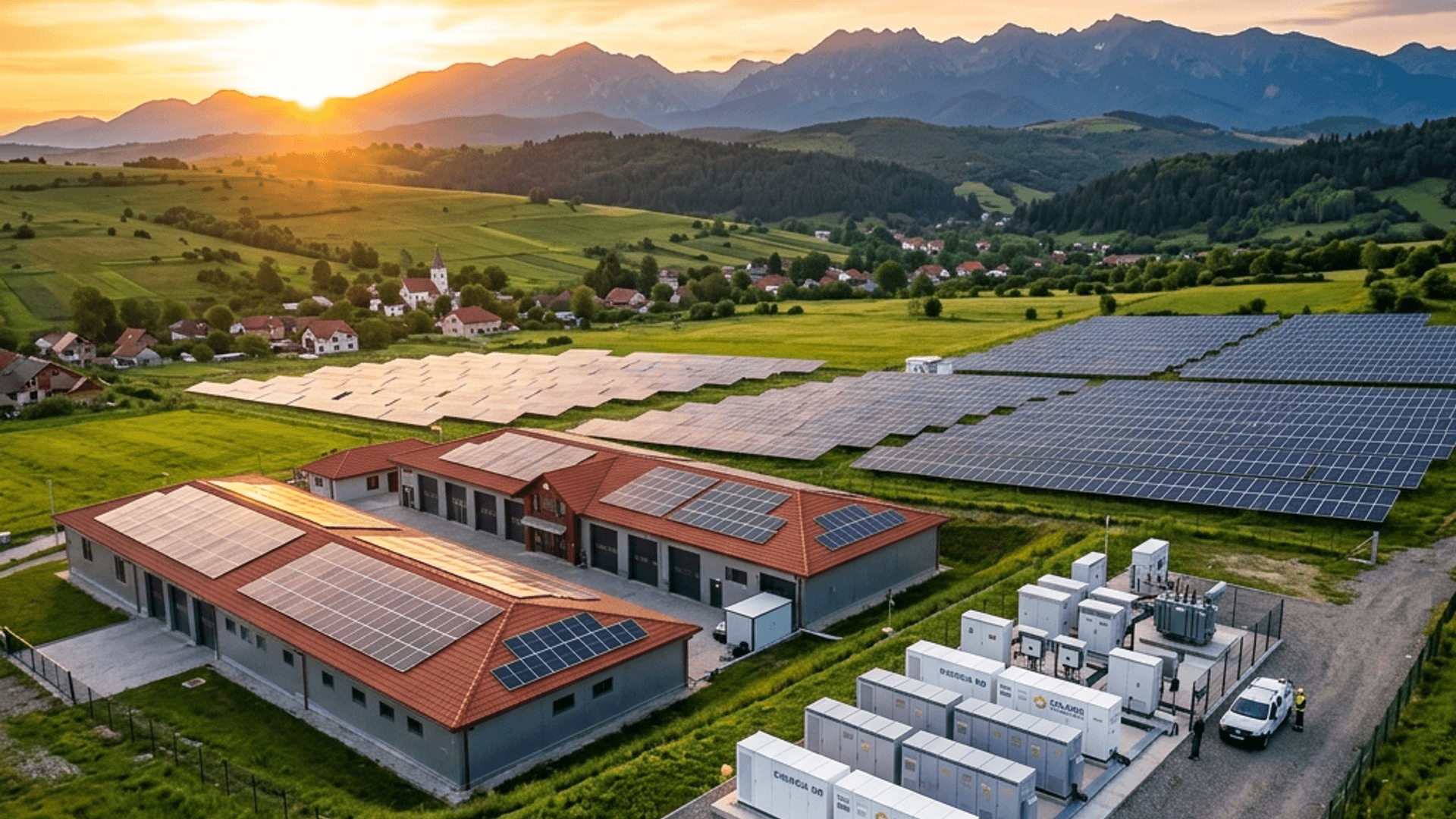
Commercial facility with solar panels on red tiled roofs and battery storage cabinets in Romania at sunrise.

Romania Energy Storage Market

Romania Residential Battery Storage Market: Policy, Growth & Investment Guide

Romania mandates residential battery storage by 2027. Discover the policy drivers, grid demand, funding landscape, and commercial opportunities shaping this fast-growing market.

Romania's Energy Storage Systems Market: Key Numbers You Need to Know

Romania is Europe's fastest-growing BESS market — here is what the data shows for distributors and EPCs.

From Near Zero to 5 GW: Romania's Storage Boom

Romania's solar capacity surpassed 5 GW in 2024, up 56% year-on-year. BESS capacity grew from 10 MW/20 MWh at start-2024 to 137 MW/269 MWh by year-end. The 5 GW storage target by end-2026 means a 36x increase.
Residential Battery Storage: Demand Is Mandated, Not Optional

Unlike most EU markets, Romania's residential battery storage demand is legally mandated. Law 255/2024 forces 130,000 prosumers to retrofit batteries by December 2027 or face a hard 3 kW export cap. Demand is structural and non-reversible.

What This Scale Means for Suppliers and Distributors

Transelectrica urgently requires 4 GW/20 GWh of battery energy storage system capacity for grid stability. This creates a multi-year procurement window across residential, C&I, and utility-scale segments — a market condition RAKOUR is built to serve.

The Policy Framework Shaping Romania's Battery Storage Market

Three laws are driving Romania's storage boom — understanding each is essential before entering as a supplier, EPC, or distributor.

Law 255/2024: The Mandate That Created a Market Overnight

Adopted July 2024, Law 255/2024 requires prosumers with 10.8–400 kW PV to install batteries immediately. Existing prosumers must comply by 31 December 2027. Storage must equal 30% of PV capacity up to 200 kW, rising to 50% for larger systems.

GEO 134/2024: Removing the Double Taxation Barrier

Before GEO 134/2024, residential battery storage faced double charges on cycled electricity. This ordinance reclassified storage as non-final consumption, removing transmission tariffs. ANRE's July 2025 reform integrated energy storage system operators into the green certificate mechanism.

CfD Auctions and the BESS Energy Container Tariff 2024

Romania's first CfD auction awarded 432 MW of solar at €51/MWh — below the €78/MWh ceiling. Utility-scale storage must absorb 75% of co-located annual output. This drives direct demand for RAKOUR's BESS solutions at grid scale.

Solar Battery Storage System Sizing: Romania's Mandatory Compliance Ratios

Law 255/2024 sets precise storage-to-PV ratios. This helps EPCs calculate what battery capacity each project legally requires.

The Three-Tier Sizing Framework Under Law 255/2024

Systems from 3–200 kW require 30% storage coverage; systems from 200–400 kW require 50%. A 300 kW commercial site therefore needs 150 kW of battery capacity. Grid export cannot exceed the rated solar energy storage unit capacity under any configuration.

AC Coupled Design Solar BESS: The Preferred Retrofit Approach

For prosumers retrofitting before 2027, AC coupled design solar BESS avoids rewiring existing inverters. RAKOUR's LV rack series — 51.2V, 100Ah to 314Ah — supports 15-unit parallel expansion via CAN/RS485, enabling incremental residential battery storage upgrades without replacing hardware.

Certification Requirements for Romanian Market Entry

Romanian lenders and EPCs require CE certification, IEC 62619 reports, and cycle-life data before procurement. RAKOUR carries CE, IEC 62619, MSDS, and UN38.3 — meeting Romania's technical standards for solar battery storage system deployments across residential and C&I segments.

Price Arbitrage, Microgrids, and Energy Storage Revenue in Romania

Romania's wholesale market delivers the EU's highest daily price spreads, making BESS commercially viable without subsidies in 2025.

€168/MWh Daily Spread: The EU's Best Arbitrage Window

Romania's daily electricity price spread in 2025 averaged €168/MWh — the EU's highest. Aurora Energy Research projects double-digit IRR for standalone BESS entering Romania from 2026, making it one of Europe's most commercially attractive storage markets without requiring grant support.

Solar With Battery Storage: Stacking Three Revenue Streams

Developers pairing solar with battery storage access CfD-secured generation income, peak/off-peak price arbitrage, and Transelectrica ancillary services fees. This stacked revenue model improves bankability when approaching EIB or EBRD for long-term financing.

Microgrids and Energy Storage for C&I Off-Takers

For factories, telecom towers, and agrivoltaic farms, microgrids and energy storage reduce grid dependency and costs. RAKOUR's HV rack series supports 232V to 979.2V, enabling scalable behind-the-meter systems qualifying for GEO 134/2024 tariff exemptions with measurable energy savings.

Learn Our Energy Storage Solutions

Explore Rakour's advanced, safe, and highly efficient lithium battery storage systems. From residential low-voltage batteries to high-capacity commercial and industrial solutions, we empower you to achieve energy independence and reliable power security.

Explore Solutions

Investment in Renewable Energy Storage: Romania's EU Funding Landscape

Multiple EU and national programs are simultaneously active. Eligibility criteria determine which projects qualify and when capital becomes available.

PNRR and the Modernisation Fund: Primary Capital Channels

Romania's PNRR allocated funding for 791.48 MWh across five battery storage system projects in November 2024 — covering 20% of the national target. The EU Modernisation Fund channels green loans via EIB and EBRD for projects meeting renewable input ratios and ESG standards.

The Clean Industrial Deal: Open to SMEs and Large Enterprises

Approved March 2026, this scheme targets 2,174 MWh of standalone storage by 2030. Battery storage system for solar qualifies when absorbing 75% of co-located output annually. RAKOUR's CE-certified rack series meets eligibility criteria across all currently active Romanian grant programs.

Municipal BESS: Romania's Newest Distributor Opportunity

Launched November 2025, Romania's municipal BESS program targets 385 MW across municipalities. This opens a residential battery storage channel separate from prosumer retrofits — where RAKOUR's modular LV series excels given its parallel expansion and local distributor network.

Romania's Grid Stability Gap: Why BESS Systems Are Urgently Needed

Romania's solar expansion has outpaced grid infrastructure. Battery storage is now the critical mechanism keeping the national system balanced.

Transelectrica's 4 GW/20 GWh Storage Requirement

Romania's grid operator has stated the national system requires 4 GW/20 GWh of storage to maintain frequency stability. Without this, curtailment risk grows and blackout probability rises. The grid-side bess system procurement window opened in 2025.

The Gap: From 137 MW to 5 GW by End-2026

Romania ended 2024 with 137 MW/269 MWh of installed storage against a 5 GW target — a near-total market to build from scratch. RAKOUR's scalable rack solutions span residential rooftops to grid tie solar system integration at utility scale.

BESS Clean Energy Integration: Curtailment as Revenue

High solar penetration suppresses daytime prices and causes curtailment. BESS clean energy systems shift surplus generation to evening peak periods, capturing Romania's €168/MWh daily spread. For RAKOUR distributors, curtailment risk in client proposals is a commercial closing argument.

Residential Energy Storage to Utility Scale: Romania's Three Demand Segments

Romania's storage demand spans three tiers — each with distinct drivers, sizing rules, and procurement timelines that suppliers must understand separately.

Home Battery Storage System: The Law 255/2024 Retrofit Wave

Over 300,000 prosumers are active by end-2025, all subject to Law 255/2024. Each home battery storage system retrofit generates 3–10 kW of demand. RAKOUR's LV rack series, expandable to 15 parallel units, is built for this wave.

C&I: Mandatory Ratios Creating Large-Scale Demand

Commercial prosumers with 200–400 kW PV must pair 50% battery coverage — meaning 100–200 kW per site. Residential energy storage compliance cascades into C&I budgets as 2027 approaches. RAKOUR's HV rack series, supporting 232V to 979.2V, addresses these requirements.

Utility-Scale: Grid-Side Demand Beyond Prosumer Compliance

Romania's municipal BESS program and grid tenders create separate utility demand. A 400 MWh project in 2025 doubled Romania's total installed storage. RAKOUR's container solutions — IP65, intelligent EMS, OEM/ODM — serve this segment directly.

Explore Our Products Line

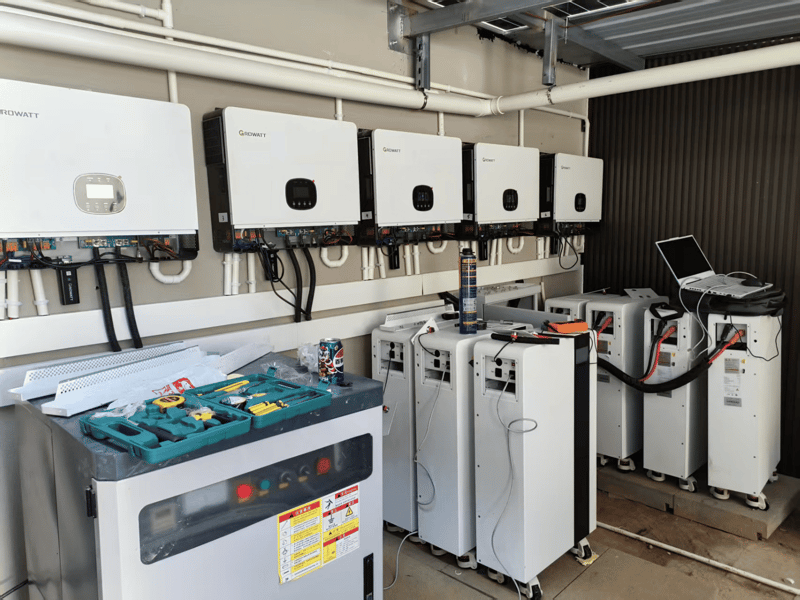
Rakour NSTLV low voltage LiFePO4 battery energy storage system assembly line with technicians in Xiamen manufacturing facility

Explore Low-voltage residential energy storage products

Explore
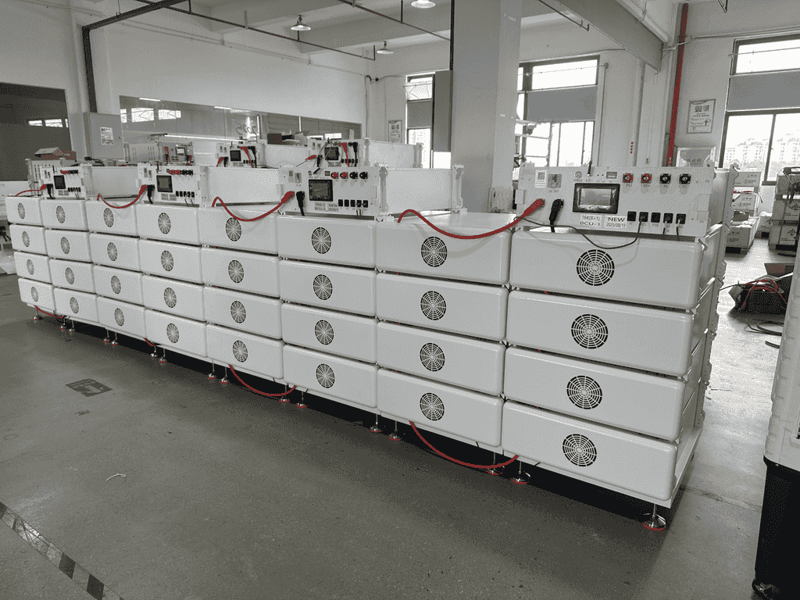
Rakour high-voltage solar battery storage cabinet, modular expansion up to 225kWh for home and small commercial and industrial C&I energy storage.

Explore High-voltage C&I storage products

Explore

Technical Standards and Battery Energy Storage Systems Compliance in Romania

Romania's lenders, EPCs, and ANRE enforce strict technical thresholds. Meeting these is a prerequisite for any battery supplier entering this market.

What Is BESS Compliance? The Three-Layer Test

What is BESS compliance in Romania? It means: ANRE licensing under Electricity Law 123/2012, CE and IEC 62619 certification, and CAN/RS485 protocol compatibility. RAKOUR carries CE, IEC 62619, UN38.3, and MSDS — covering all three layers simultaneously.

Inverter Protocol Compatibility: CAN/RS485 Is Non-Negotiable

EPC contractors pre-qualify suppliers on CAN/RS485 before issuing purchase orders. Deye, Growatt, and Solis dominate Romania's inverter market. RAKOUR's battery energy storage systems support CAN, RS485, RS232, and WiFi — confirming compatibility before procurement, not after delivery.

Cycle Life and Warranty: The Bankability Threshold

Romanian lenders require ≥6,000 cycle-life data and 5-year warranty documentation before credit approval. RAKOUR's LFP rack series delivers ≥6,000 cycles standard, with 314Ah models rated ≥11,000 cycles and 5-year warranties across the range — satisfying bankability requirements for project financing.

Battery Storage System Companies and Romania's BESS Supply Chain

Romania's storage supply chain is evolving fast. Suppliers combining European stock, CE certification, and inverter compatibility hold a structural advantage in the market.

European Stock Availability: The Key Supply Chain Differentiator

Romanian EPC timelines rarely allow 6–8 week shipping from Asia. Battery storage system companies with European warehousing are increasingly preferred over longer-lead alternatives. RAKOUR maintains European distribution capacity, enabling delivery timelines aligned with Romanian installation schedules.

Inverter Ecosystem: Deye, Growatt, and Solis Compatibility

Deye, Growatt, and Solis dominate Romania's inverter market. Suppliers not pre-validated on CAN/RS485 are routinely excluded from EPC shortlists. RAKOUR's LV and HV rack series carries documented compatibility across all three brands — eliminating pre-qualification risk for distributors entering Romania.

EU Content Bonuses and Local Manufacturing Incentives

Romania contracted a 140 MW PV manufacturing plant in October 2024. EU grant programs offer bonuses for EU-sourced components. RAKOUR's CE-certified range and European logistics presence position distributors to qualify when tendering for PNRR-funded residential battery storage projects.

Romania BESS Market Outlook 2025–2030: Targets, Timelines, and Entry Windows

Romania's storage market is on a decade-long growth trajectory. Here are the capacity milestones and entry windows that matter most for suppliers.

Energy Storage Systems for Solar Power: The 2026 Procurement Peak

Romania plans 2.5 GW of new solar in 2026. Each gigawatt creates demand for energy storage systems for solar power. For RAKOUR distributors, 2026 is the peak window before December 2027 forces prosumers to act.

The 2027 Compliance Cliff: 300,000 Prosumers on the Clock

Romania had 300,000 active prosumers by end-2025, all required to install residential battery storage before 31 December 2027 or face a permanent 3 kW export cap. Procurement urgency compounds quarterly — Romania's most time-sensitive commercial opportunity.

2030 and Beyond: 2 GW Storage, 10 GW Solar

Romania targets 2 GW of storage and 10 GW of solar by 2030, and 33.3 GW PV by 2050. RAKOUR's modular architecture — from 5.12 kWh units to MWh-scale containerised systems — serves Romania at every stage.

Frequently Asked Questions About Romania's Battery Storage Market

Everything distributors, EPCs, and investors need to know before entering Romania's BESS market.

What is BESS and why does Romania's Law 255/2024 mandate residential battery storage systems?

BESS (Battery Energy Storage System) stores surplus solar energy for peak-hour use. Law 255/2024 mandates residential battery storage for Romanian prosumers with 3–400 kW PV systems by December 2027.

What solar battery storage system size does my Romanian PV project legally require under Law 255/2024?

Systems from 3–200 kW require storage equal to 30% of PV capacity. Systems from 200–400 kW require 50%. A 10 kW residential system needs a minimum 3 kW battery under Romania's compliance rules.

How do I identify reliable battery storage system companies supplying the Romanian market?

Prioritise suppliers with CE and IEC 62619 certification, European stock, CAN/RS485 inverter compatibility, and 5-year warranties. These criteria define bankable Romanian BESS projects.

Is investment in renewable energy storage projects in Romania eligible for EU funding?

Yes. PNRR, the EU Modernisation Fund, and the Clean Industrial Deal all fund Romanian storage projects. Eligibility requires CE-certified systems, ESG compliance, and minimum renewable input ratios.

What are the key technical certifications required for battery energy storage systems in Romania?

Romanian lenders require CE, IEC 62619, UN38.3, and ≥6,000 cycle-life data before credit approval. RAKOUR's full rack range meets all four requirements across residential and C&I projects.

Ready to Enter Romania's Fastest-Growing Battery Storage Market?

Ready to Enter Romania's Fastest-Growing Battery Storage Market?

Partner with RAKOUR to supply CE-certified BESS solutions built for Romania's compliance market.