Rakour
Menu
High Voltage Commercial Battery Storage Systems — Scalable C&I LiFePO4 Solutions

C&I High Voltage Battery Storage

High Voltage Commercial Battery Storage Systems — Scalable C&I LiFePO4 Solutions

From 5.12 kWh to 225 kWh, Rakour's modular high voltage battery systems power factories, commercial parks and industrial sites with reliable LiFePO4 technology.

What Is a High Voltage Battery Energy Storage System?

Built for commercial and industrial power demands beyond residential scale

Defining the Battery Energy Storage System for C&I

A battery energy storage system stores electricity from the grid or renewable sources and releases it precisely on demand. For commercial and industrial sites, this means actively controlling energy consumption — reducing peak demand costs and ensuring operational continuity during grid disruptions or high-tariff periods throughout the year.
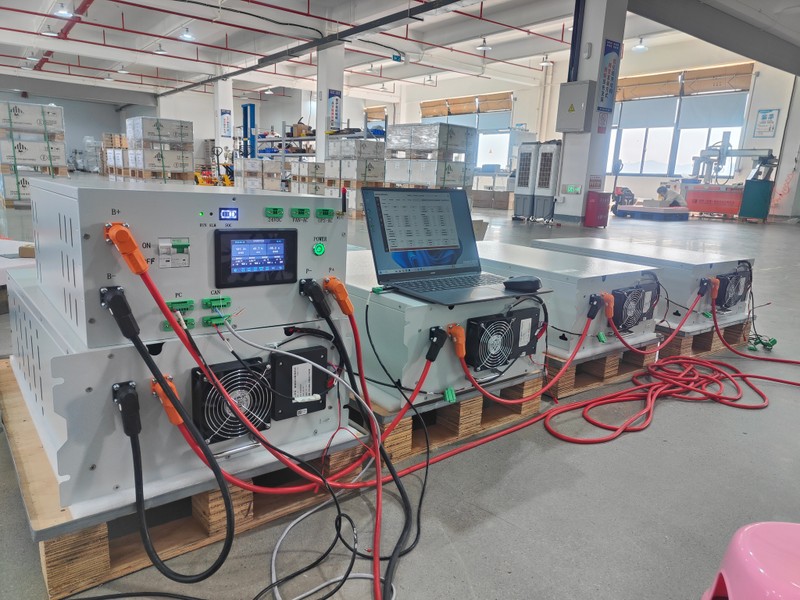
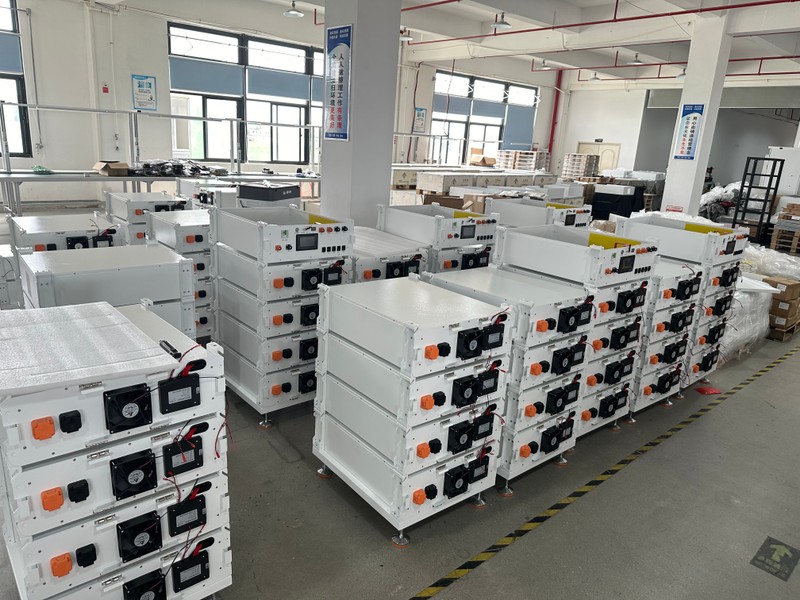
How Rakour HV Systems Deliver Energy

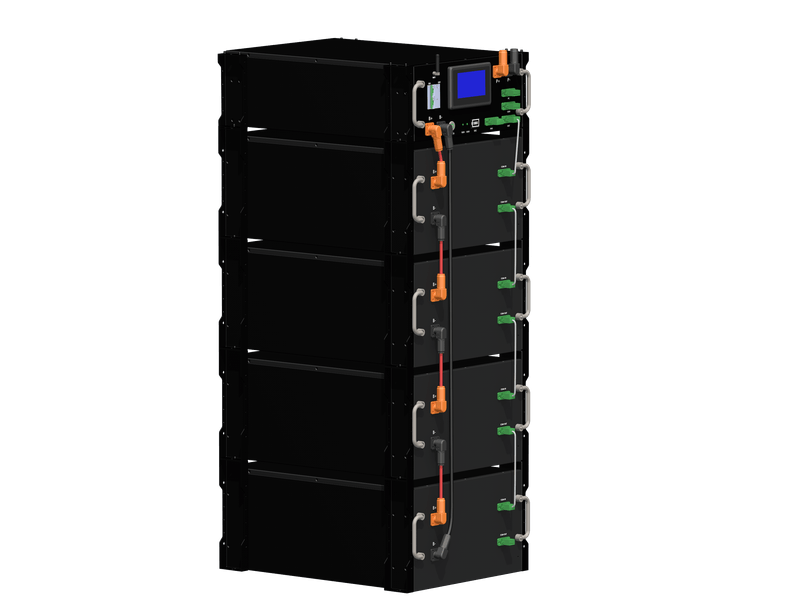
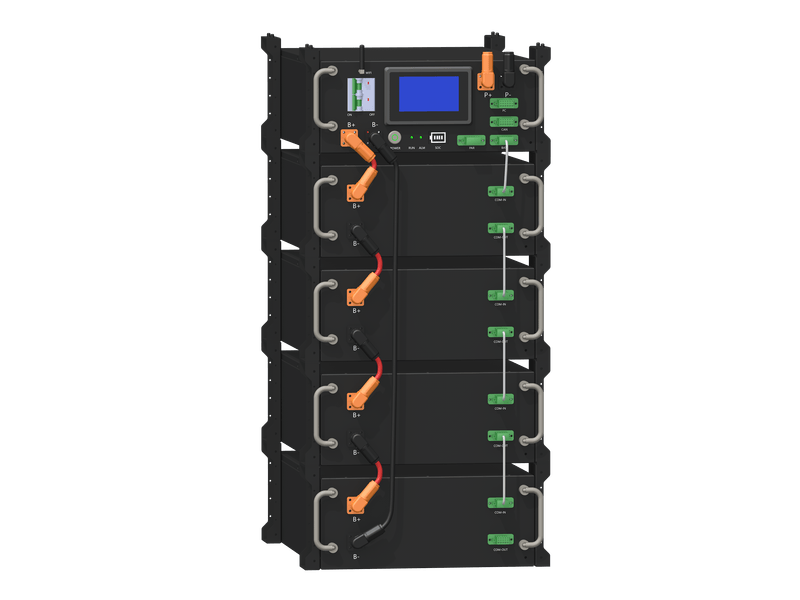
Rakour's HV series connects multiple 51.2V LiFePO4 modules in series through a BCU (Battery Control Unit), creating a unified system operating between 232V and 980V. The BCU coordinates charging, discharging, and real-time monitoring across all connected modules via internal CAN bus communication protocol.

Why High Voltage Architecture Suits C&I Facilities

High voltage DC buses reduce current draw, minimizing cable losses and enabling higher power output per installation footprint. Rakour HV systems are engineered for factories, commercial parks, and industrial facilities requiring sustained, high-power discharge without performance degradation across thousands of daily operating cycles.

High Voltage vs. Low Voltage: Selecting the Right C&I Storage Architecture

Understanding how high voltage battery design changes system performance at scale

What Separates a High Voltage Battery from Standard LV Units

A high voltage battery system like Rakour's HV series operates between 232V and 980V DC — far exceeding the 46.4V–57.6V range of standard LV units. This enables larger power delivery at lower current, reducing thermal stress and minimizing conductor sizing requirements across the full installation.

LiFePO4 vs Lithium Ion: Why Cell Chemistry Matters

Rakour HV modules use LiFePO4 chemistry. In a direct LiFePO4 vs lithium ion comparison, LiFePO4 tolerates deeper discharge cycles, maintains flatter voltage curves under load, and delivers 6,000+ confirmed cycle life — essential for daily C&I charge-discharge operations over a 10-year asset horizon.

Matching Voltage Architecture to Your Facility Load Profile

Low voltage systems suit loads below 15 kWh. When a facility requires discharge above 30 kW or integration with three-phase inverters above 29.9 kW, Rakour's HV architecture delivers better efficiency, lower installation cost per kWh, and longer operational lifespan verified in real-world C&I deployments.

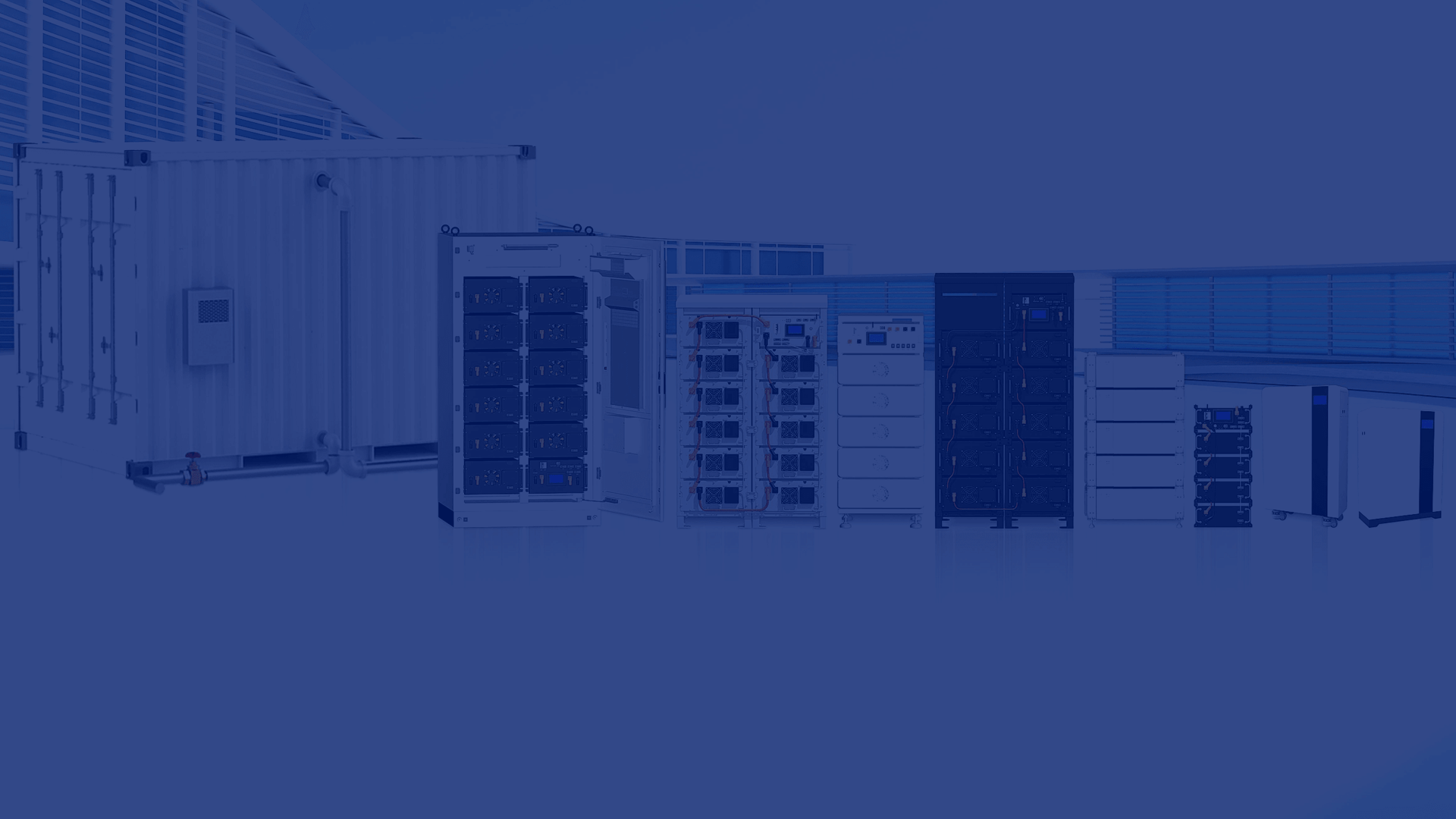
Rakour HV Product Series Overview: Commercial Battery Storage by Model

Compare configurations by energy capacity, voltage range, and target application

51.2V 100Ah HV — Entry-Level High Voltage C&I Configuration

The 100Ah HV scales from 5 to 17 series modules, delivering 5.12–87 kWh across a 256V–979V range. It suits light commercial facilities with moderate loads and provides a cost-effective entry into scalable high voltage commercial battery storage infrastructure with future expansion capability.

51.2V 200Ah HV — Mid-Range Industrial Energy Solution

The 200Ah HV delivers 10.24 kWh per module, scaling to 174 kWh at 17 units with 100A continuous current. Compatible with inverters up to 50 kW, it fits warehouses, office complexes, and solar-plus-storage commercial projects where energy capacity requirements are expected to grow over time.

51.2V 314Ah HV — Flagship High-Capacity BESS

The 314Ah HV delivers 16.08 kWh per module, scaling to 225 kWh at 14 units. With 200A max current and verified Deye 80 kW compatibility, it serves industrial parks, cold-chain logistics, and high-density battery energy storage system deployments requiring maximum energy output per rack.

Core Application Scenarios for High Voltage Commercial Battery Storage

Where Rakour HV systems deliver measurable operational and financial value

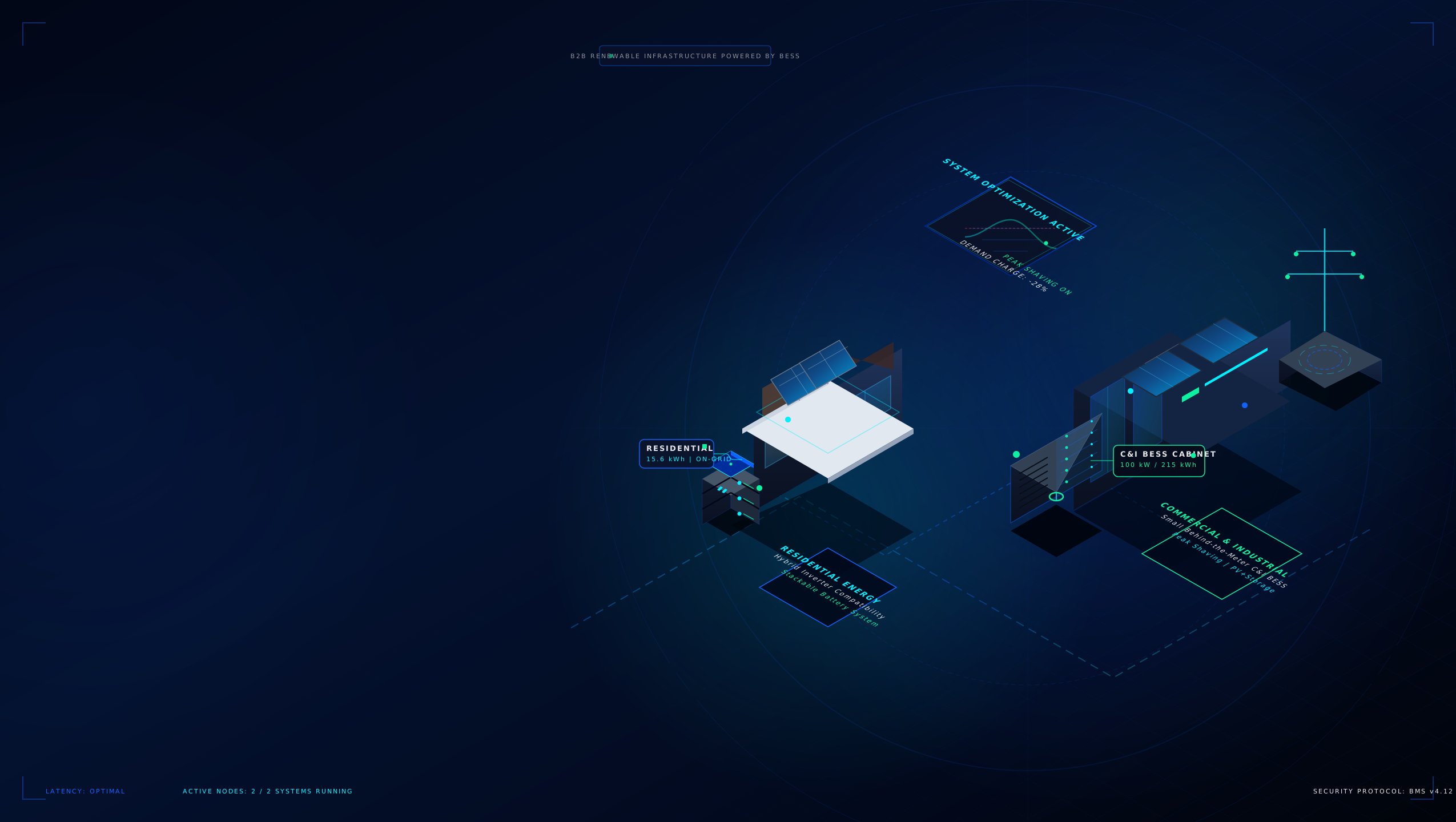
Peak Shaving and Demand Charge Reduction

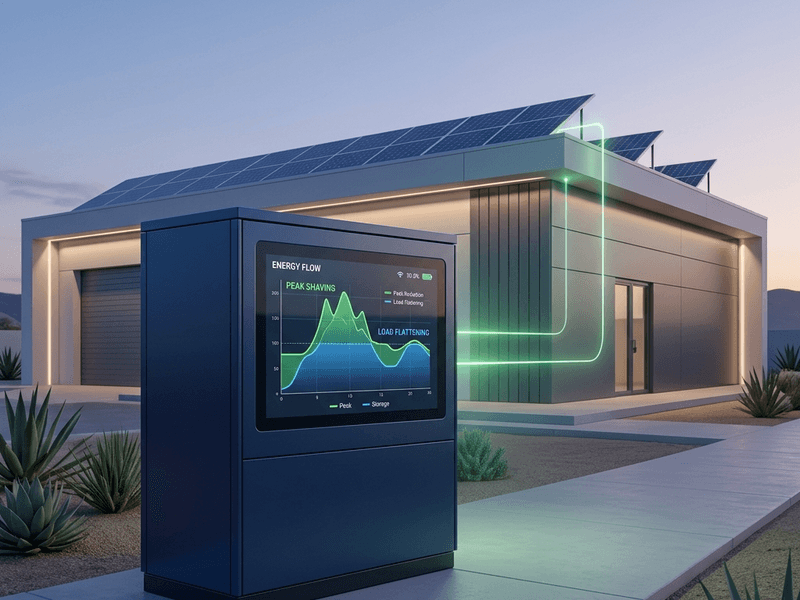
Commercial facilities with variable load profiles incur significant demand charges at peak consumption windows. Rakour HV systems discharge stored energy precisely during those periods, flattening the load curve. Combined with TOU-aware scheduling through the BCU, this directly reduces monthly utility bills for factories and commercial parks.

Solar-Plus-Storage and Energy Storage System with Diesel Generator

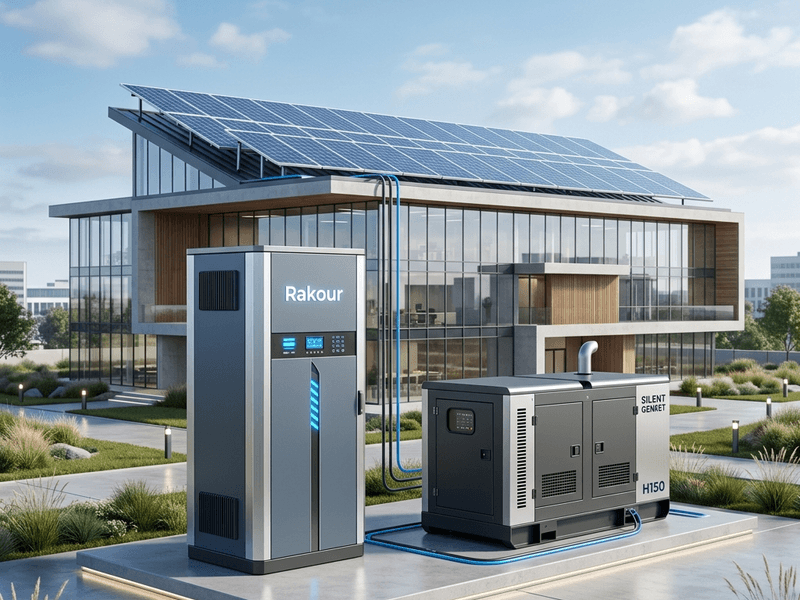
Rakour HV batteries integrate with grid-tied solar inverters to maximize on-site solar self-consumption. In hybrid or off-grid configurations, they buffer energy storage system with diesel generator setups — absorbing surplus generator output and supplying stored energy during peak demand intervals without additional grid draw.

Backup Power for Critical Commercial Operations

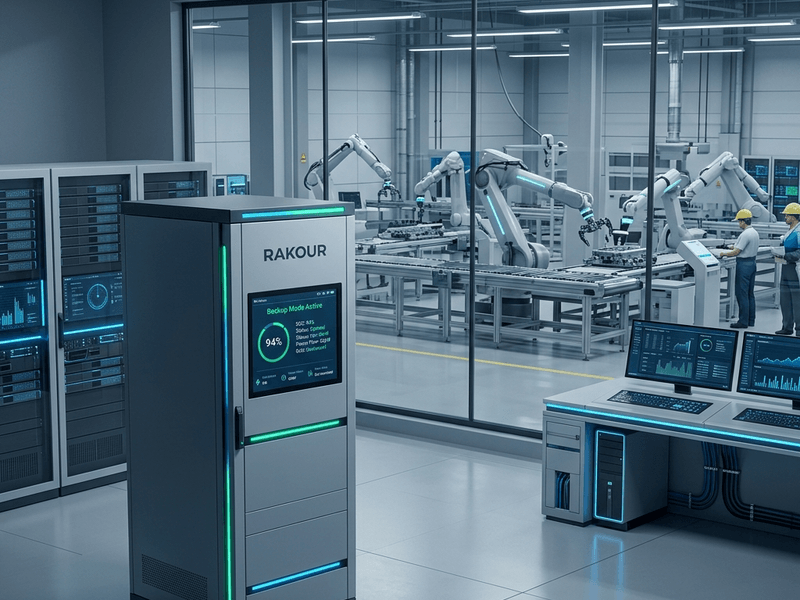
For facilities where downtime directly impacts revenue — manufacturing lines, cold storage, processing centers — Rakour HV provides seamless grid-outage backup. The built-in soft-start circuit ensures clean inverter switchover, while the BCU maintains stable output voltage, protecting connected equipment and sustaining uninterrupted operations.

System Architecture and Core Components of the Rakour HV BESS

How each hardware layer contributes to reliable, intelligent energy management

Battery Module Layer: LiFePO4 Cells and Active Thermal Management

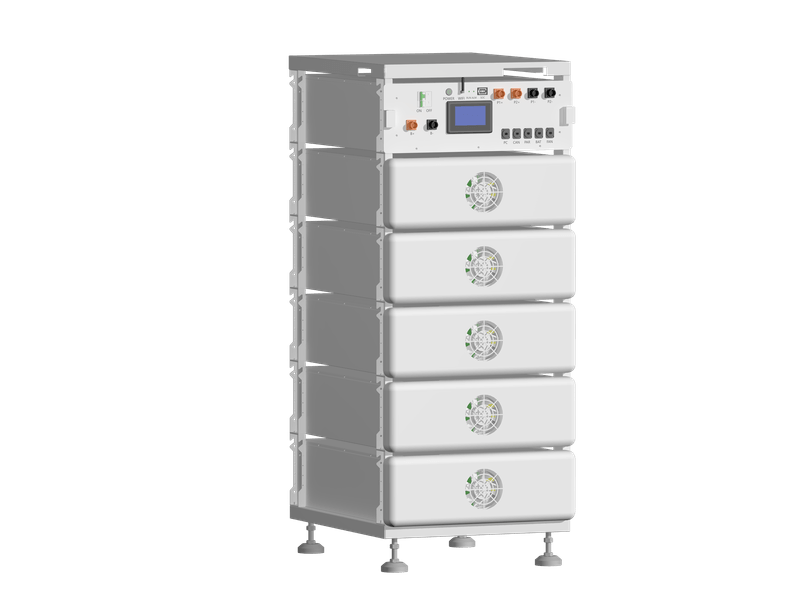
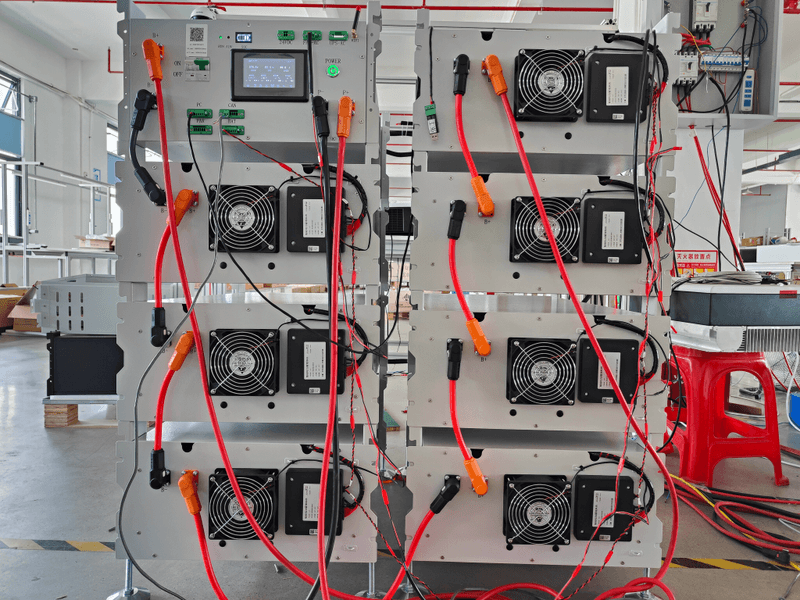
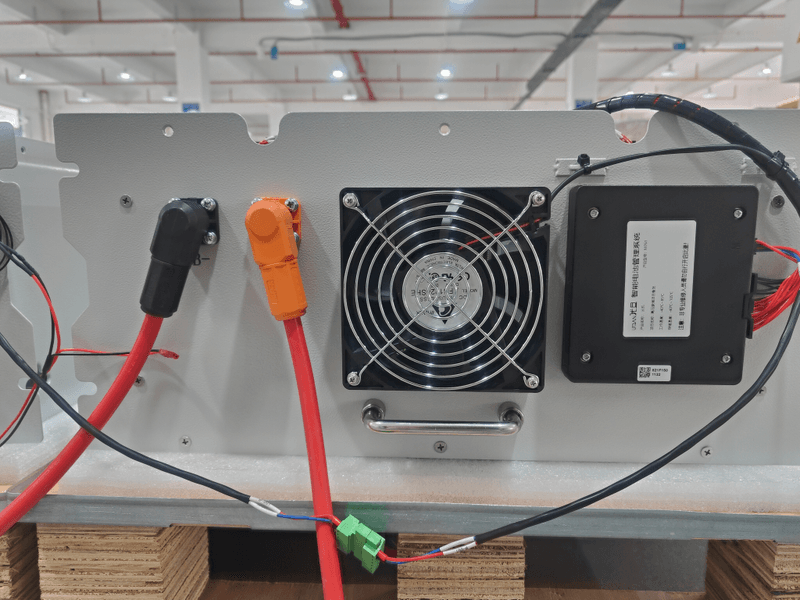
Each Rakour HV module houses 51.2V LiFePO4 prismatic cells with a dedicated cooling fan and perforated sheet-metal enclosure. This actively dissipates heat during high-load discharge cycles, maintaining stable cell temperatures across the –10°C to 55°C operating range and protecting long-term capacity retention.

BCU and Battery Management System: The Intelligent Control Core

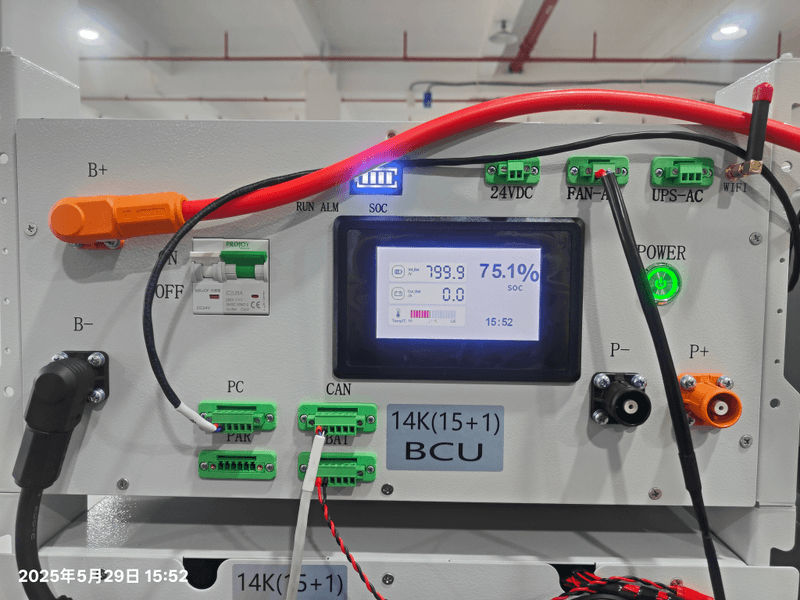
The Battery Control Unit hosts the master battery management system (BMS), receiving real-time voltage, current, and temperature data from each module's slave BMS via CAN bus. The master BMS enforces overcharge, over-discharge, over-current, and temperature protection simultaneously while executing cell balancing to extend service life.

Communication Interfaces and Remote Monitoring Capabilities

Rakour HV systems support CAN, RS485, and integrated WiFi. WiFi enables mobile-based remote monitoring and firmware updates, while the external touchscreen displays live SOC and system alerts on-site. RS485 connectivity allows seamless integration with third-party EMS platforms and site-level energy management controllers.

Scalability and System Configuration Guide for Rakour HV BESS

How to size, expand, and configure your high voltage system to match site demands

Series Expansion: From 5 Modules to Full Rack

Rakour HV systems start at 5 series modules and scale to 17, covering 80–225 kWh per rack. Each added module increases voltage and energy capacity proportionally. Understanding LiFePO4 batteries series limitations — including voltage ceiling and BMS address capacity — is essential before finalizing any system configuration.

Parallel Configuration for Higher Power Output

Multiple Rakour HV racks can run in parallel: up to 4 sets for the 200Ah model and up to 17 for the 314Ah per inverter. Parallel expansion grows total batteries for solar power storage capacity without replacing existing hardware, protecting capital investment as site energy demands scale over time.

Matching System Size to Real Load Requirements

Start with daily kWh consumption, peak discharge demand, and TOU window duration. Rakour's BCU supports flexible module combinations, allowing integrators to right-size installations rather than defaulting to maximum configuration — reducing upfront cost while maintaining a clear, documented upgrade path.

Safety Standards and Certification for Rakour HV Commercial Battery Systems

What international certifications and built-in protections mean for C&I procurement teams

International Certifications Across the HV Product Line

All Rakour HV modules carry CE and UN38.3 certifications as standard. The LV 200Ah variant also holds IEC 62619. These confirm each unit meets international requirements for lithium ion battery safety, electrochemical performance, and transport compliance — essential for project permitting, grid connection approvals, and commercial insurance.

Multi-Layer BMS Protection Against Common Fault Conditions

Rakour's BMS enforces six active protections: overcharge, over-discharge, over-current, short circuit, high temperature, and low temperature cutoff. Lithium iron phosphate battery safety is reinforced by LiFePO4's inherent thermal stability — no thermal runaway under normal operating conditions, which directly reduces fire risk in enclosed commercial installations.

Soft-Start Circuit and Electrical Fault Isolation

Every Rakour HV BCU includes a soft-start circuit that limits inrush current at startup, protecting inverters without native soft-start capability. A DC fuse provides additional fault isolation, ensuring that a module-level electrical fault does not propagate to the inverter or the broader installation wiring.

Inverter Compatibility and AC-Coupled Design for Rakour HV Systems

Verified integration options for three-phase C&I inverter platforms

AC-Coupled and DC-Coupled Integration Modes

Rakour HV batteries support both DC-coupled and AC coupled design solar BESS configurations. DC-coupled setups connect the battery directly to the inverter's HV DC bus. AC-coupled configurations integrate with existing solar installations without replacing the PV inverter — offering flexibility for retrofit projects and phased commercial deployments.

Three-Phase Inverter Battery Compatibility: Deye Verified

Rakour HV systems have verified compatibility with Deye SUN-29.9K, SUN-50K, and SUN-80K inverters. The three phase inverter battery connection uses the BCU's CAN port to the inverter's BMS1 interface. For the 80 kW model, parallel shunting across BAT1 and BAT2 ports is required to fully utilize discharge current above 100A.

Communication Protocol Setup and BMS Address Configuration

The BCU communicates via CAN or RS485, selectable through the touchscreen. Correct BMS address assignment — host at address 1, slave modules numbered sequentially — ensures stable multi-module communication. Rakour provides model-specific wiring diagrams and setup manuals for all verified inverter platforms, reducing commissioning errors on site.

Warranty, After-Sales Support, and Service for Rakour HV Systems

What buyers should verify before committing to a long-term C&I energy storage investment

Standard Warranty Coverage Across All HV Models

All Rakour HV modules carry a 5-year battery warranty covering defects and capacity degradation under normal operating conditions. Coverage applies to both battery modules and the BCU. Validity requires installation per the user manual and operation within specified voltage, current, and temperature parameters throughout the coverage period.

Remote Monitoring and Long-Term Firmware Support

Rakour HV includes built-in WiFi for mobile-based remote monitoring, enabling proactive fault detection without on-site visits. Firmware updates are delivered remotely, extending functionality over the asset lifetime. This is directly relevant for buyers calculating investment in renewable energy storage across a 10-year or longer operational horizon.

Technical Documentation and Integrator Support Resources

Rakour provides complete documentation for every HV model: user manuals, wiring diagrams, inverter-specific setup guides, and BMS configuration references. Authorized dealers receive direct factory technical support for commissioning and troubleshooting, reducing installation risk for integrators and EPC contractors managing multiple C&I deployments.

C&I Energy Storage Market Outlook and HV System Buying Guide

What industry data tells buyers, and how to evaluate high voltage storage suppliers

Why C&I High Voltage Storage Adoption Is Accelerating

Global C&I BESS capacity is projected to exceed 122 GW cumulative by 2035. Rising tariffs, TOU pricing, and solar-plus-storage integration are pushing commercial battery storage from optional to operationally essential. High voltage architectures are gaining adoption as facilities scale beyond 30 kW sustained discharge requirements.

Key Criteria When Evaluating Battery Storage System Companies

When shortlisting battery storage system companies, verify four factors: certifications matching your target market, documented inverter compatibility, warranty terms with clear capacity retention clauses, and post-commissioning technical support availability. Price per kWh is secondary to total cost of ownership across the system's full operational life.

Why Rakour HV Suits Long-Term C&I Deployments

Rakour HV combines certified LiFePO4 cells, architecture scalable to 225 kWh, verified compatibility with leading three-phase inverters, and 5-year warranty coverage. For renewable energy storage projects requiring bankable specifications and long-term supplier accountability, Rakour delivers the documentation and reliability that procurement teams require.

Frequently Asked Questions About High Voltage C&I Battery Storage

Find answers to the most common technical and procurement questions about Rakour HV systems.

What is the operating voltage range of a high voltage battery energy storage system?

Rakour HV systems operate between 232V and 980V DC, depending on the number of 51.2V modules connected in series. The 314Ah model covers 5–14 modules; the 200Ah model supports 4–17 units.

How does the battery management system protect a C&I BESS from fault conditions?

The BMS enforces six simultaneous protections: overcharge, over-discharge, over-current, short circuit, high temperature, and low temperature cutoff, plus continuous cell balancing for longevity.

What makes LiFePO4 vs lithium ion NMC better suited for commercial battery storage?

LiFePO4 offers superior thermal stability and 6,000+ cycle life versus NMC. For C&I sites with daily cycling, this means lower total cost of ownership across the full operational asset life.

How many modules can be connected in series based on LiFePO4 batteries series limitations?

Rakour HV supports 5 to 17 series modules per rack, with BMS addressing up to 16 slave units. The 314Ah model reaches 225 kWh at 14 units. Exceeding rated voltage limits voids the product warranty.

Is Rakour HV compatible with three phase inverter battery platforms like Deye?

Yes. Rakour HV is verified with Deye SUN-29.9K, SUN-50K, and SUN-80K. The BCU's CAN port connects to the inverter's BMS1. For the 80 kW model, parallel shunting across BAT1 and BAT2 ports is required.

Start Your Commercial Battery Storage Project with Rakour

Start Your Commercial Battery Storage Project with Rakour

Share your load profile and we'll recommend the right Rakour HV configuration for your C&I project.