
Rakour
Menu
Solar Battery Storage Compatible Inverter List — Rakour LV & HV Series

Verified Inverter Compatibility · LV & HV Series · CE Certified

Solar Battery Storage Compatible Inverter List — Rakour LV & HV Series

Engineer-verified compatibility across Deye, Growatt, Victron, GoodWe and 20+ leading inverter brands. LiFePO4, CAN/RS485, 5–16 kW.

Why Solar Battery Storage and Inverter Compatibility Cannot Be Ignored

A voltage mismatch or protocol failure can silently cripple your entire energy system — here's what to check before connecting anything.

The Real Risk of Getting It Wrong

Connecting a solar battery storage system to an incompatible inverter causes more than poor performance. Incorrect voltage alignment forces the inverter into fault mode, triggering BMS protection shutdowns. In the worst cases, repeated forced shutdowns accelerate cell degradation, reduce total cycle life, and can void your product warranty entirely.
Three Factors That Determine True Compatibility

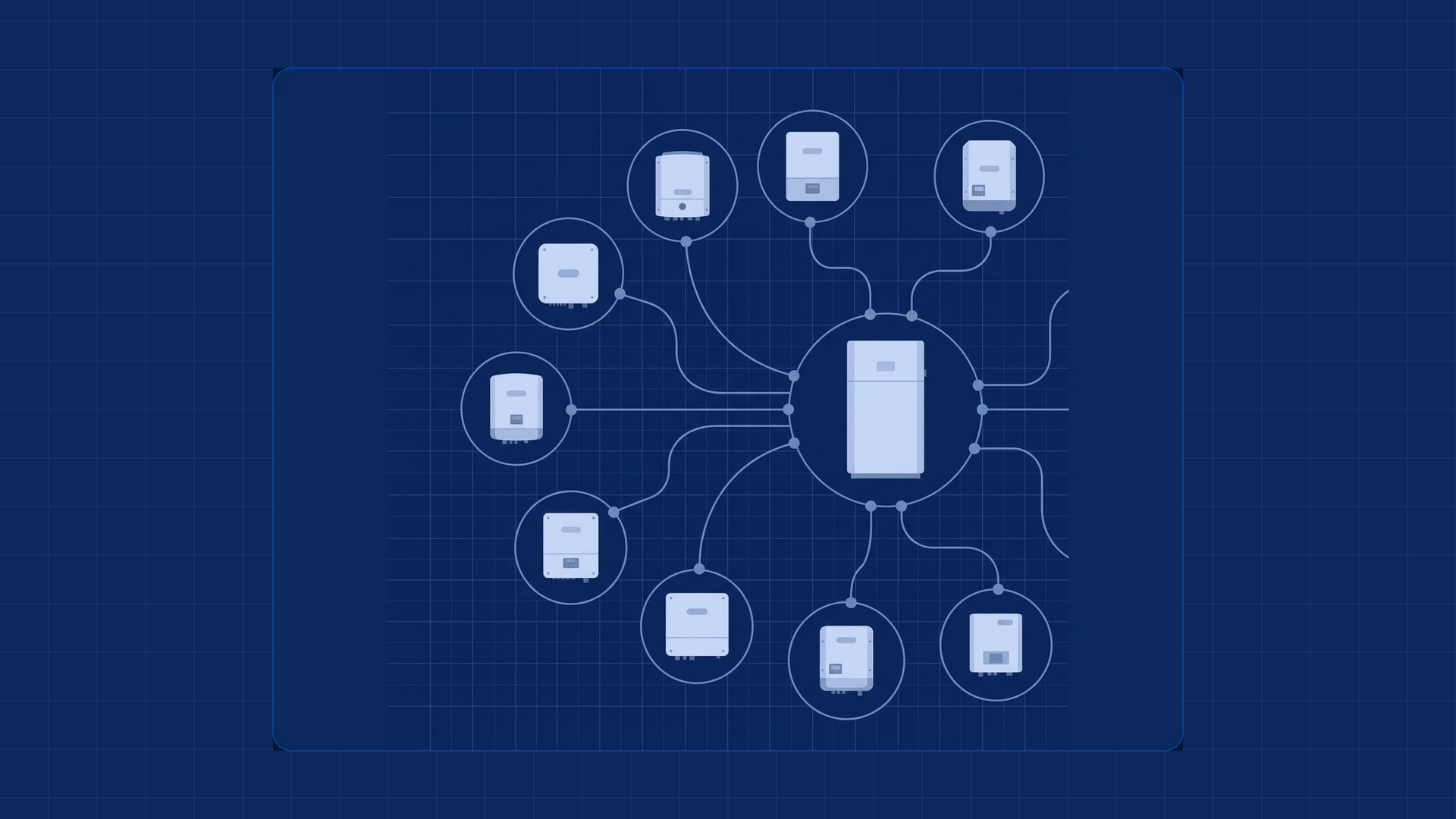
True compatibility depends on three technical layers: DC voltage range, battery chemistry charge profile, and communication protocol support. Rakour LiFePO4 batteries operate at 46.4–57.6V (LV) or up to 979.2V (HV). Your inverter must accept that specific voltage range and support CAN bus or RS485 for closed-loop BMS data exchange.

Why a "Compatible" Label Is Not Enough

Many manufacturers list inverter brands without specifying protocol type or tested firmware versions. Rakour only publishes inverter models that have completed hands-on communication handshake testing — meaning BMS data exchange between battery and inverter has been physically verified on the bench, not simply assumed from a datasheet comparison.

How Rakour Verifies Every Compatible Inverter Pairing

Our list is built on lab bench results, not marketing claims — every entry passes a three-step validation process before it's published.

Step 1 — Voltage and Capacity Matching

Every inverter candidate is benchmarked against Rakour's full product range. DC input voltage, maximum charge/discharge current — up to 100A for HV models — and rated power output are all cross-checked to ensure the inverter operates safely across the complete SOC range of our solar battery storage units under real load conditions.

Step 2 — BMS Communication Handshake Test

Rakour engineers establish a live CAN or RS485 link between the battery BCU and the inverter BMS port. The test confirms that charge current commands, discharge cut-off voltage, cell temperature, and SOC percentage are accurately transmitted and acted upon by both sides. No missing or mismatched data fields are accepted for the listing.

Step 3 — Multi-Unit Parallel Stability Check

For systems using multiple Rakour units in parallel, the full stack is tested as a group. Engineers verify address assignment, inter-battery RS485-2 communication, and inverter response under dynamic load transitions, ensuring the battery inverter pairing stays stable at full rated power output.

Full Compatible Inverter Table — Rakour LV and HV Battery Serie

Filter by battery series, inverter brand, or protocol to find your exact verified configuration in seconds.

Low Voltage Series Compatibility (46.4–57.6V)

Rakour's LV rack batteries — including 100Ah, 200Ah, 280Ah, and 314Ah models — are designed for hybrid solar inverters operating in the 48V DC range. Verified compatible brands include Deye, Growatt, Solis, GoodWe, Victron, Luxpower, SolaX, and Sofar. Both CAN bus and RS485 connections are supported, selectable directly from the battery's built-in touchscreen without rewiring.

High Voltage Series Compatibility (185.6–979.2V)

The HV series (200Ah and 314Ah) connects to high-voltage inverters from Deye (SUN-29.9K to SUN-80K), with a dedicated BCU managing up to 17 stacked modules. The BCU CAN port links directly to the inverter's BMS1 terminal, enabling full closed-loop control. The HV series includes a soft-start circuit supporting inverters that lack built-in inrush protection.

How to Read the Compatibility Table

Each table entry shows: battery model, inverter brand and model number, connection protocol (CAN/RS485), and loop type (open or closed). Closed-loop entries mean the inverter actively reads BMS data. Open-loop entries require manual parameter input on the inverter side before commissioning.

Understanding CAN Bus vs RS485 in Rakour Battery Systems

Choosing the wrong communication protocol between battery and inverter leads to silent data loss — here's how each works in practice.

What the BMS Management System Sends to the Inverter

Through CAN bus or RS485, Rakour's BMS battery management system transmits six live parameters: cell voltage, pack voltage, current, state of charge, temperature, and fault codes. The inverter uses this data to dynamically adjust charge voltage and discharge cut-off limits — not fixed presets. This is what real closed-loop communication looks like.

CAN Bus — Speed and Reliability for HV Systems

CAN bus communicates at up to 500 kbps and handles multi-node environments without signal degradation. Rakour's BCU uses the RJ45 CAN port (PIN4: CAN-H, PIN5: CAN-L) to connect to the inverter BMS1 port. Deye SUN-29.9K–80K inverters use this channel by default, making CAN bus the recommended protocol for all HV pairings.

RS485 — Flexible Protocol for LV Inverter Integration

RS485 supports longer cable runs and is available on virtually all hybrid inverters for solar. On Rakour LV batteries, the RS485-1/CAN port handles inverter communication, while RS485-2 is reserved for inter-battery parallel data. The built-in touchscreen lets installers switch protocol per brand without any rewiring required.

Low Voltage vs High Voltage Battery — Choosing the Right System for Your Inverter

Getting this decision wrong means buying hardware that cannot work together — here's exactly how to match Rakour's two battery architectures to the right inverter type.

Choosing the Right System: Low Voltage vs High Voltage Battery for Your Inverter

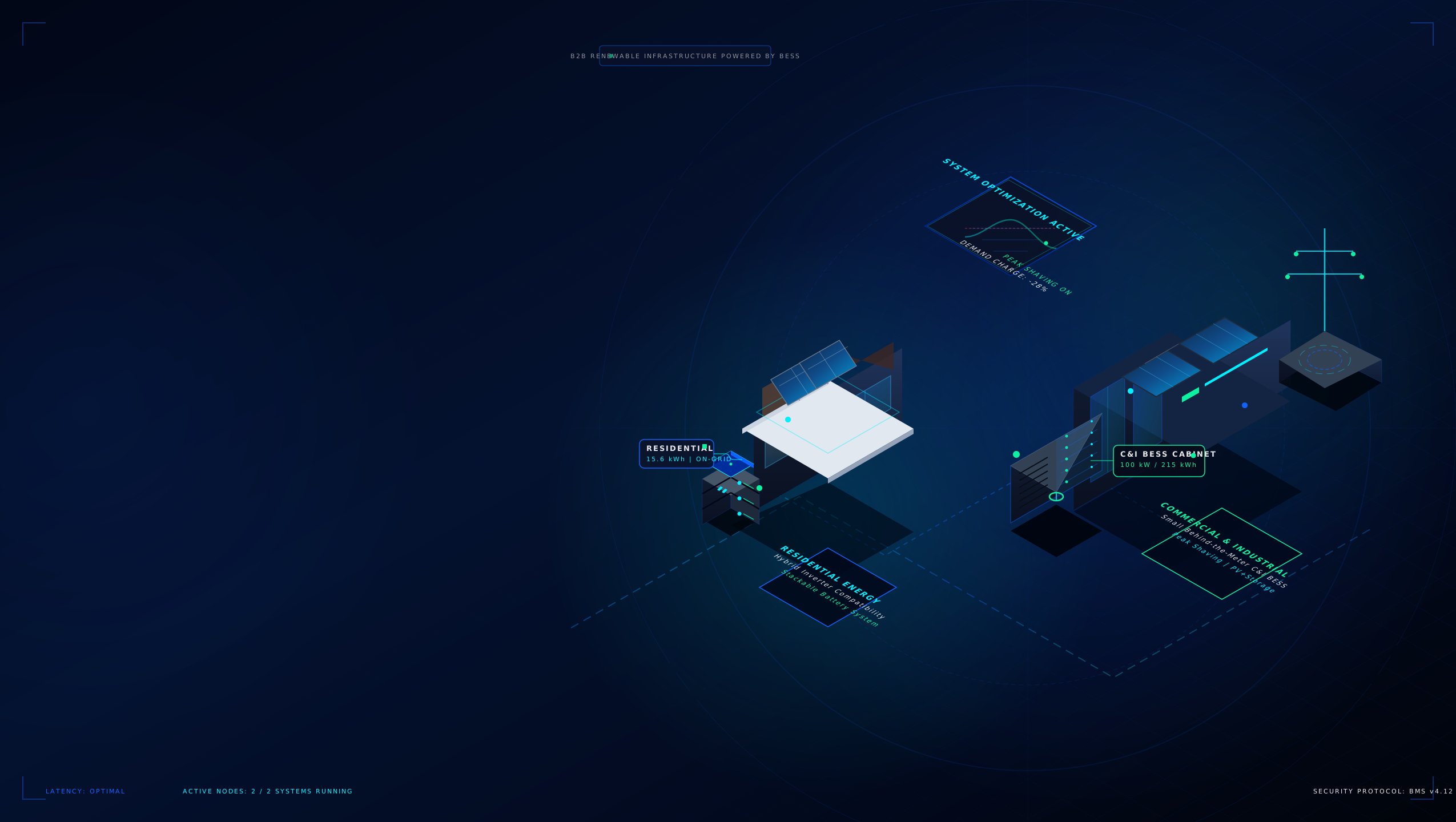
The choice between a low voltage battery and a high voltage system depends on your inverter's DC input range and total power requirement. Rakour LV batteries operate at 46.4–57.6V, pairing with standard 48V inverters up to 16 kW per unit. This makes them the default choice for most residential solar-plus-storage installations.

When a High Voltage Battery System Makes More Sense

Rakour's high voltage battery series runs from 185.6V to 979.2V, reducing DC cable losses and supporting large inverters such as Deye SUN-29.9K to SUN-80K. Fewer parallel strings mean simpler wiring, lower connector current stress, and better round-trip efficiency at commercial-scale deployments above 30 kW.

Scalability: How Both Series Grow With Your Project

LV units support up to 15 batteries in parallel per system; HV units stack 5 to 17 modules in series inside one BCU enclosure. Both series are fully rack-mountable. Rakour's modular architecture allows installers to begin at a smaller capacity and expand later without replacing the inverter or rewiring communication cables.

Parallel Expansion and Multi-Inverter Configuration Guidelines

Expanding a Rakour system incorrectly causes capacity imbalance and current hotspots — these are the exact rules that prevent both.

Parallel Expansion Rules for Rakour LV Battery Systems

Rakour LV batteries support up to 15 units in parallel battery configuration. Before connecting, confirm the voltage difference between units is within 1V and production dates are within 12 months. The host battery (ADDR = 1000) connects to the inverter; slave units are addressed sequentially using the RS485-2 inter-battery port.

Power Shunting on Dual-Port Inverters Like Deye 29.9K–80K

Each BAT port on dual-input Deye inverters is limited to 50A. For batteries in parallel with 10 kWh capacity and 100A discharge rating, Rakour recommends connecting BCU P1+/P1– to BAT1 and P2+/P2– to BAT2. This parallel shunt doubles effective current without requiring a second battery string.

Staggered Terminal Wiring for Capacity Balance

To prevent uneven discharge across parallel units, use staggered terminal wiring: upper-left positive to lower-right negative at the inverter DC terminals, or the reverse diagonal. This cross-connection forces equal current across the stack and is mandatory for any multi-unit battery parallel connection to maintain long-term capacity balance.

Wiring and Setup Overview for Compatible Rakour Inverter Pairings

A three-step sequence — power cable, communication cable, inverter settings — covers every Rakour-to-inverter installation in the compatibility list.

Power Cable Connection: Sequence and Port Mapping

For HV systems, connect BCU P1+ and P1– to inverter BAT1 terminals, then P2+ and P2– to BAT2. For LV parallel setups, stagger terminals across units before connecting to the inverter. Confirm polarity before powering on and use rated cable cross-section to prevent voltage drop at full discharge current.

Communication Cable Routing and BMS Address Assignment

Connect the BCU or host battery CAN port to the inverter BMS1 port using the supplied RJ45 cable. For LV multi-unit stacks, link modules sequentially via RS485-2. Set each unit DIP switch: host at address 1, slaves from 2 to 15. Verify address sequence before enabling the inverter.

Inverter Settings Required After Physical Connection

Set battery mode to Lithium on the inverter and enable Parallel bat1 and bat2 when using dual BAT ports. Do not manually enter a fixed charge voltage. Rakour's BMS pushes dynamic limits via CAN, and manual overrides conflict with parallel battery wiring balance control, potentially triggering BMS shutdowns.

Certifications, Safety Standards, and Warranty Coverage

Every certification on this page is independently issued — not self-declared — and the warranty terms are directly linked to using a verified inverter from this list.

Certifications Covering Every Rakour Battery Model

All Rakour lithium battery storage products carry CE, MSDS, and UN38.3 certification. LV models such as the 51.2V200Ah-LV additionally hold IEC62619 and ROHS approvals. These certifications confirm that cell chemistry, BMS protection design, and transportation safety have each been independently tested, not self-declared by the manufacturer.

BMS Protection Functions That Safeguard Your System

Rakour's BMS provides six hardware-level protections: overcharge, over-discharge, over-current, short circuit, high temperature, and low temperature cutoff. For the HV series, the BCU adds a DC fuse and soft-start circuit to prevent inrush damage at inverter startup. These protections work independently of the inverter firmware version.

Warranty Coverage and What It Requires

All Rakour batteries carry a 5-year warranty. To maintain coverage, the system must stay within documented voltage and current limits, and the paired inverter must appear on Rakour's verified compatibility list. Connecting to an unlisted inverter or bypassing BMS communication voids the warranty, as safe boundaries cannot be enforced.

Frequently Asked Questions About Solar Battery Storage and Inverter Compatibility

Real answers to the compatibility questions installers ask most — before the first cable is run.

Which inverter brands are compatible with Rakour low voltage battery systems?

Rakour LV batteries are verified with Deye, Growatt, Solis, GoodWe, Victron, Luxpower, SolaX, and Sofar. CAN bus and RS485 are supported, switchable via the battery touchscreen — no rewiring required.

What communication protocol does the Rakour BMS battery management system use?

Rakour batteries support CAN bus and RS485. CAN suits HV Deye pairings; RS485 suits most hybrid inverters. Switch protocol via the battery touchscreen — no hardware modifications required.

How many batteries in parallel can a Rakour LV system support?

Up to 15 LV units in parallel. Host battery (DIP 1000) connects to the inverter via CAN or RS485; slaves link via RS485-2. Voltage difference between all units must remain within 1V before connecting.

Does the high voltage battery series require a soft-start inverter?

No. Rakour HV batteries have a soft-start circuit in the BCU that limits inrush current at startup. They safely pair with inverters lacking soft-start — no connector or inverter damage at power-on.

What certifications does Rakour lithium battery storage carry, and does it affect warranty?

CE, UN38.3, MSDS, and IEC62619 (select models). Warranty of 5 years stays valid only when the battery is paired with a listed inverter and operated within documented voltage and current limits.

Not Sure Which Inverter Works With Your Rakour Battery? Let Us Confirm It For You.

Not Sure Which Inverter Works With Your Rakour Battery? Let Us Confirm It For You.

Tell us your inverter model — our engineers confirm compatibility and send the wiring guide.