
Residential Energy Storage Solutions: Complete Home Battery & Solar Battery Storage Guide

Home » Solutions » Residential Energy Storage Solutions

Why Home Battery Storage Is Essential for Modern Living

Rising Energy Costs and the Shift to Solar Battery Storage

Electricity prices are climbing worldwide, and time-of-use tariffs mean homeowners now pay premium rates during peak hours. A home battery stores excess solar energy generated during the day and releases it in the evening — cutting reliance on expensive grid power. For EPC installers and distributors, solar battery storage has become the most requested upgrade alongside rooftop PV systems.

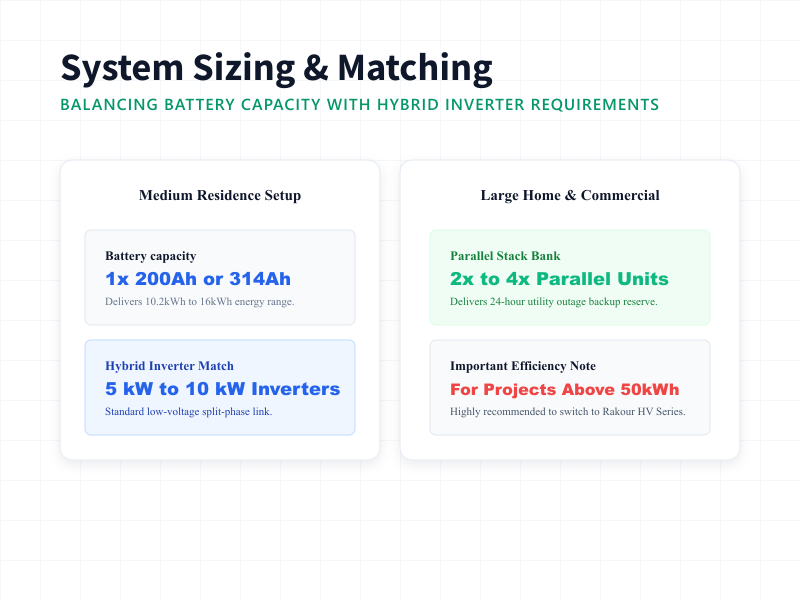
RAKOUR's residential LiFePO4 battery lineup, ranging from 5.12 kWh to 16 kWh per unit with up to 15 units in parallel, gives installers the flexibility to design systems that match any household's consumption pattern.

Key Benefits — From Whole House Battery Backup to Off Grid Solar System

A properly sized residential energy storage system solves three core problems for homeowners:

Backup Power During Outages
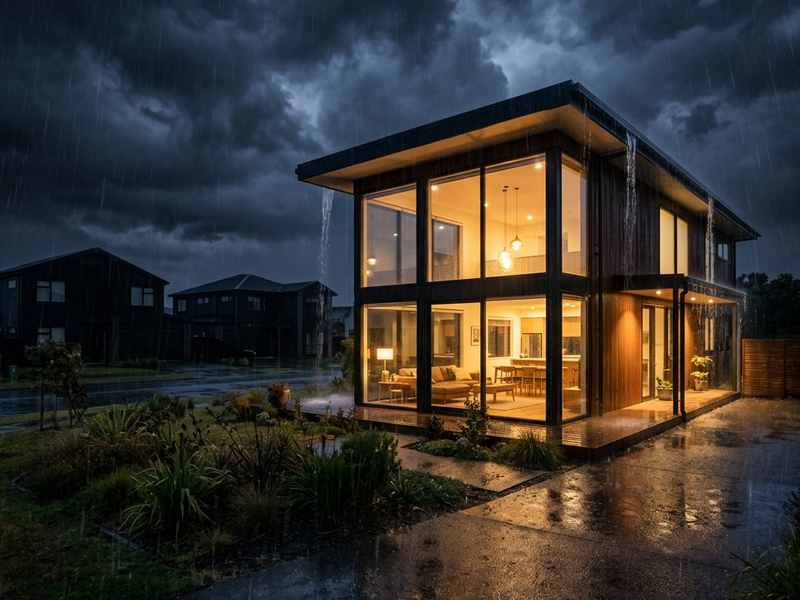
RAKOUR batteries provide whole house battery backup with continuous discharge power up to 10.24 kW, keeping essential appliances running when the grid fails.
Higher Solar Self-Consumption
Instead of exporting surplus PV energy at low feed-in rates, homeowners store it and use it after sunset — increasing self-consumption from a typical 30% to over 80%.
Full Energy Independence
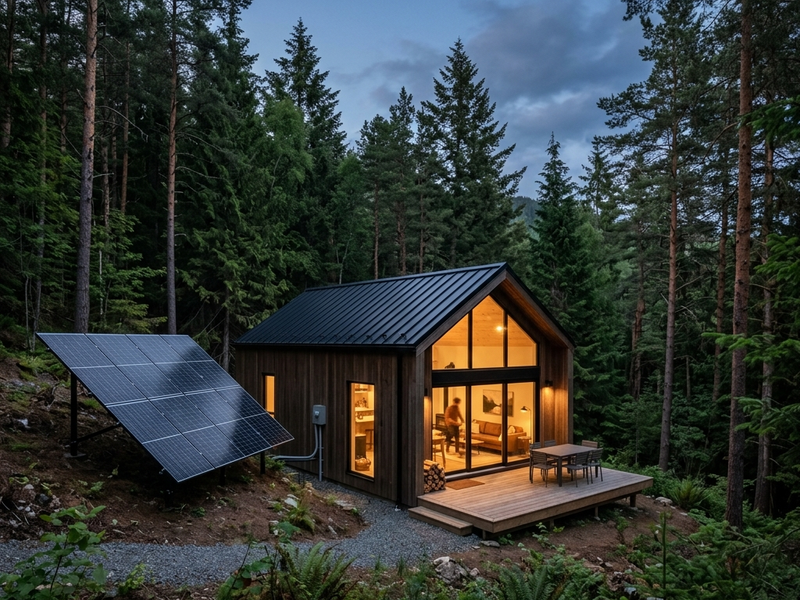
For remote properties or unreliable grids, RAKOUR systems support complete off grid solar system configurations, operating independently with a compatible hybrid inverter.

Whether you are an installer quoting a suburban retrofit or a distributor building inventory for your regional market, these three use cases represent the fastest-growing segments in residential energy storage today.

View Our Solutions

  • Battery Energy Storage System For Integrated Home Light And Storage Solution
  • Battery Energy Storage System For Home Solar Battery Storage Solution
  • Battery Energy Storage System For Home Battery Backup Solution

How to Size a Residential Battery Energy Storage System

Calculate Your Daily Energy Needs (kWh)

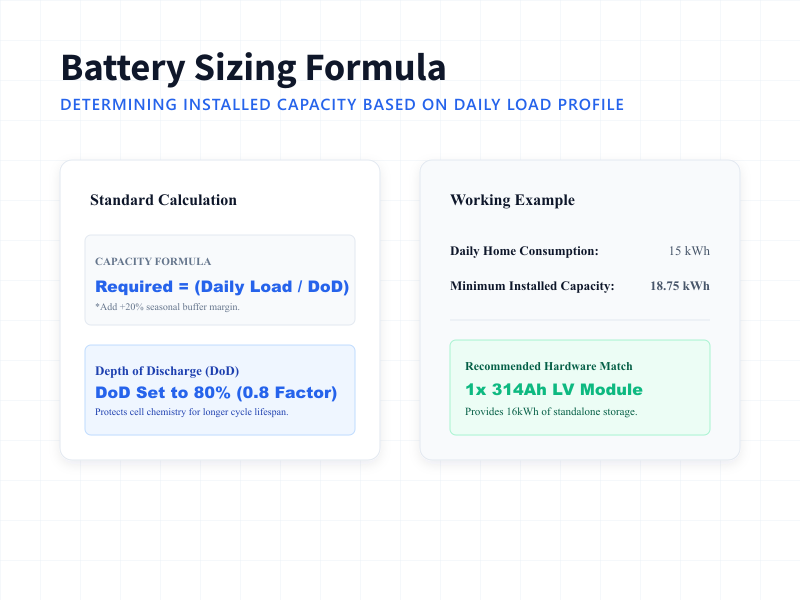
The sizing formula is straightforward: Required Battery Capacity = Daily Energy Consumption ÷ Depth of Discharge (DoD). RAKOUR LiFePO4 batteries operate at a recommended 90% DoD, meaning a 16.08 kWh unit delivers 14.47 kWh of usable energy per cycle. Start by reviewing the household's electricity bill to determine average daily consumption — typically 15–30 kWh for a standard home.

Real-World Example — 15 kWh Home Battery Backup Sizing

Consider a home consuming 17 kWh per day that needs overnight backup. At 90% DoD, this requires approximately 18.9 kWh of nominal capacity. The most efficient RAKOUR configuration: two 51.2V200Ah-LV rackable units in parallel, providing 20.48 kWh total (18.43 kWh usable) with a combined discharge power of 12.29 kW. Alternatively, a single NSTLV-16K wall-mounted unit at 16.08 kWh covers most of the load in a more compact footprint.

Solar Battery Cost vs. Long-Term Savings

For installers presenting proposals, cost-per-kilowatt-hour over the battery's lifetime matters more than upfront price. A RAKOUR 314Ah unit rated at 11,000 cycles delivers over 159,000 kWh across its service life — reducing the effective solar battery cost to a fraction of grid electricity in most markets.

Why LiFePO4 Battery Is the Best Choice for Home Storage

LiFePO4 vs lithium ion battery comparison showing safety lifespan and performance differences

LiFePO4 vs Lithium Ion — Safety, Lifespan and Performance

When comparing lifepo4 vs lithium ion (NMC), the critical difference is thermal stability. LiFePO4 contains no cobalt — the phosphate bond structure resists thermal runaway, the leading cause of battery fires in NMC systems. The tradeoff is energy density: LiFePO4 delivers 100–120 Wh/kg versus 150–200 Wh/kg for NMC. For stationary home storage where weight is not a constraint, this makes LiFePO4 the safer and more cost-effective chemistry. Every RAKOUR residential unit uses LiFePO4 cells with a built-in BMS providing overcharge, over-discharge, over-current, short-circuit, and high/low temperature protection.

Lithium iron phosphate battery vs lead acid battery comparison for solar energy storage systems

Lithium Iron Phosphate Battery vs Lead-Acid — A Clear Upgrade

Traditional lead-acid batteries offer only 500–1,500 cycles at 50% depth of discharge. A RAKOUR lithium iron phosphate battery achieves 6,000–11,000 cycles at 90% DoD — delivering 6 to 10 times more usable energy over its lifetime. Lead-acid also demands regular maintenance and ventilated installation spaces. RAKOUR LiFePO4 units are maintenance-free with IP54-rated wall-mounted options safe for indoor installation.

Understanding LiFePO4 Battery Life and Cycle Performance

RAKOUR's lifepo4 battery life varies by model to match different project budgets: the 100Ah unit delivers ≥6,000 cycles, the 280Ah reaches ≥10,000 cycles, and the 314Ah achieves ≥11,000 cycles — all at 90% DoD. At one cycle per day, the 314Ah model provides over 30 years of theoretical service life, far exceeding any warranty requirement.

Model Cycle Life DoD Usable Energy Est. Service Life Warranty
51.2V 100Ah-LV
5.12 kWh · Rackable
≥ 6,000 cycles 90% 4.61 kWh per cycle 16+ years @ 1 cycle/day 5 years
51.2V 200Ah-LV
10.24 kWh · Rackable
≥ 6,000 cycles 90% 9.22 kWh per cycle 16+ years @ 1 cycle/day 5 years
51.2V 280Ah-LV
14.34 kWh · Rackable
≥ 10,000 cycles 90% 12.90 kWh per cycle 27+ years @ 1 cycle/day 5 years
51.2V 314Ah-LV
16.08 kWh · Rackable
≥ 11,000 cycles
Best
90% 14.47 kWh per cycle 30+ years @ 1 cycle/day
Best
5 years
All cycle life data tested at 90% depth of discharge (DoD) and 25°C ambient temperature. Estimated service life assumes one full charge-discharge cycle per day. Actual lifespan may vary with usage patterns and environmental conditions.

High Voltage vs Low Voltage — Choose the Right System Architecture

When to Choose a 48V LiFePO4 Battery System (Low Voltage)

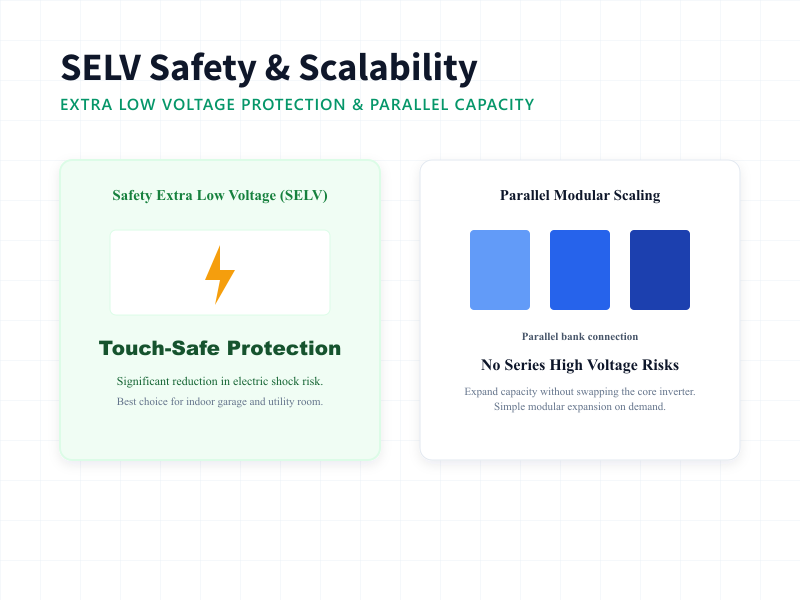
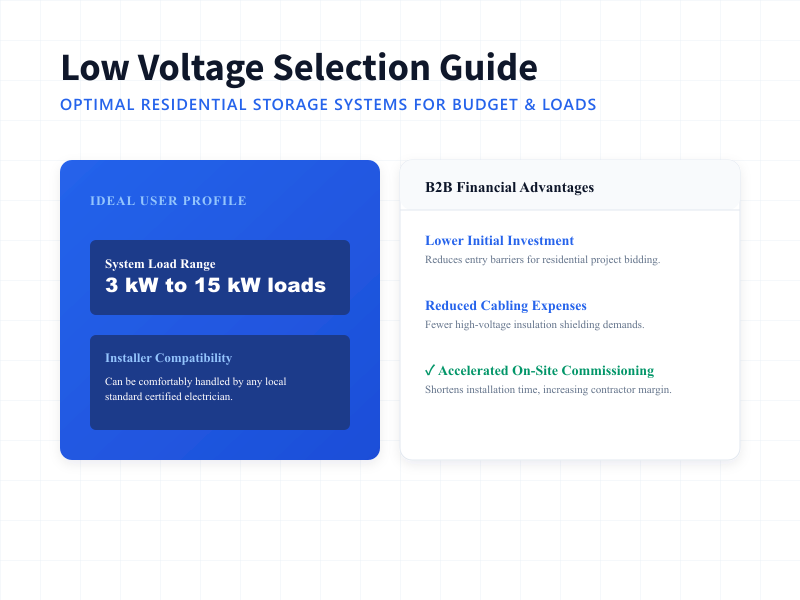
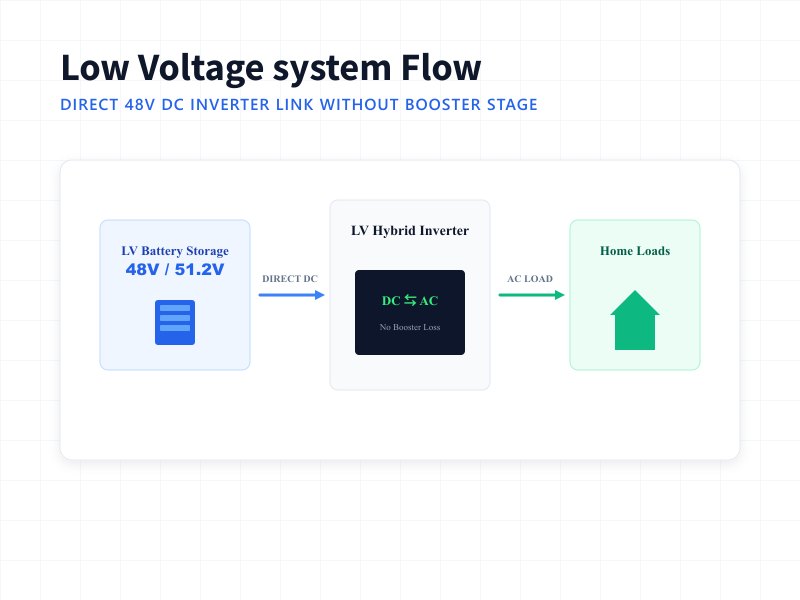
A 48v lifepo4 battery system operates at 46.4–57.6V and pairs with widely available low voltage hybrid inverters. RAKOUR's LV product range includes rackable units (5.12–16.08 kWh) and IP54 wall-mounted models (10.2–16 kWh), all supporting up to 15 units in parallel. This makes LV ideal for small to mid-size homes, solar retrofits, and markets where 48V inverters from brands like Deye and Growatt are already the standard. Installation is simpler, and the lower voltage reduces electrical certification requirements in most regions.

When High Voltage Battery Systems Make More Sense

RAKOUR's HV systems connect 8–17 battery modules in series through a dedicated BCU (Battery Control Unit), reaching a system voltage of 358.4V–979.2V. The 280Ah HV configuration scales from 114.69 kWh to 243.71 kWh per set, with up to 4 sets in parallel. Higher voltage means lower current at the same power level — resulting in thinner cables, reduced energy losses, and higher round-trip efficiency. For large villas or multi-story residences with loads exceeding 20 kW, an HV architecture is the more efficient and cost-effective choice.

How System Voltage Affects Battery Inverter Compatibility

The voltage architecture must match the inverter's DC input range. RAKOUR LV systems communicate via CAN/RS485 with most 48V hybrid inverters. HV systems use the same protocols but require a high voltage inverter with a compatible DC input window above 350V. Choosing the wrong voltage tier creates integration failures — always verify the inverter's specifications before finalizing the battery configuration.

Specification
LV System (48V)
HV System (350V+)
Operating Voltage
46.4 – 57.6V 358.4 – 979.2V
Communication
CAN / RS485 / RS232 CAN / RS485 / WiFi
Inverter Type Required
48V Low Voltage Hybrid Inverter High Voltage Inverter (DC input > 350V)
Inverter DC Input Match
40 – 60V window 160 – 1000V window
Max Parallel Units
15 units 4 sets
Max System Capacity
241+ kWh
(15 × 314Ah)
~975 kWh
(4 sets × 17 modules)
BMS Architecture
Host + Slave via RS485 parallel bus BCU master + module slave via internal CAN
Best Suited For
Small–mid homes, solar retrofits, 48V inverter markets Large villas, high-power loads > 20 kW, C&I edge cases
Important: The battery voltage architecture must match the inverter's DC input range. Connecting an LV battery to an HV inverter — or vice versa — will cause communication failure and may damage the system. Always verify the inverter's DC voltage window before finalizing the battery configuration.

Battery Inverter Compatibility — Works with Leading Brands

Verified Compatibility with Deye, Growatt and More

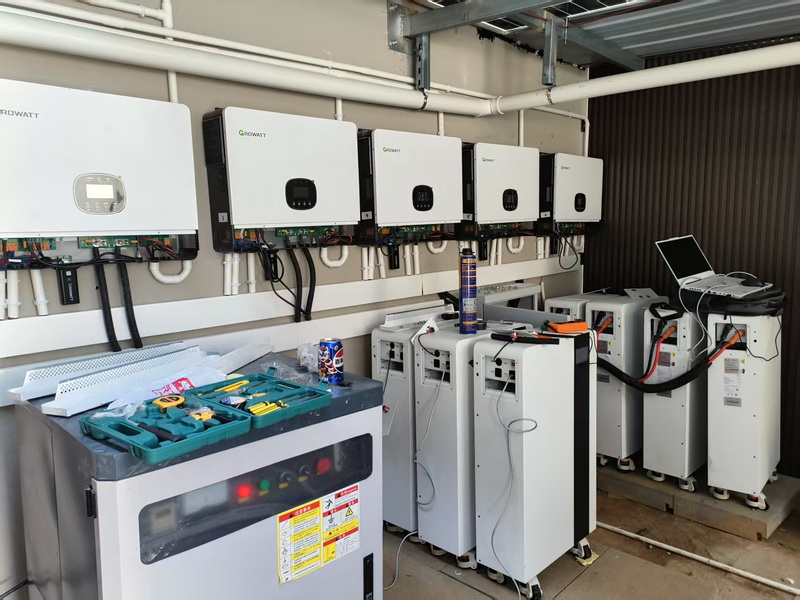
RAKOUR batteries communicate with the inverter BMS through standard CAN and RS485 protocols via RJ45 ports. The BMS transmits real-time cell voltage, current, temperature, and SOC data, allowing the inverter to dynamically adjust charging and discharging parameters. This two-way communication has been verified with Deye 29.9K–80kW series inverters, with documented connection guides covering power cable routing and CAN-to-BMS1 port wiring. RAKOUR LV units also feature a touch color screen that allows installers to switch communication protocols on-site, enabling quick adaptation to Growatt, Goodwe, SMA, Victron and other major brands without hardware changes.

Communication Protocols and BMS Integration

Every RAKOUR unit uses a master-slave BMS architecture. In LV systems, the host battery (address 1) connects to the inverter while slave batteries (addresses 2–15) report through the internal RS485 parallel bus. In HV systems, the BCU acts as the master BMS — collecting data from each module's slave BMS via internal CAN and managing the inverter interface centrally. Both architectures support the PACE BMS mobile app (available on iOS and Android) for remote monitoring via WiFi or Bluetooth, giving installers and homeowners real-time visibility into SOC, cell voltage balance, temperature, and historical cycle data from anywhere.

Scalable and Modular — Expand Your Battery Energy Storage System

Parallel Expansion — Up to 15 Units for Greater Capacity

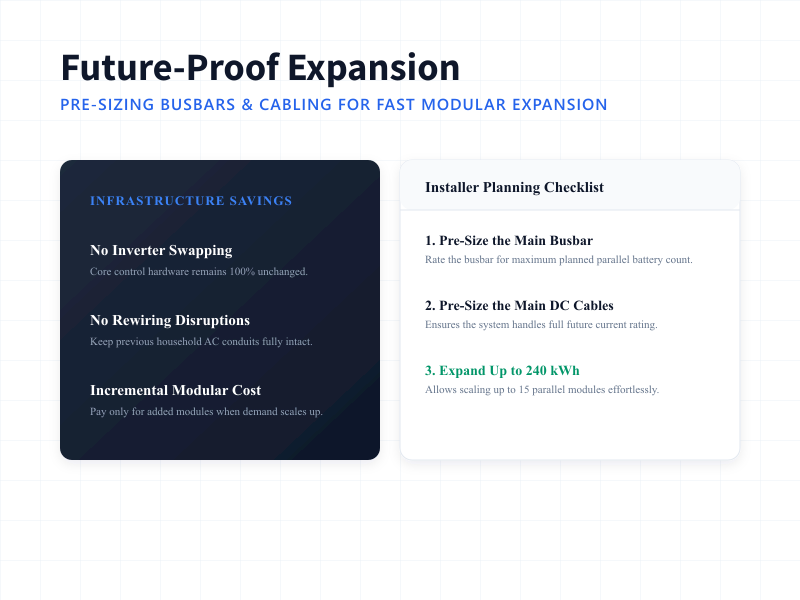
RAKOUR LV batteries support up to 15 units in parallel, scaling a single 51.2V314Ah unit from 16.08 kWh to over 241 kWh across the full array. This means an installer can start a homeowner with one or two units and add more as energy needs grow — without replacing the inverter or rewiring the system. Before paralleling, the voltage difference between batteries must be within 1V, and RAKOUR recommends units produced within the same 12-month period for optimal capacity balance. When expanding an existing installation, charge the online batteries to 45–50% SOC before connecting new units, then perform a full charge cycle to equalize the capacity gap.

Rakour LiFePO4 battery system supporting parallel expansion up to 15 units

HV Series Connection — 8 to 17 Modules in One Stack

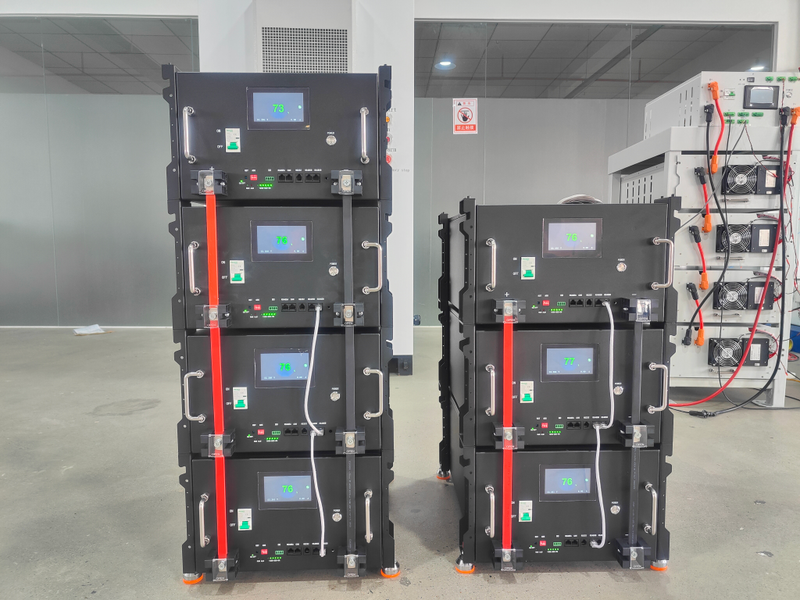
RAKOUR HV systems take a different approach: modules connect in series through a centralized BCU, building system voltage from 409.6V (8 modules) to 870.4V (17 modules) in the 280Ah configuration. This delivers 114.69 kWh to 243.71 kWh per cabinet, with up to 4 sets in parallel for large residential or light commercial projects approaching 1 MWh. Each module slots into a steel frame rack with removable handles — a single technician can install or replace an individual module without disassembling the full stack, reducing on-site service time significantly.

Stackable high voltage LiFePO4 battery modules connected in series for scalable energy storage

Safety and Certification — Built to Global Standards

Battery Management System — Multi-Layer Protection

Every RAKOUR battery includes a built-in battery management system that monitors each cell's voltage, current, and temperature in real time. The BMS enforces five layers of protection: overcharge (cell cutoff at 3.6V), over-discharge (cutoff at 2.9V), over-current, short-circuit, and high/low temperature shutdown. Charging is disabled below 0°C to prevent lithium plating, while discharge operates down to -20°C. In HV systems, the BCU's master BMS collects data from every module's slave BMS via internal CAN, providing centralized control with a hardware cut-off switch and DC fuse as additional fail-safes. This architecture ensures no single point of failure compromises system safety.

Certified for International Markets — IEC 62619, CE, UN38.3

RAKOUR products are tested by accredited third-party labs (Shenzhen CCJC Technology) to the IEC 62619:2022 standard — the primary international safety benchmark for industrial lithium batteries. Tests include external short-circuit, impact, drop, thermal abuse, forced discharge, and overcharge control. Across the product range, RAKOUR holds CE (EMC compliance), RoHS (EU hazardous substance directive), UN38.3 (transport safety for air, sea, and road), MSDS documentation, and By Sea shipping certificates. For distributors importing into Europe, Australia, or Southeast Asia, these certifications eliminate the need for additional in-market testing and accelerate customs clearance.

Warranty, Lifespan and Total Value of Ownership

LiFePO4 lithium battery with 10+ year lifespan for solar energy storage systems

LiFePO4 Battery Life — 10+ Years of Reliable Performance

RAKOUR batteries are built with Grade-A cells from leading manufacturers and deliver a lifepo4 battery life of 6,000 to 11,000 cycles at 90% depth of discharge. In practical terms, a 314Ah unit cycled once daily retains usable capacity for over 30 years — far beyond the warranty period. Even the entry-level 100Ah model at 6,000 cycles provides 16+ years of daily service. This predictable longevity means the system your client installs today will still be performing when competing lead-acid installations have been replaced three or four times.
Reliable LiFePO4 energy storage battery warranty and global after-sales support service

Our Warranty Policy and After-Sales Support

All RAKOUR residential batteries carry a standard 5-year product warranty, with wall-mounted models offering a 5+5 year extended warranty. Support includes pre-sales system design consultation, remote diagnostics via the PACE BMS App (WiFi/Bluetooth), distributor technical training programs, and on-site service in select regions. If an issue arises, RAKOUR's after-sales team can access real-time battery data remotely to diagnose faults before dispatching replacement parts — minimizing downtime for both the installer and the homeowner.
Rakour LiFePO4 home battery system offering a Tesla Powerwall alternative for solar storage

Tesla Powerwall Alternative — Professional-Grade at Better Value

For distributors and installers seeking a tesla powerwall alternative with more flexible configurations, RAKOUR offers full OEM/ODM support, low minimum order quantities, and a complete product range from 5.12 kWh to 243 kWh. Unlike closed-ecosystem consumer brands, RAKOUR systems work with any compatible inverter, support up to 15-unit parallel expansion, and give B2B partners the freedom to build their own brand on a proven, certified platform.

Frequently Asked Questions About Home Battery Storage

Answers to common questions from installers and buyers.

How many kWh do I need for a whole house battery backup?

It depends on daily consumption. A typical home uses 15–30 kWh per day. At 90% depth of discharge, RAKOUR's NSTLV-16K wall-mounted unit provides 14.47 kWh usable energy — enough for overnight backup of essential loads. For full whole-house coverage, two 51.2V314Ah-LV units in parallel deliver 28.94 kWh usable, handling most households comfortably.

How long does a LiFePO4 battery last in a solar storage system?

RAKOUR LiFePO4 batteries last 6,000 to 11,000 cycles at 90% DoD, depending on model. The 314Ah unit at 11,000 cycles provides 30+ years of daily use. Even the 100Ah entry model delivers 16+ years at one cycle per day. All units come with a 5-year warranty, with wall-mounted models offering 5+5 year extended coverage.

Can RAKOUR batteries work with Deye and Growatt inverters?

Yes. RAKOUR batteries communicate via standard CAN and RS485 protocols. Compatibility with Deye 29.9K–80kW series inverters is fully verified, with documented wiring guides available. A built-in touch screen lets installers switch communication protocols on-site to match Growatt, Goodwe, SMA, Victron, and other brands — no hardware change required.

What is the maximum expandable capacity for home battery storage?

RAKOUR LV batteries support up to 15 units in parallel. Using 51.2V314Ah-LV units, that scales to over 241 kWh — more than enough for any residential application. HV systems connect 8–17 modules in series per cabinet (up to 243.71 kWh), with 4 cabinets in parallel reaching nearly 1 MWh for large residential or light commercial projects.

What certifications do RAKOUR batteries have for international shipping?

RAKOUR products hold IEC 62619 (industrial battery safety), CE (EMC), RoHS (EU hazardous substances), UN38.3 (air, sea, and road transport safety), MSDS documentation, and By Sea shipping certificates. All testing is performed by accredited third-party labs. These certifications cover market access in Europe, Australia, Southeast Asia, and most global markets.

Start Your Home Energy Storage Solution Today

Get reliable solar battery storage for your home.